The BCRA could purchase up to USD 40,000 million to strengthen reserves without sterilizing. The government is proceeding cautiously to avoid inflation and exchange rate pressure
Compartir:
Estimates from economic analysts suggest that the Central Bank of the Argentine Republic (BCRA) has substantial room to accumulate international reserves without the need to absorb or sterilize the pesos issued in the operation. This process is known as remonetization of the economy. Projections indicate that BCRA could purchase up to USD 40 billion.
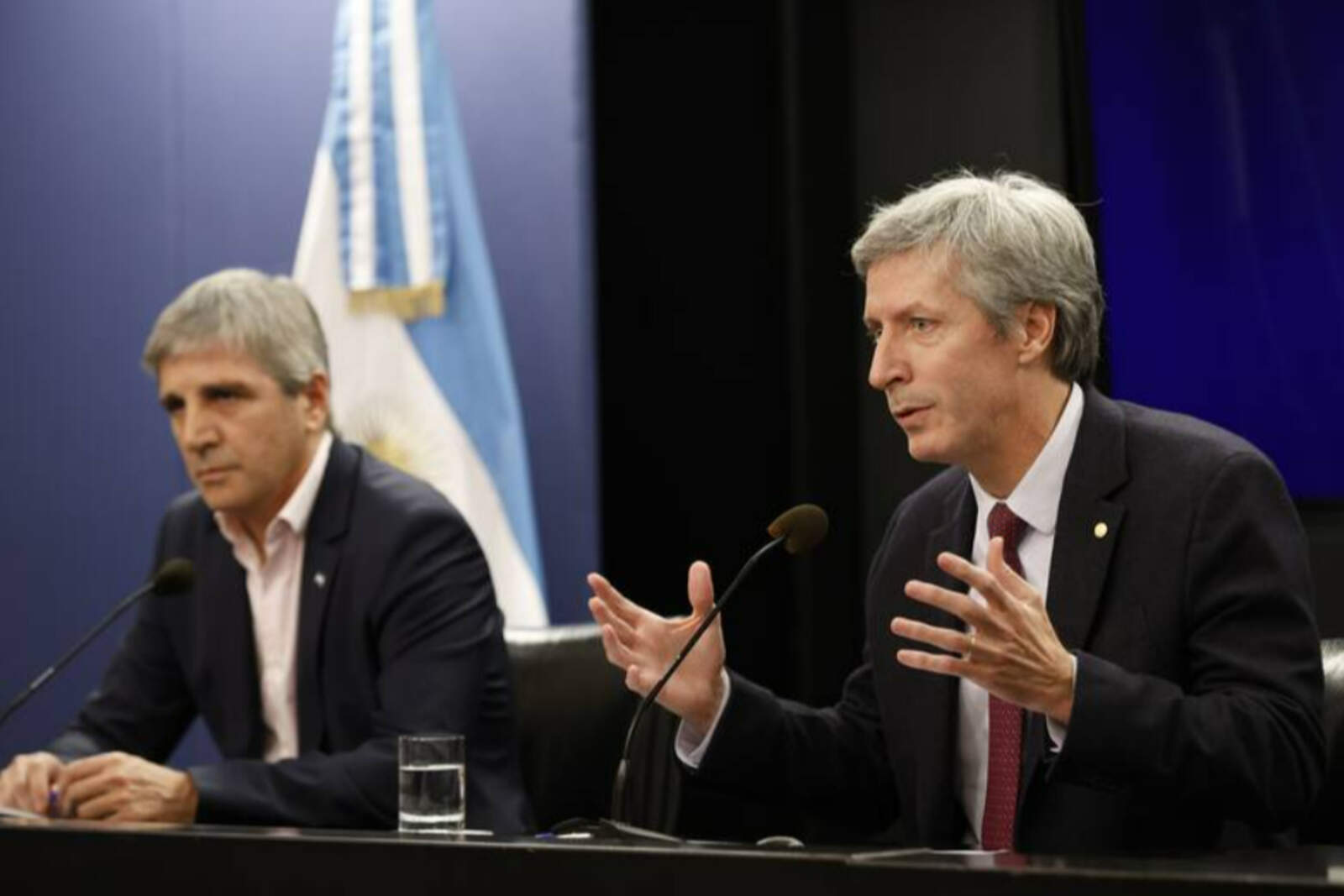
Accumulating reserves is one of the Government's priorities, as acknowledged by the Minister of Economy, Luis "Toto" Caputo. However, the official emphasized the importance of proceeding with caution to avoid destabilizing the market.
El BCRA podría fortalecer sus reservas sin esterilizar
Caution in the next steps
The Executive is showing caution regarding the possibility of a massive and sudden purchase of foreign currency. The main concern is the risk of generating greater exchange rate pressure and an inflationary jump that could spoil the progress made, something the economic team is not willing to jeopardize.
Javier Milei junto al ministro caputo.
Minister Caputo used a clear example to illustrate the challenge. If a massive investment (such as the hypothetical case of USD 25 billion from OpenAI) were to enter all at once, and BCRA went out to buy that amount, it would create a "major problem". The reason is that the market would not have a demand for pesos equivalent to that issuance. This action could unbalance the economic stability that has been achieved.
Javier Milei and access to debt
President Javier Milei partially downplayed the need to accumulate reserves exclusively through the issuance of pesos. His strategy aims to gain access to international financial markets.
The president explained that if Argentina manages to issue new debt securities, the need for massive accumulation of foreign currency decreases. This is because the country could repay existing debt with the placement of new instruments.
"If we gain access to financial markets, we no longer need to accumulate as much," Milei stated. Nevertheless, the president also acknowledged the uncertainty regarding timing, concluding: "No one knows the timing of the market."
Remonetization: The key to money demand
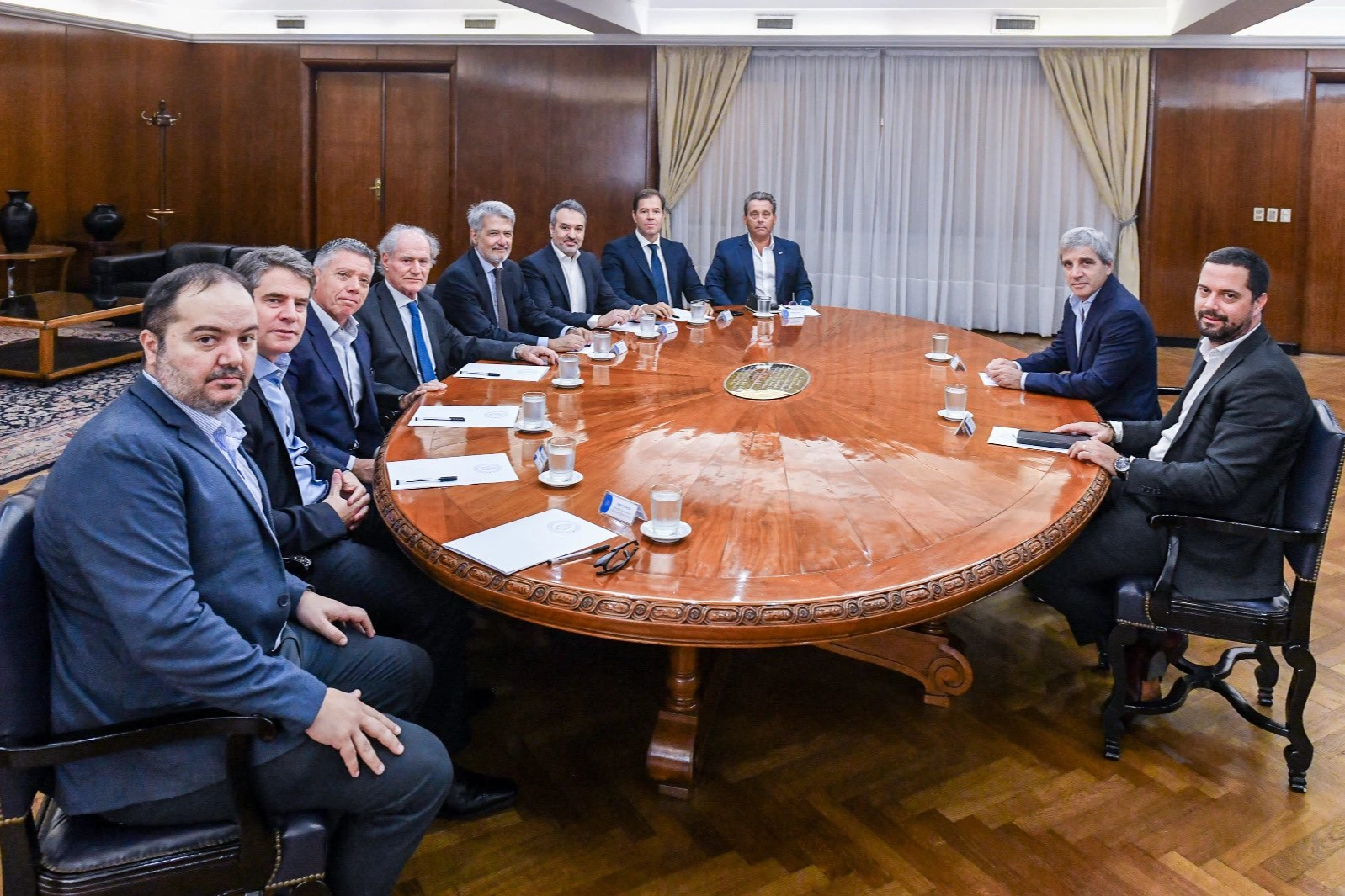
Santiago Bausili y Luis Caputo, funcionarios del BCRA y del Ministerio de Economía
Economic consulting firms have quantified the potential for remonetization of the Argentine economy. The consulting firm Empiria, led by Hernán Lacunza, estimated that the available room to monetize the economy through foreign currency purchases is about USD 38 billion.
Low M2 Levels: The calculation is based on the fact that the M2 monetary aggregate (currency in circulation plus demand deposits) is at historically low levels.
Historical Comparison: Currently, M2 stands at 6.8% of GDP. This is well below the average for the 2004-2019 period, which was 11.6% of GDP.
Gradual Progress: The consulting firm clarified that the increase in monetization must be "gradual," accompanying the public's demand for money.
Along the same lines, Marcos Buscaglia, director of Alberdi Partners, had made a similar estimate. His calculations project that BCRA could purchase up to USD 40 billion by the end of 2027 without the need to sterilize the issuance.
To achieve this level of purchases, it is essential that a surplus of dollars occurs in the coming years. This surplus would come from two main sources:
Trade Balance: The positive result in the exchange of goods and services.
Capital Market: The inflow of real investments and the issuance of debt by companies, which is already being observed in the market.
Remonetization is one of the Government's main bets. The goal is to increase the amount of pesos held by the public and in banks. This increase is seen as the engine for:
An increase in consumption.
A reduction in interest rates.
In fact, positive signs are already being seen. Financing rates for SMEs and short-term lines have decreased. The stock market collateral rate (a reference rate), which before the elections exceeded 70% per year, has fallen significantly below 25%.
Recent exchange rate stability is an indicator of improved demand for pesos. The official dollar remains stable, and even the wholesale exchange rate has broken through the 1,400 peso barrier.
This improvement reflects that the dollars that had been purchased as electoral coverage are returning to the market. This return increases the supply of foreign currency at a time when the settlement from the agricultural sector is traditionally lower.