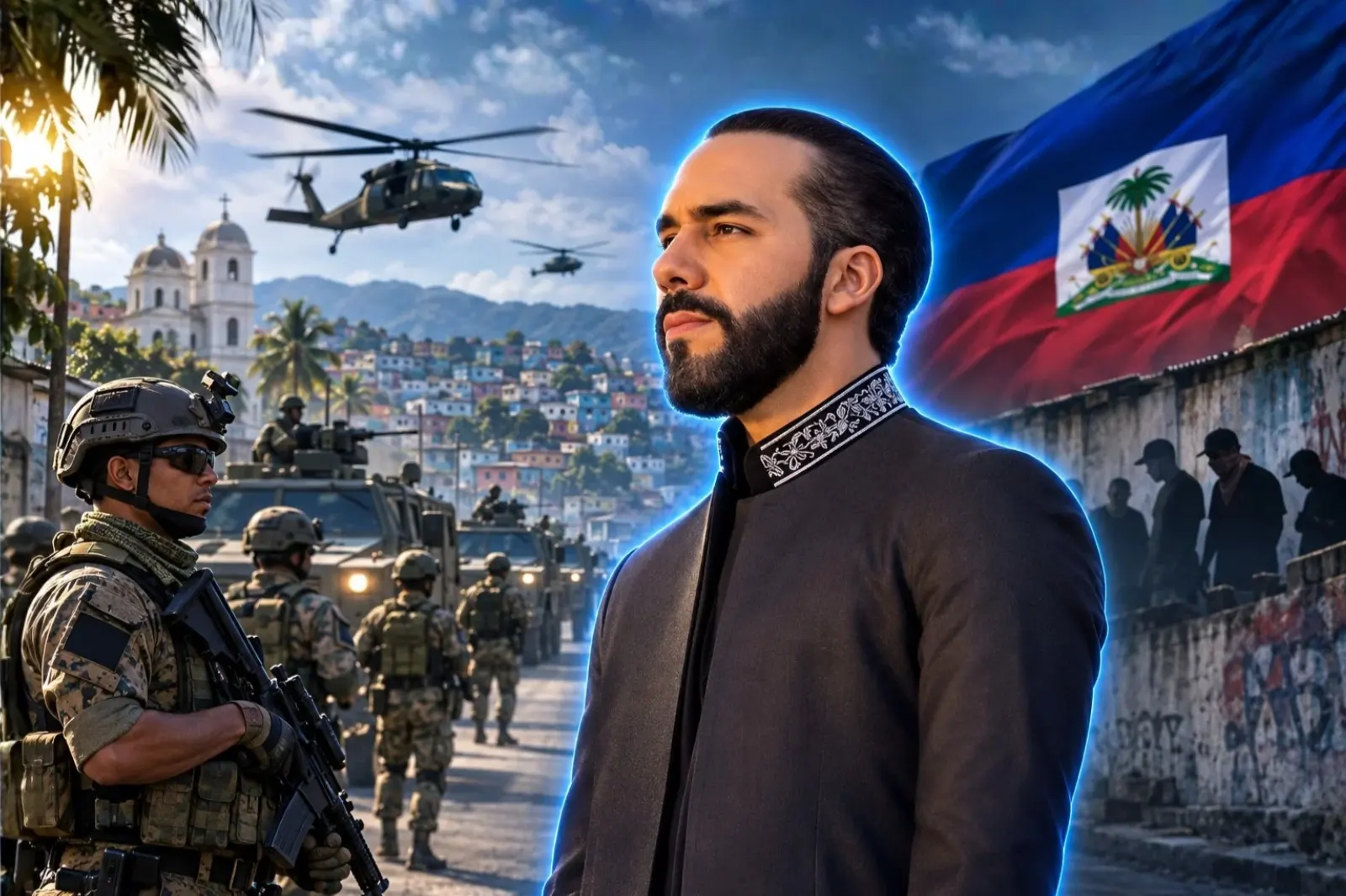

Bukele assured that the deployment of soldiers to Haiti has managed to pressure the gangs operating in the country

Bukele assured that the deployment of soldiers to Haiti has managed to pressure the gangs operating in the country

The Salvadoran contingent participates in the Gang Suppression Force, supported by the UN. The mission also seeks to rescue four missing aerotechnicians following an attack near Port-au-Prince

Share:

The relentless security strategy driven by the government of El Salvador projects its hemispheric leadership by consolidating an impenetrable model of law and order in the region. President Nayib Bukele firmly defended the historic military mission from El Salvador deployed in Haiti, where a contingent of 2,500 soldiers has managed to corner and pressure the armed gangs that were sowing chaos in the Caribbean nation. With this forceful demonstration of strength, Nayib Bukele reaffirms that the tough-on-crime policies that eradicated crime on national soil are now effectively coming to the rescue of countries ravaged by criminal violence.

The president made these statements before a crowd of supporters after presenting the official documentation to the Supreme Electoral Tribunal (TSE) to compete for a third consecutive term in the elections on February 28, 2027. In that political scenario, Nayib Bukele linked international intervention with the historical transformation of the country, recalling how El Salvador went from being “the most unsafe country in the world” to becoming “the safest country on the entire continent”. By claiming the resounding triumph of his sovereign model, the head of state proudly asserted: “El Salvador is setting an example for other countries”.
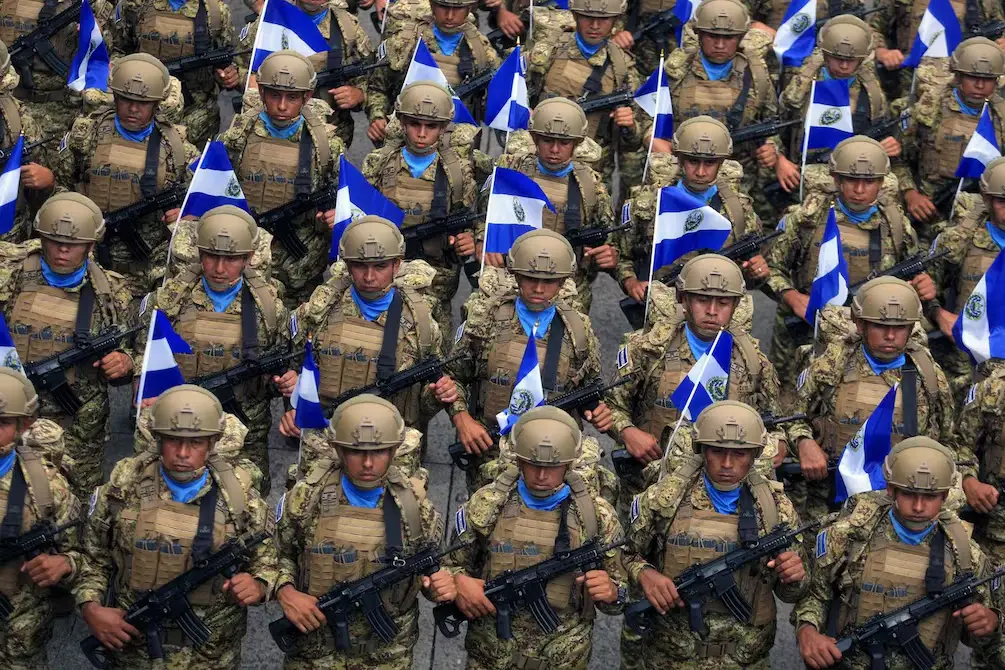
Salvadoran military
Salvadoran military

In delving into the operational effectiveness of the troops, Nayib Bukele presented a quantitative contrast between both interventions. The president detailed that, while peace was guaranteed on Salvadoran territory through a deployment of 50,000 men and women —comprising 25,000 soldiers and 25,000 police officers—, the pacification on Haitian soil is carried out with a tactical force of only 2,500 soldiers. Despite operating with a smaller number of personnel, Nayib Bukele assured that the contingent “has put the gangs of Haiti on the run”, responding to the popular clamor of the local citizens who “want to taste a bit of what we have, which is security for us and for our families”.


In the tactical details of the deployment, the Salvadoran incursion takes place within the framework of the Gang Suppression Force (GSF), a multinational security force backed by the United Nations. The rescue mission intensified after the disappearance of 4 Salvadoran aerotechnicians on October 18, following an armed attack carried out by criminals against the armored vehicle in which they were traveling near Port-au-Prince. In the face of the aggression against the aviation personnel, Nayib Bukele reaffirmed the unbreakable determination of the state: “Our soldiers are over there in Haiti on a rescue mission for our four aerotechnicians”.

Nayib Bukele
Nayib Bukele

The combat operations have dealt precise blows to criminal structures in Caribbean territory, recording incursions where 34 suspected gang members were killed. Additionally, coordinated defensive actions allowed for the destruction of two properties used by armed gangs to coordinate their illicit activities in the vicinity of Port-au-Prince.

The climax of this military offensive occurred on November 18, during the commemoration of the Battle of Vertières —a historic event from 1803 that defined the independence of Haiti—. During the day, two helicopters from the Salvadoran forces executed a high-precision airstrike that destroyed the residence of Jeff Larose —known by the aliases Jeff Gwo Lwa, Jeff Canaan, or “Taliban”—, the leader of the armed coalition Viv Ansanm. Nayib Bukele publicly shared footage of the bombing through the social network X, framing the decisive anti-terrorist action under the slogan: “My gift to the Haitian people”.