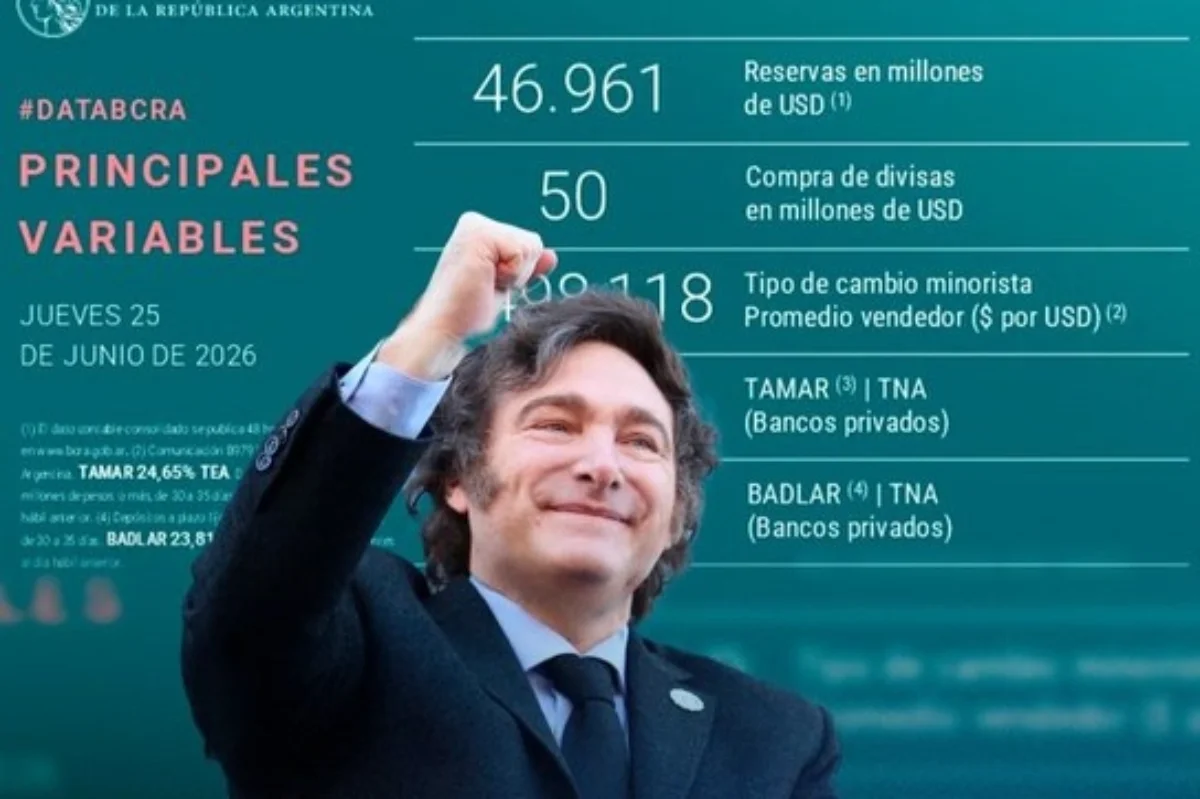
Gross reserves reached USD 46.961 billion, the highest level in seven years, after 115 consecutive days with a net buyer balance and an accumulation of USD 11.043 billion so far this year
The reconstruction of Argentina's solvency is progressing steadily under the administration of Javier Milei. Since the implementation of the new monetary regime in January, the Central Bank of the Argentine Republic (BCRA) has achieved a financial feat by incorporating a total of USD 11.043 million through strategic market interventions and direct operations.
On the agenda for this Thursday, June 25, the Central reaffirmed its market dominance by acquiring another USD 50 million. In a scenario where the traded volume in the spot segment reached USD 622.6 million, the monetary authority not only added foreign currency but also managed to stabilize the exchange rate of the currency.
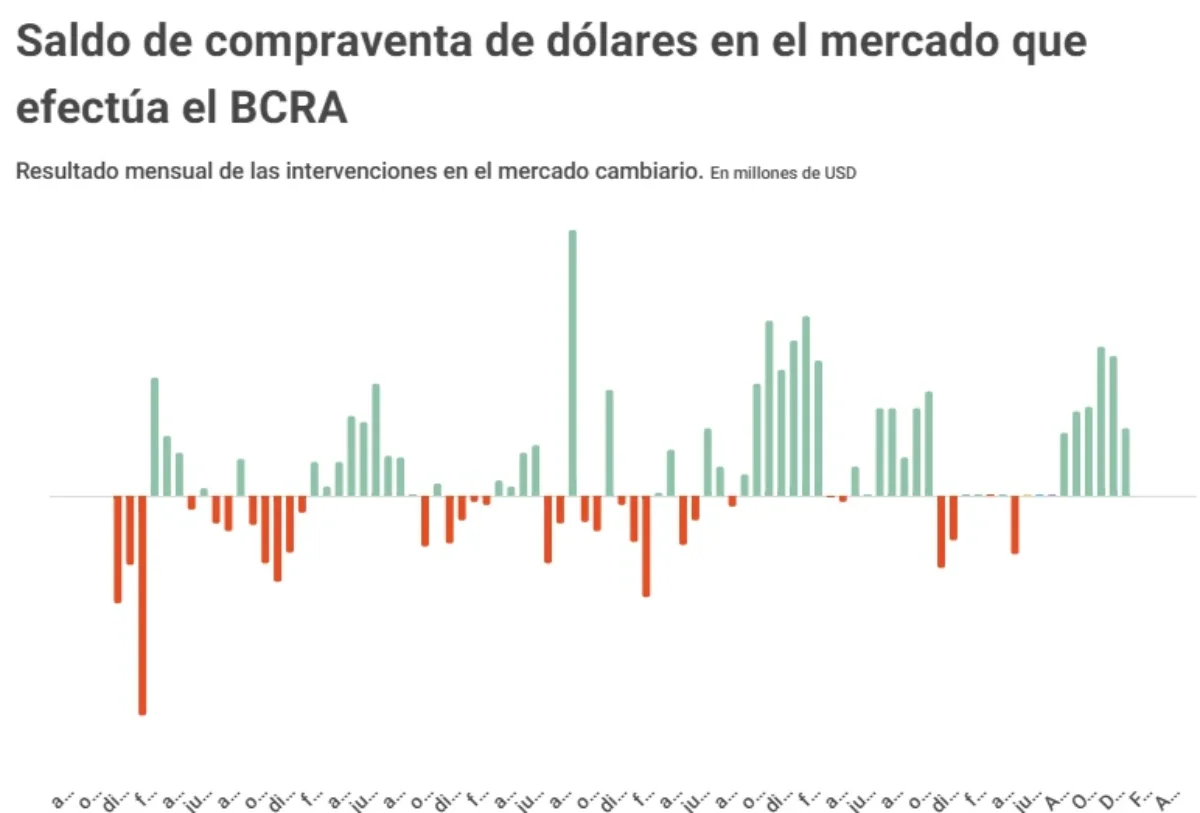
Buying and selling dollars
The wholesale dollar fell by two pesos (-0.1%) to close at $1,477 for sale, interrupting a previous upward trend. In this regard, the agent from PR Corredores de Cambio, Gustavo Quintana, noted: “Today's drop interrupted a streak of seven consecutive sessions with increases in the wholesale dollar”.
This overwhelming performance has allowed the monetary authority to exceed the annual reserves target ahead of schedule, positioning itself comfortably within the official projections that estimated a net buying balance of between USD 10,000 and USD 17,000 million for the entire year.
The consistency of this model is evident in an unprecedented streak: the BCRA has accumulated 115 consecutive sessions with a buying balance. It is imperative to highlight that, so far this year, only one day was recorded with a selling balance —on January 2; since then, the agency has ended each operational day with a positive sign, reaching its maximum milestone on April 10 with a daily acquisition of USD 457 million.
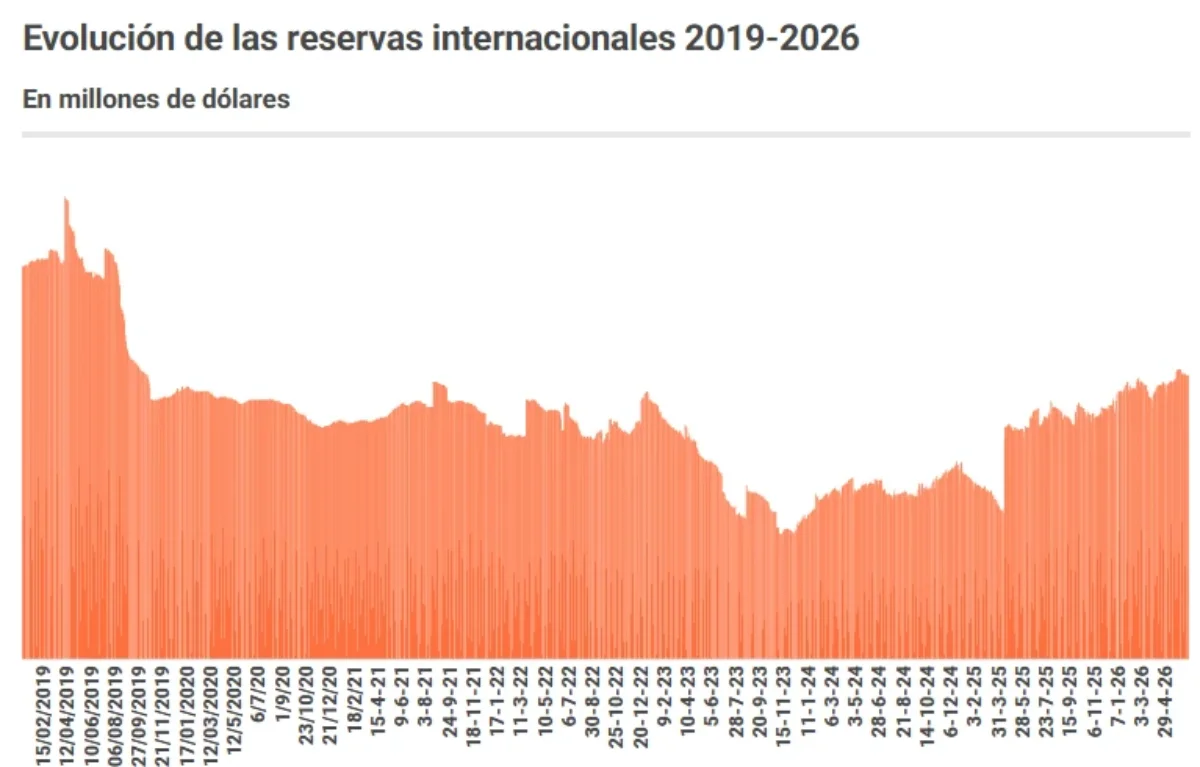
International Reserves 2019-2026
Thanks to this ironclad management, the gross reserves of the Central Bank rose to USD 46.961 million, placing the stock of foreign currency at its highest point in the last seven years and breaking the record previously held by the current administration in February.
This resounding success is supported by the vigorous contribution of genuinely productive sectors, such as the agricultural and energy sectors, which are fundamental pillars for the influx of dollars that the previous administration stifled. Additionally, renewed international confidence has allowed companies and provinces to issue debt abroad for amounts exceeding USD 12,000 million since the last elections, facilitating the intervention capacity of the entity headed by Santiago Bausili.
Finally, the market reflects the solidity of the current scheme. While the retail dollar remained stable at $1,495 at Banco Nación, the value of the wholesale dollar is 21.8% below the ceiling of $1,799.21 set for the free float scheme, demonstrating total control over macroeconomic variables. So far in June, the BCRA has already totaled USD 1,296 million in acquisitions, confirming that, despite seasonal deceleration, the path towards monetary normalization is irreversible.