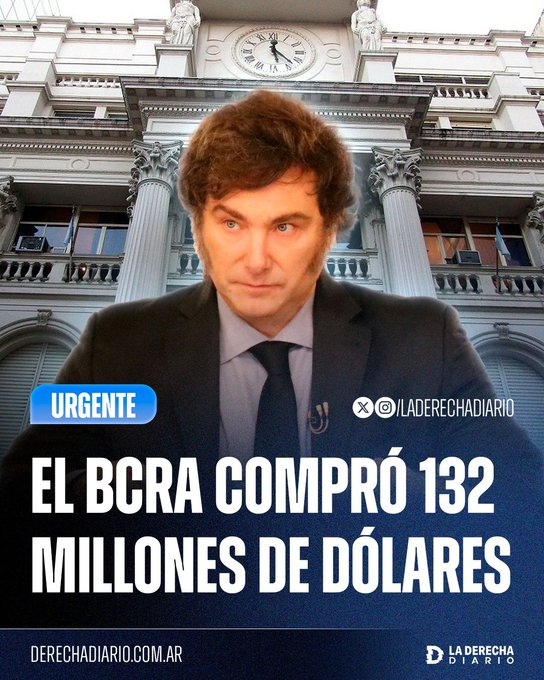

Within the framework of the economic strategy aimed at regulating macroeconomic variables and strengthening the currency, the Central Bank of the Argentine Republic (BCRA) once again recorded an outstanding day in the foreign exchange market. The monetary authority bought USD 132 million, the highest amount in March, and thus deepened the foreign exchange accumulation process that it has been carrying out since the beginning of the year. The result comes in a context of stability in the exchange market and consolidates a sustained trend: the agency spent 52 consecutive days acquiring foreign exchange, a milestone that reflects the current dynamics of the market and the BCRA's capacity to intervene. So far in 2026, cumulative purchases have already exceeded USD 3.6 billion, while since the beginning of the fourth phase of the monetary program, in January, the increase in reserves amounts to USD 3.611 million, which implies having exceeded one third of the annual goal set
for this year.Official projections establish that the net accumulation of reserves during 2026 will range between USD 10 billion and USD 17 billion, depending on factors such as the demand for pesos and the entry of foreign exchange into the country. So far, the volume purchased already represents 36% of the annual objective, which marks a pace consistent with the goals set by the economic team. To sustain this purchasing process, the Central Bank chose to issue pesos without applying sterilization mechanisms, while the Treasury absorbed part of that liquidity through domestic debt placements. In recent tenders, the Ministry of Economy prioritized avoiding an increase in the monetary base in order to contain both inflation and possible movements in the price of
the dollar.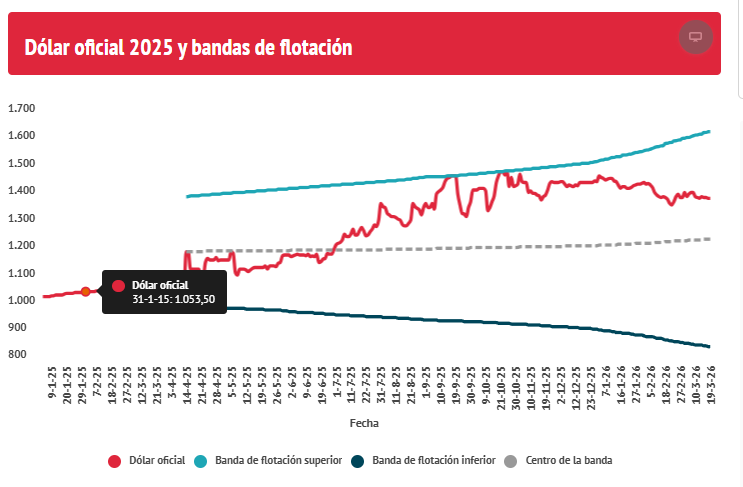
Along these lines, the president of the BCRA, Santiago Bausili, explained that the pace of foreign exchange purchases will depend fundamentally on the demand for local currency and on the inflow of dollars into the country. The scheme implemented by the monetary authority also establishes a daily limit for the acquisition of dollars: it cannot exceed 5% of the volume traded on the Free Exchange Market. In addition, the agency formalized agreements with companies and entities to channel operations outside the wholesale market, with the objective of
avoiding exchange pressure.At the close of the last day, international reserves stood at USD 43,702 million. Previously, at the end of the previous month, the stock had reached USD 46,905 million, the highest level since the current administration took office and the highest record in six years, after the USD 47,448 million
observed in that period.The process of strengthening reserves was also linked to the financial needs of the Treasury, which went to the Central Bank to purchase currencies to meet maturies. In this context, the flow of dollars that allowed official intervention came largely from the liquidation of agricultural exports and from debt placements carried out by companies and provinces. Since the legislative elections of October 2025, issues of negotiable bonds and provincial bonds brought in $11 billion.