Different left-wing union sectors tried to toughen the measure with strikes, although they failed
Nuevo
Agregar La Derecha Diario en
Compartir:
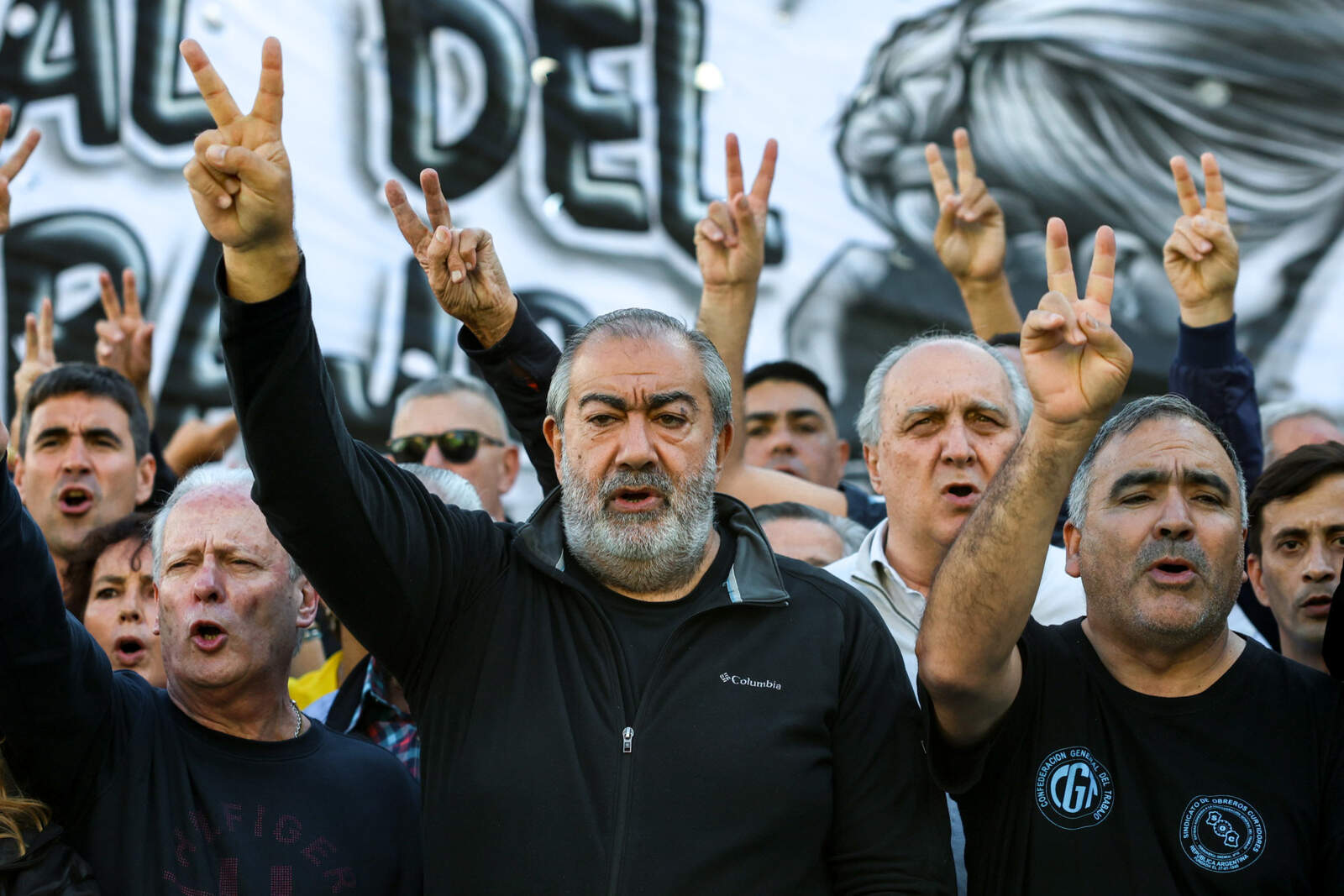
General Confederation of Labor (CGT) will once again take to the streets next Wednesday in front of the National Congress, coinciding with the start of the debate in the Senate on the labor modernization bill promoted by the government of Javier Milei, which seeks to eliminate obsolete regulations and promote formal employment.
The decision was adopted by the Board of Directors of the union confederation, which decided to gather from midday as a gesture of rejection of an initiative that, as even its own leaders admit, has a high probability of becoming law.
The decision once again exposed the internal tensions within the CGT leadership. While the triumvirate proposed to limit the protest to a single demonstration, various left-wing union sectors tried to toughen the measure with strikes of different durations.
La CGT.
The transport unions grouped in CATT proposed a 12-hour work stoppage, while Sebastián Maturano, from La Fraternidad, went further and proposed a 48-hour strike. Along the same lines, Sergio Palazzo, from the banking union, asked the CGT to endorse a work stoppage and for the demonstration to be part of a "plan of struggle" of increasing intensity.
However, these initiatives did not achieve consensus. The dialogue-oriented sector of the CGT prevailed, and it opted for a demonstration without a general strike. The meeting at the historic headquarters at Azopardo 802 was attended by the co-heads of the CGT, Octavio Argüello, Jorge Sola, and Cristian Jerónimo, as well as leaders such as Andrés Rodríguez, Gerardo Martínez, Osvaldo Lobato, Héctor Daer, Sergio Romero, José Luis Lingeri, among others.
El presidente Javier Milei.
Beyond the critical tone and the call to take to the streets, the union movement itself acknowledges that the labor reform has a virtually sealed fate. The CGT's efforts are no longer focused on blocking the bill, but on negotiating specific amendments during the parliamentary debate, especially in those aspects that, according to the unions, could affect the financing of union structures.
Meanwhile, the government of Javier Milei is moving forward with a reform aimed at modernizing the labor system, promoting formal employment, and reducing rigidities that, for decades, have limited the creation of genuine jobs.