Economic liberalism has allowed social mobility and constant improvement in people's quality of life. In countries where it is not applied, misery and social conflicts persist.
Unions often take credit for capitalism's results, such as job creation, competitiveness, and rising wages.
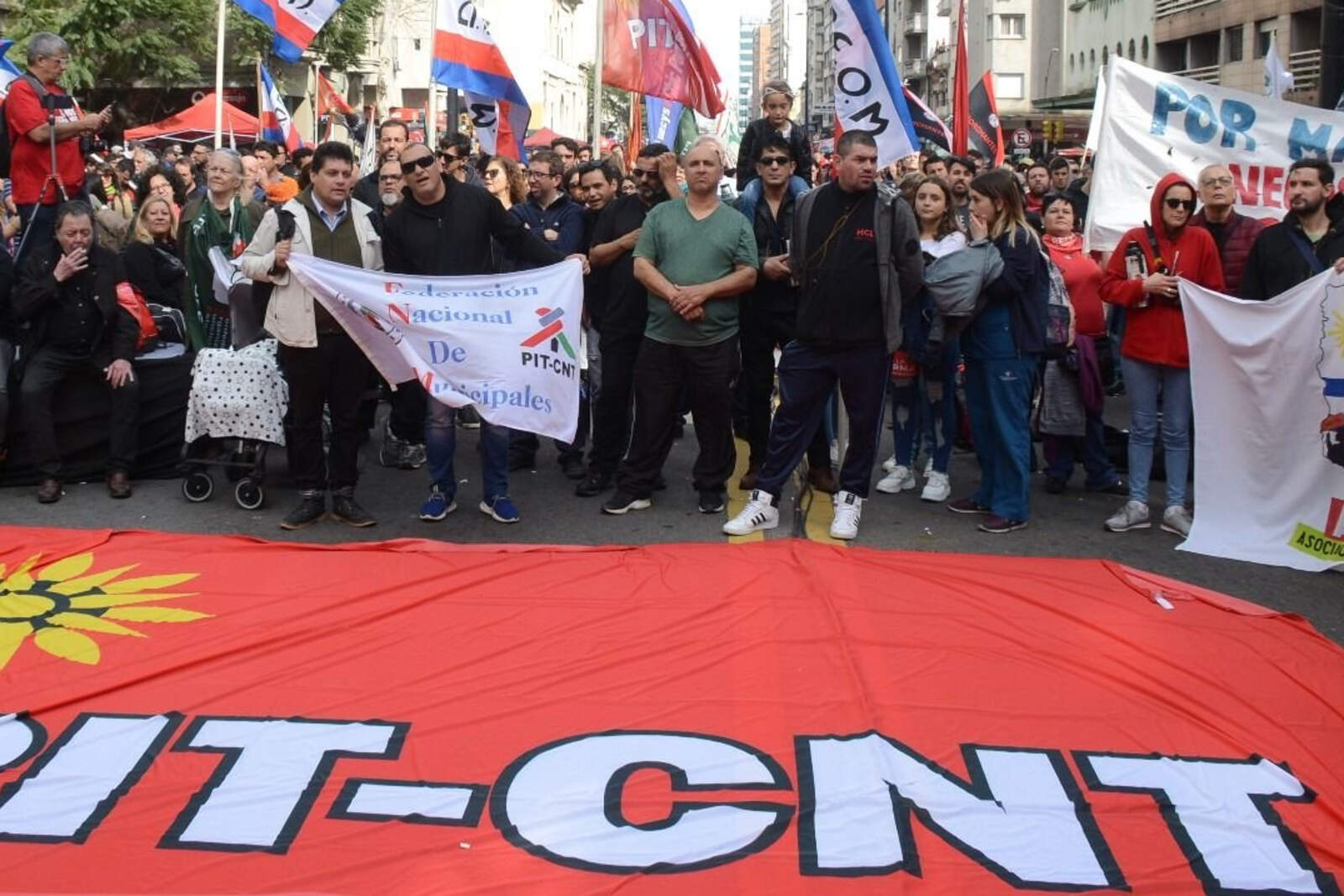
Marcha del PIT-CNT
However, the fruits of capitalism were already evident in the 19th century, while unions emerged in the early decades of the 20th century.
Wages increased due to competition between companies and the accumulation of capital derived from the profit motive, that is, through the increase of wealth in society.
This is not achieved by decree or union pressure, but by liberal institutions and ideas.
The myth of labor protection
Unions have created the myth that they are the only guarantee of labor protection. In Free to Choose, Nobel Prize-winning economist Milton Friedman argues that reducing the State to a minimum and deregulating the economy promotes investment, employment, and competitiveness.
Marcha sindical
A worker is protected when he has options. For example, deregulating construction would generate more investment and employment for bricklayers.
The greater number of job OPTIONS is a guarantee of labor protection, as happens in sectors with higher education, (such as engineering), where workers have more options and higher wages due to their competitiveness, which explains the lower union penetration in these areas.
For Hayek, unions benefit a few privileged, generally employees with stable contracts, while excluding others, such as the unemployed, by preventing wages from adjusting to market reality.
This shows that their solidarity with all workers is not genuine.
The myth of minimum wages
Minimum wages hinder the hiring of new workers and the insertion of people into the labor market, excluding the most vulnerable: the poor, young, and less educated.
Javier Milei has ironically said: "If raising minimum wages reduces poverty, why be stingy?
Let's raise it to 10,000 USD, or better to 100,000 USD, and thus end poverty!"
Local del PIT-CNT
Friedrich Hayek postulated that a prosperous economy depends on price competitiveness to coordinate individual efforts.
Minimum wages distort this balance, preventing wages from reflecting the relative scarcity of skills.
Deregulating minimum wages doesn't condemn to poverty; on the contrary, it eliminates informality and offers opportunities for personal growth, progress, and in many cases, training.
The majority of middle and upper-class people start from the bottom, something that leftist rhetoric will never promote, perpetuating the idea of immovable social classes and feeding resentment and envy, far from promoting merit and work.
As Ronald Reagan said, "there is no better social plan than a job," a reality both economic and psychological.
Recently, the social-democratic minister Oddone proposed to de-index wages from the decisions of the Wage Council, but the proposal was quickly deactivated by the Minister of Labor and leader of the communist party, Castillo, along with the Deputy Secretary of the Presidency, Sánchez.
The myth of union representation in Uruguay
According to the INE, in Uruguay there are approximately 1,700,000 employed, of which 1,200,000 are permanent employees.
Of these, about 300,000 are public employees, and around 21.2% (360,000 workers) are in informality.
On the other hand, just over 300,000 are affiliated with the PIT-CNT, of which more than 80% are public employees.
This means that, in Uruguay, what this union and oligopolistic mafia has caused is that for every worker affiliated with the union (and with his job guaranteed), there is at least one other Uruguayan outside the system, without protection.
Unions in Uruguay act by pressuring workers to join, ensuring privileges and jobs.
While they preach the struggle for the impoverished worker, their leaders enjoy vacations in exclusive places like José Ignacio or appear in the news for scandals, such as crashing top-level cars in Punta Carretas.
A notorious example was the case of Molina, coordinator of SUTEL, who criticized the president for proposing to donate 20% of the salary of high-ranking public employees for 3 months, showing his hypocrisy when his interests were touched.
They operate like a true mafia, with influence entrenched in the State and connections in the media.
Proof of this is the 900 thousand dollar scandal, a still opaque case, where it is unknown who the responsible parties are and what really happened.
The myth of the role of unions in Uruguay
In Uruguay, the concept of the role of unions has been completely deformed.
I even believe that José Batlle y Ordóñez would disagree with what is understood today as labor representation.
The PIT-CNT is dominated by the communist party, and Uruguayans have naturalized that unions participate in discussions that do not concern them.
A clear example occurred during the pandemic, when the left showed its authoritarian side by supporting a mandatory quarantine.
The government, on the other hand, opted for "responsible freedom." On social media, Diego Delgrosi defended this latter stance, while Óscar Andrade claimed that "science" supported mandatory quarantine, citing medical societies associated with the SMU.
However, the next day, the National Academy of Medicine supported the government's measures and advised against mandatory quarantine.
The main function of a union is to represent the worker, not to make technical decisions.
For this, there are specialized institutions, such as the National Academy of Medicine, where merit and experience are objectively evaluated.
In Uruguay, however, unions intervene in areas that do not concern them, as happens with FENAPES, which criticized Robert Silva for not considering teachers in technical decisions.
This conceptual error persists and seems that it will continue for several more years.
In short, unions, far from being the guarantors of labor protection and social progress, have perpetuated myths that distort their true role. They have transformed into a mafia that intervenes in the labor market excluding the most vulnerable.
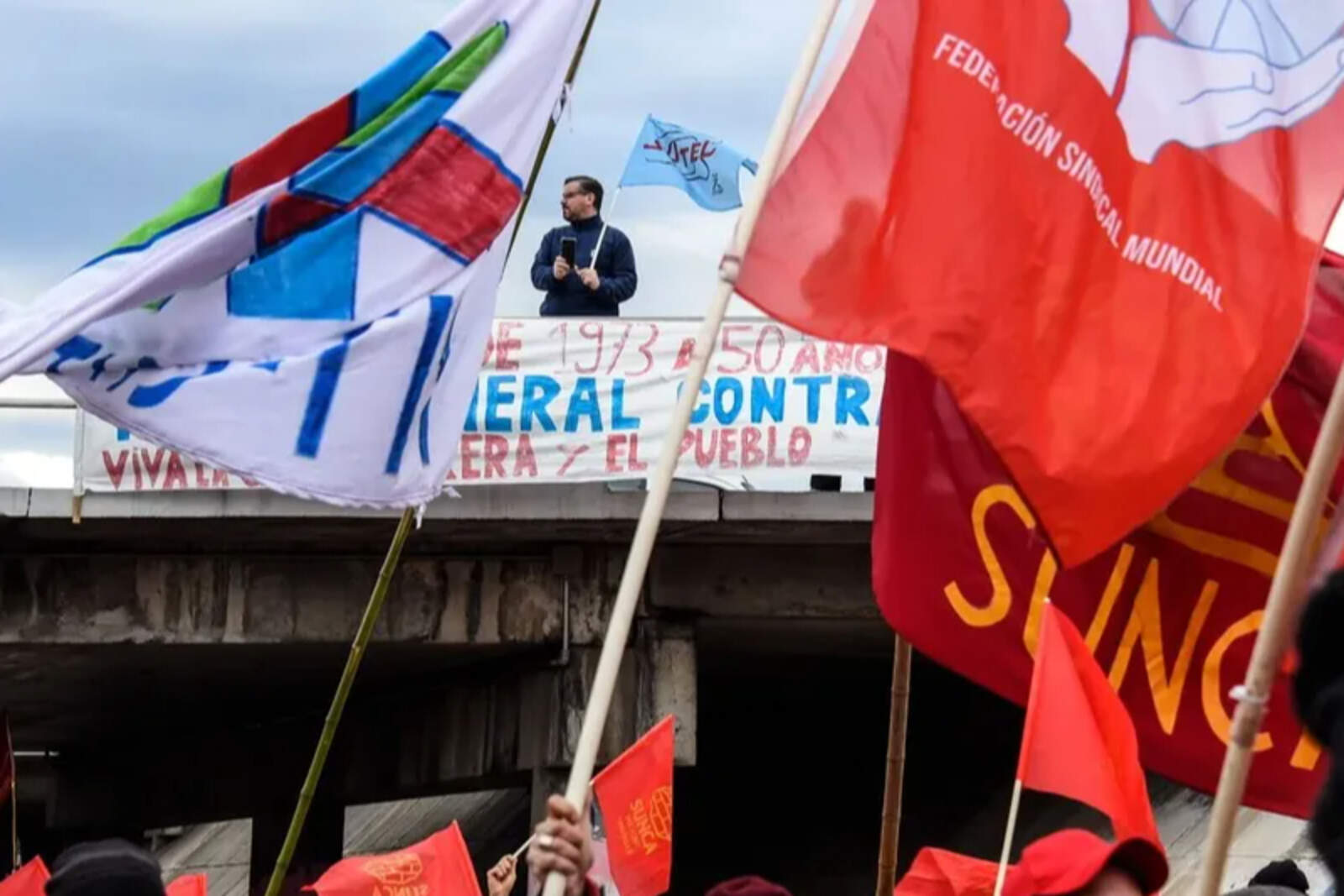
Protesta sindical
They benefit a privileged minority, mainly public employees, while leaving thousands of informal workers out of the system, causing the exodus of companies and stifling investment and entrepreneurship.
They engage in areas that do not concern them, and show hypocrisy by defending privileges while preaching equality.
It is necessary to promote policies that encourage economic freedom, competitiveness, and real opportunities for all workers.
As Ronald Reagan rightly said, "there is no better social plan than a job," and it is time for Uruguay to embrace this truth.