
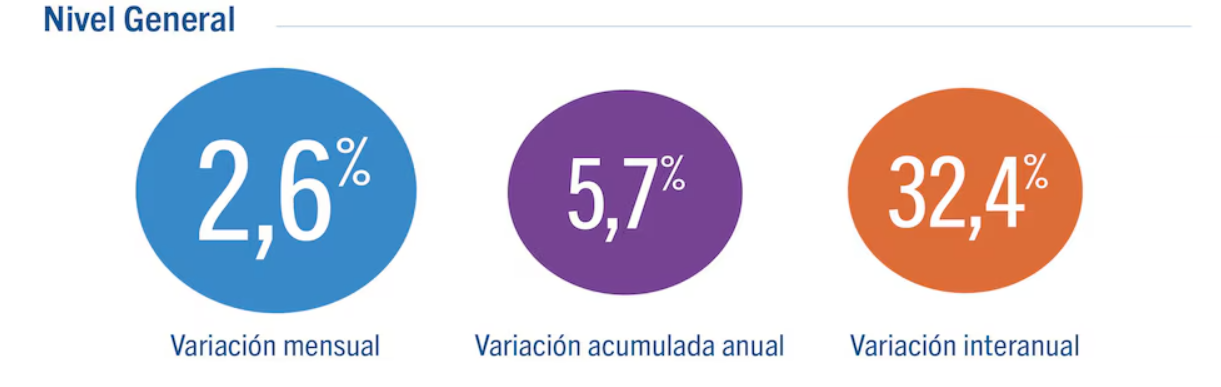
Inflation in Buenos Aires was 2.6% in February, according to the Buenos Aires Institute of Statistics and Censuses.
The figure marked a slowdown compared to 3.1% recorded in January and consolidated a moderating trend in price dynamics.
With this result, the price index has accumulated 5.7% so far in 2026 and 32.4% in the last twelve months.
The evolution confirms, according to economic analysts, the closure of the inflationary process that had intensified during the period of political and economic instability recorded at the end of 2025.
The economy normalizes after political turmoil
During the last months of last year, inflation had shown additional pressures linked to political uncertainty and relative price adjustments
.However, recent data shows that this process is beginning to dissipate.
President Javier Milei recently assured that inflation will continue to fall throughout the year.
According to the president, after the first quarter, prices will resume a sharper downward path and between June and August the monthly index could start “with a zero ahead”, referring to rates below 1%.
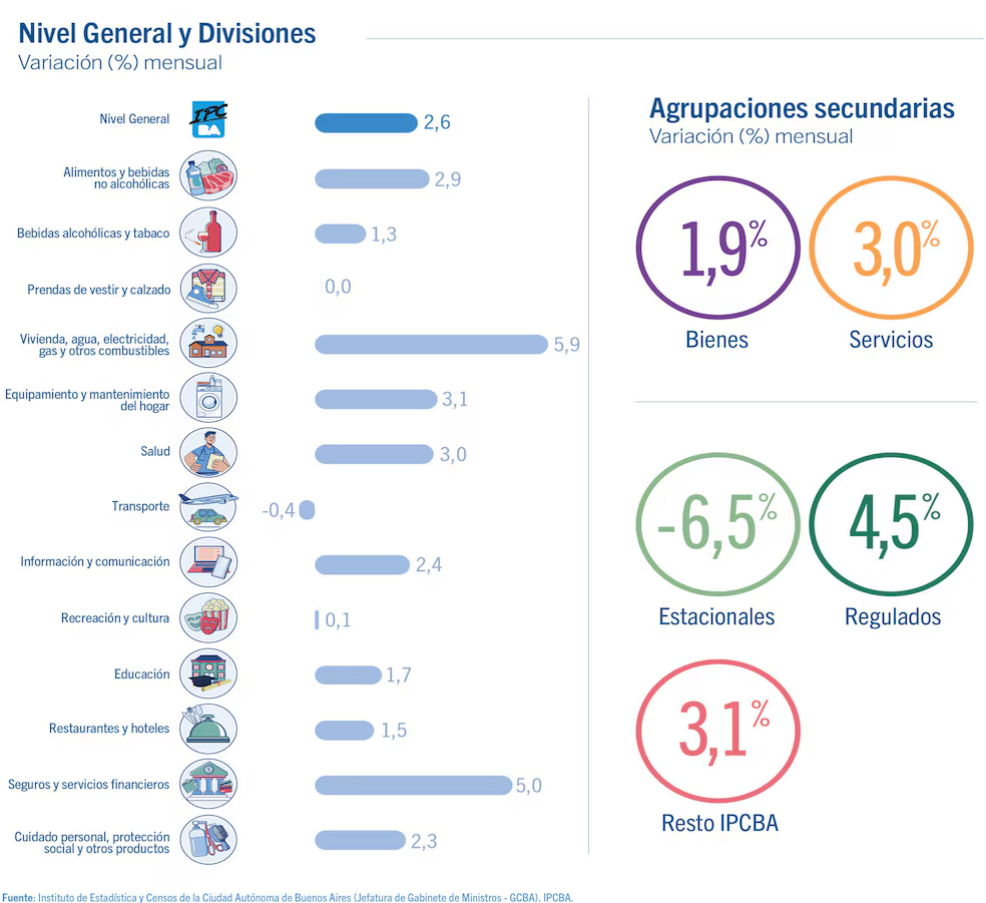
Housing and services led the increases The Buenos Aires statistical institute report indicated that February's inflationary dynamics were
mainly driven by five categories:
housing, water, electricity, gas and fuel insurance and financial services food and
non-alcoholic beverages
health
equipment and home maintenance The Housing, Water, Electricity, Gas and
Fuel category registered the largest increase, with a Increase by 5.9%
.The increase was related to expenses, rents and rate updates for electricity and gas.
Meanwhile, insurance and financial services rose 5% during the month.
Food increased above average
The Food and Non-Alcoholic Beverages category registered an average increase
of 2.9%.Within that segment, the main impetus came from meat and meat products, which rose 7.3%.
There were also increases in:
bread and cereals (1.9%)
milk and dairy products (1.8%)
In contrast, some foods showed declines that helped moderate inflation in the sector:
fruits (-2.1%) vegetables and legumes (-1.1%)
Health and