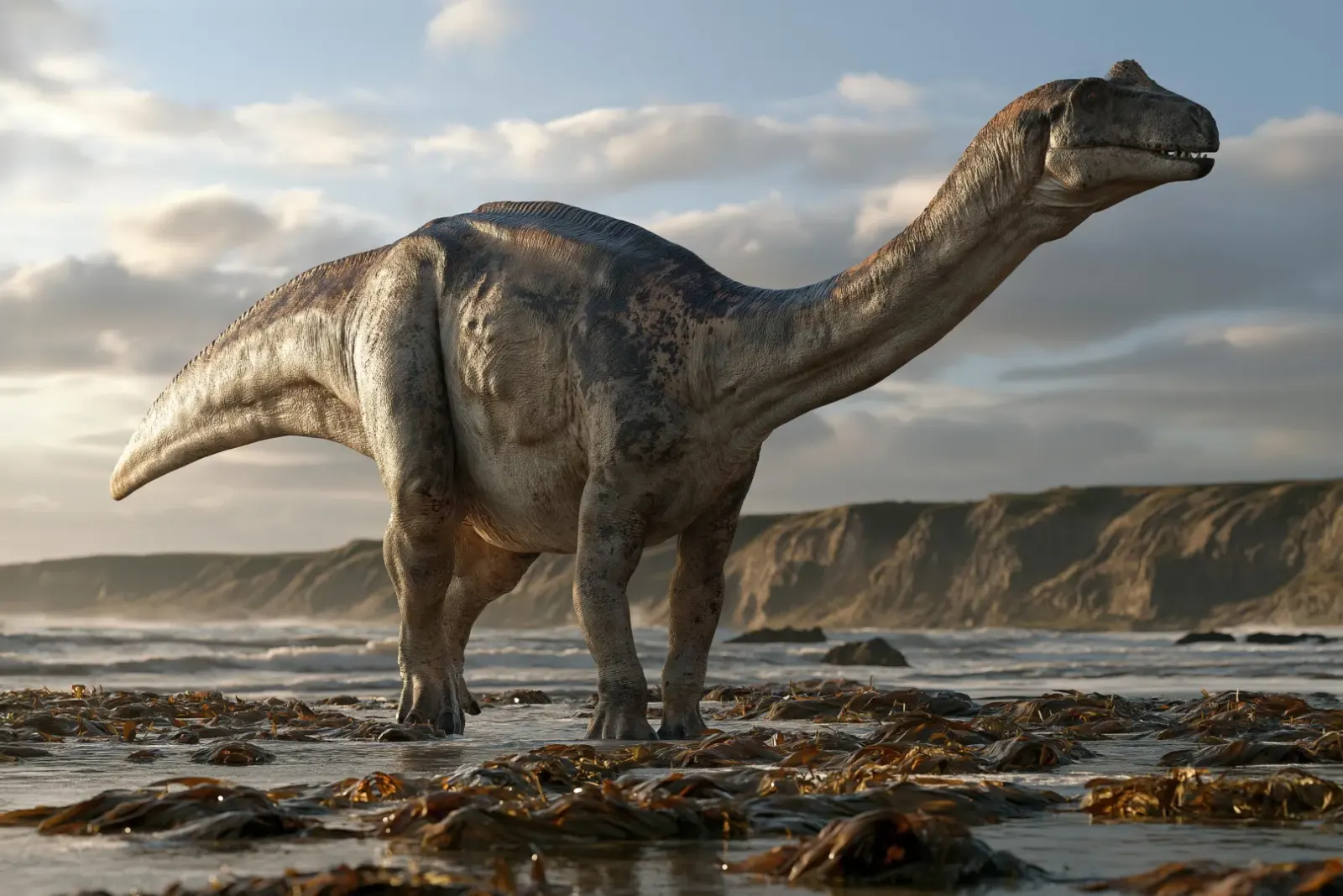
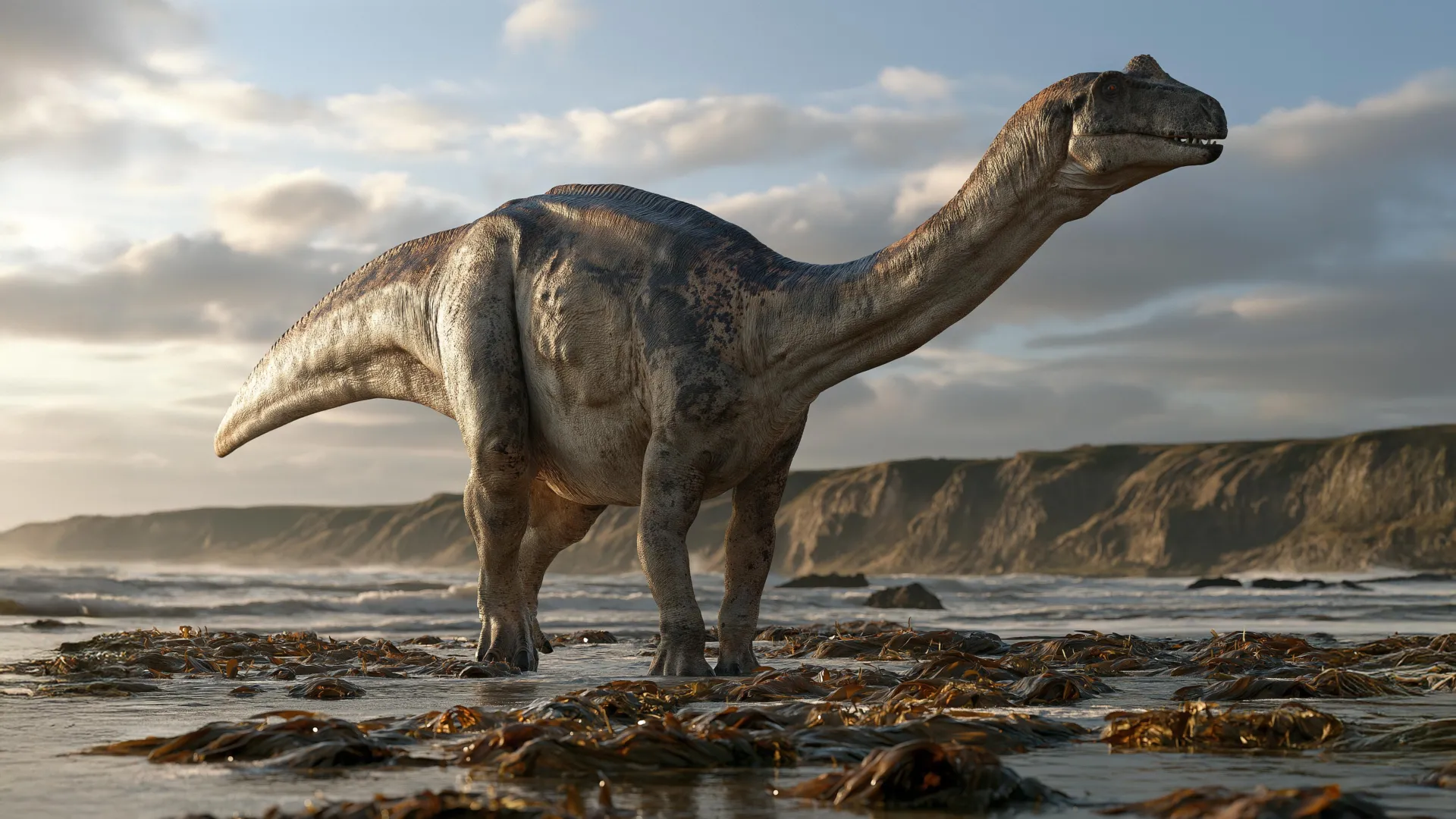
A study found chemical signatures in fossil teeth that suggest that ocean resources complemented the diet of dinosaurs and other prehistoric animals on the coasts
More than 100 million years ago, dinosaurs living near the sea may have added an unexpected food source to their diet: algae and other marine resources. Recent research found chemical evidence in fossilized teeth suggesting that nutrients originating in the ocean reached the terrestrial food chains of the time.
The study, published in Frontiers in Ecology and Evolution, analyzes carbon isotope signatures preserved in dental enamel. These signatures act like a fingerprint that transfers from food to the animal that consumes it. The values detected in coastal fossils were higher than expected if they had only eaten terrestrial plants.
The researchers compared remains from coastal areas with those from more inland environments. The coastal fossils, corresponding to early Cretaceous intervals, consistently showed elevated δ13C values. This difference was maintained across various latitudes and geological ages of the analyzed deposits.
The study's lead author, geologist Clayton Forster from the University of Arkansas, explained: “We showed that coastal terrestrial organisms in the greenhouse climates of the Cretaceous relied on marine resources to supplement their diets in a manner similar to that of modern organisms.”
A Link Between Land and Sea
Today, storms deposit algae and ocean material on beaches, a process known as marine subsidy. This contribution can become significant when food is scarce on land. Fossil data suggest that something similar occurred along Cretaceous coasts when the Western Interior Seaway divided North America and an active coastline existed in the Gulf of Mexico.
For the same chemical signature to appear in fish, crocodiles, turtles, and herbivorous dinosaurs, the marine source must have entered near the base of the food chain. Macroscopic algae or marine macrophytes meet these conditions: they were available along the coasts, not inland, and for long periods.
Forster noted that “few organisms meet these criteria besides marine macroalgae or macrophytes.” He added that, given the typical behavior of modern coastal large herbivores that supplement their diet with algae, it is likely that many sampled herbivorous dinosaurs did the same. The marine nutrients were then transferred to predators and other animals through the food web.
Not all dinosaurs took advantage of this resource. A notable case is Tenontosaurus tilletti, a large herbivore whose teeth showed δ13C values similar to those of modern animals that feed solely on terrestrial plants. This difference between species reinforces the interpretation that the signatures reflect actual diets and not alterations after death.
Unanswered Questions
The study provides the first clear evidence of marine subsidy in prehistoric ecosystems. However, the available fossils do not cover polar or equatorial regions of those intervals, so it is still unknown how widespread the behavior was across different latitudes.
It is also not yet known if similar relationships existed in the Jurassic or in later stages of the early Cenozoic. What is evident is the deep connection between terrestrial and marine ecosystems over hundreds of millions of years.
Forster concluded that the work “highlights the connections between terrestrial and marine ecosystems. They are deeply intertwined and have been for hundreds of millions of years.” The research opens a window into how ocean resources helped sustain life on land long before the appearance of modern mammals.