
La Derecha Diario logoLa Derecha Diario logo
ESX logoInstagram logoYouTube logoTikTok logoFacebook
ARGENTINAUNITED STATESECUADORISRAELMEXICODERECHA DIARIO TV
  • ES
    XInstagramYouTubeTikTokFacebook
  • DERECHA DIARIO TV
  • Sections
  • ARGENTINA
  • UNITED STATES
  • ECUADOR
  • ISRAEL
  • MEXICO
  • URUGUAY
  • Countries
  • La Derecha Diario logoLA DERECHA DIARIO
  • La Derecha Diario México logoLA DERECHA DIARIO MÉXICO
  • La Derecha Diario Uruguay logoLA DERECHA DIARIO URUGUAY
  • La Derecha Diario Ecuador logoLA DERECHA DIARIO ECUADOR
  • La Derecha Diario Israel logoLA DERECHA DIARIO ISRAEL
  • La Derecha Diario Estados Unidos logoLA DERECHA DIARIO ESTADOS UNIDOS
  • Topics
  • GUERRA EN IRÁN
  • The Newspaper
  • QUIENES SOMOS
  • AUTORES
  • PUBLICIDAD
  • DONAR

When payment is made, abuse disappears

When payment is made, abuse disappears
Imagen de Editorial Team
porEditorial Team
Argentina

Salta demonstrated that the problem was not the poverty of the neighbor but the unlimited free service that turned hospitals into a good without a price

Add La Derecha Diario on
Share:

There comes a moment when societies stop disguising their preferences with good intentions and start revealing what they truly value. That moment arrives when resources run out and someone finally decides to put a price on what was previously given without limit. Then the numbers appear. And the numbers, unlike speeches, do not lie.

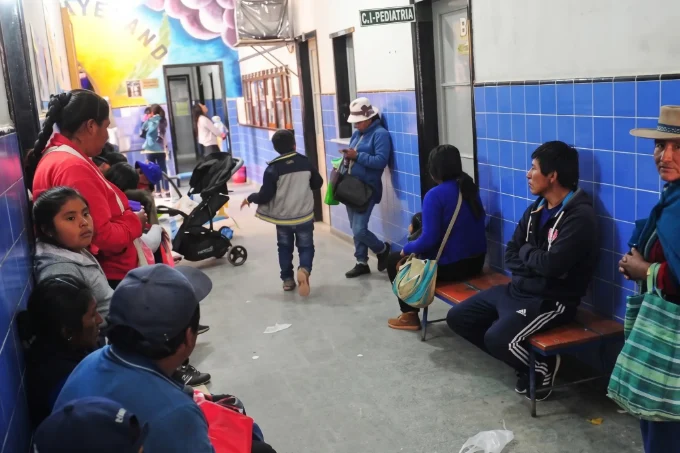
In February 2024, Salta became the first Argentine province to charge for medical care for non-resident foreigners. The measure was simple: charges apply, except in emergencies. The result, a year and a half later, is eloquent. At the San Vicente de Paul Hospital in Orán, the births of Bolivian women dropped by nearly 95%. From thirty to fifty per month to just three or four, almost always due to real emergencies. The same trend was repeated in other border hospitals. Demand collapsed. Beds were freed up. Appointments were shortened. The people of Salta became a priority in their own system again.

The thesis is clear: when open subsidies are eliminated, abuse is almost automatically reduced. There is no need to moralize. There is no need to appeal to xenophobia or abstract solidarity. It is enough to restore the basic principle that those who do not contribute cannot freely dispose of what others pay for. The incentive changes and behavior changes with it.

For years, it was argued that any limit was inhumane. “Health tours” were discussed as if they were a picturesque anecdote and not a systematic transfer of resources from Argentine taxpayers to those who crossed the border just to receive care. The tradition of welcoming foreigners was invoked while ignoring that this tradition was financed by the efforts of those who lived and worked on the Argentine side. The result was predictable: saturation, delays, and growing resentment among those who saw their hospital fill up with patients who shared neither taxes nor residency.


Salta did not invent anything new. It simply applied a logic that most countries in the world consider obvious. Emergencies are treated. Scheduled care is charged. Those who can pay, pay. Those who cannot seek alternatives or bear the cost. The difference is that here, for too long, generosity was confused with institutional irresponsibility. A one-time act of charity became a permanent and unlimited obligation.

The data from Orán shows something deeper than mere budget savings. It shows that people respond to prices. When the service stops being free, those who used it opportunistically stop coming. Only the true cases of need remain. And those cases, precisely because they are fewer, can be treated with greater quality and speed. Resources return to those who generate them.

There are those who still insist that charging is discriminatory. They forget that to discriminate, in this context, means to distinguish between those who belong to the contribution system and those who do not. That distinction is not hatred. It is basic administration. A country that cannot make this distinction ends up financing the well-being of others while its own citizens wait months for an appointment or travel hundreds of kilometers because the beds are occupied.

The experience in Salta does not solve all public health problems. But it does dismantle a dangerous fiction: the idea that institutional generosity has no costs and that those costs can be indefinitely borne by the same people as always. When the price is restored, abuse recedes. And what remains is a somewhat fairer system for those who truly sustain it.

In the end, the question is not whether we are generous. The question is whether we are willing to continue pretending that solidarity can be infinite when resources are, by definition, limited.


La Derecha Diario logo
TwitterInstagramYouTubeTikTokFacebook
Derecha Diario TV

Nosotros

  • Quienes Somos
  • Autores
  • Donar

Privacidad

  • Protección de datos
  • Canales
  • Sitemap
  • RSS

Contacto

  • info@derechadiario.com.ar
PUBLICIDAD

Related news

River would be negotiating with Independiente Rivadavia a possible loan exit for Maximiliano Salas

River would be negotiating with Independiente Rivadavia a possible loan exit for Maximiliano Salas

LIVE | Press conference of presidential spokesperson Adrián Ravier

LIVE | Press conference of presidential spokesperson Adrián Ravier

What is the European giant that has set its sights on the goalkeeper of the Argentine National Team, Emiliano "Dibu" Martínez

What is the European giant that has set its sights on the goalkeeper of the Argentine National Team, Emiliano "Dibu" Martínez

Who was Duilio Cabré, the brother of Nicolás Cabré who died at the age of 47

Who was Duilio Cabré, the brother of Nicolás Cabré who died at the age of 47

Flor Vigna took Nicolás Cabré down with a cutting remark: “He was terrible and unbearable”

Flor Vigna took Nicolás Cabré down with a cutting remark: “He was terrible and unbearable”

Georgieva will visit Vaca Muerta with Caputo to learn about Argentina's energy engine

Georgieva will visit Vaca Muerta with Caputo to learn about Argentina's energy engine