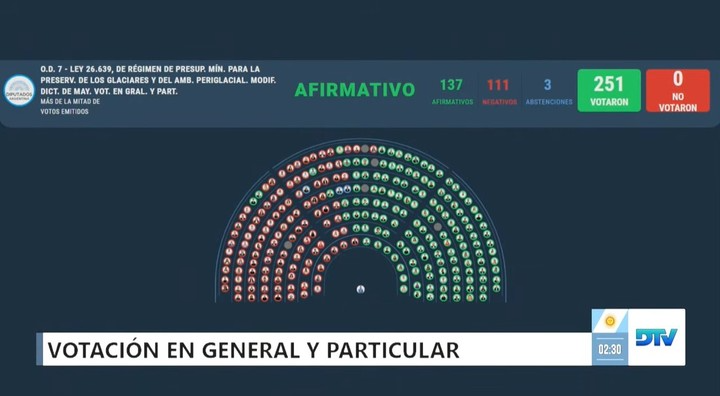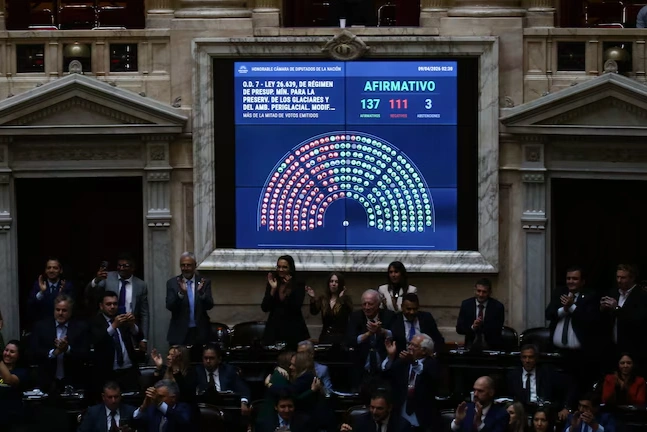











The Chamber of Deputies approved the reform of the Glacier Law with 137 votes in favor, 111 against and 3 abstentions, in a key vote for the country's productive direction. The initiative, promoted by the Government of Javier Milei and backed by the governors of mining provinces, updates regulations in force since 2010 that for years generated legal obstacles and uncertainty for the
development of strategic investments.The law redefines which areas should be protected under specific technical criteria, limiting the category to those glaciers and periglacial zones that perform an effective water function. In this way, the ambiguity of the past law, which had indiscriminately extended restrictions, is abandoned, even in territories with no real impact on
the water system.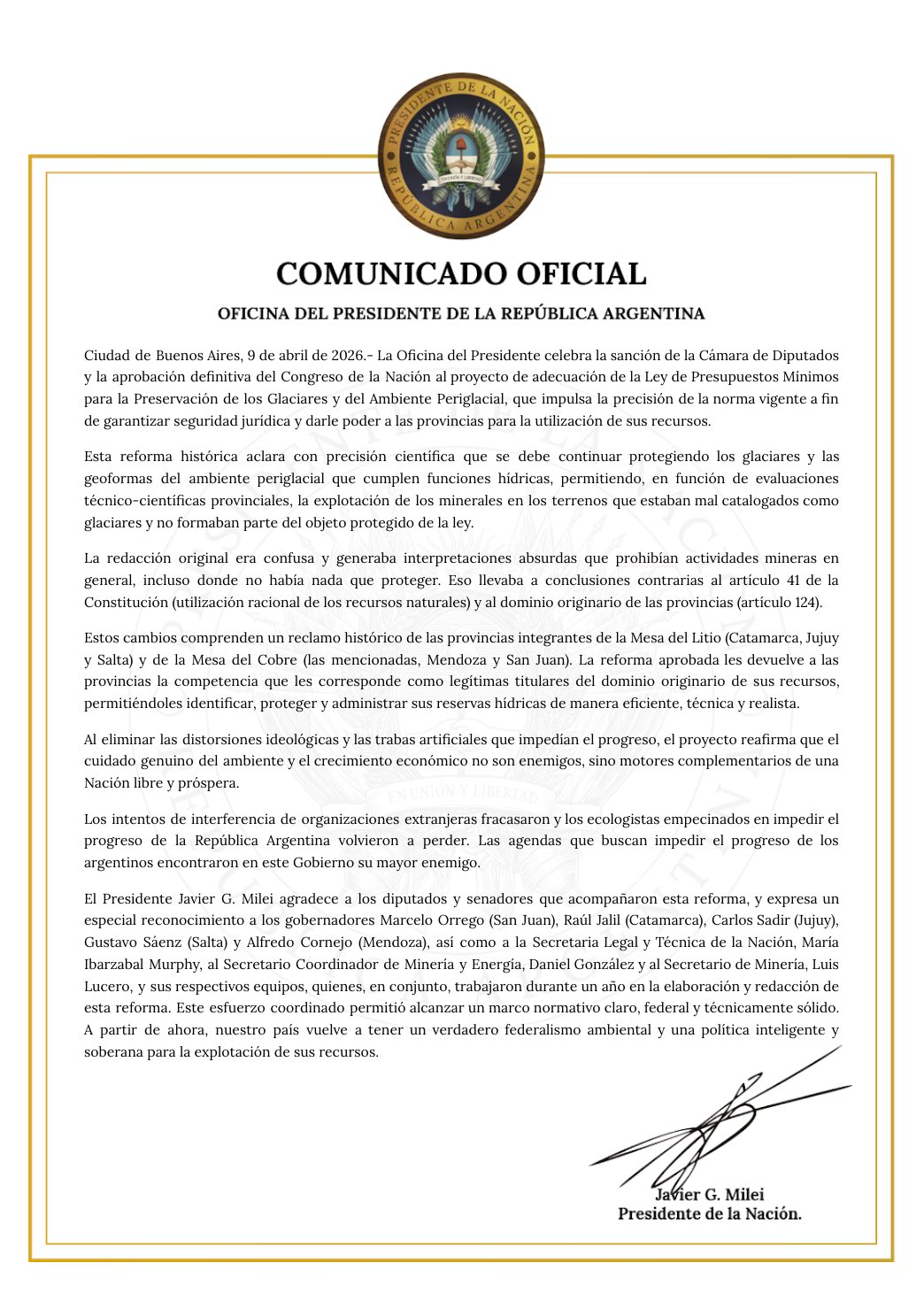
One of the main axes of the reform is the strengthening of federalism. Based on the new regulations, the provinces —constitutional owners of natural resources—will be responsible for determining, based on technical-scientific studies, which areas should be protected and which can be used for productive activities.
Within this framework, the possibility of carrying out mining and hydrocarbon activities in periglacial zones that do not function as testable water regulators is enabled. However, the law maintains strict restrictions in areas identified as sensitive, where the exploitation, pollution and installation of industrial infrastructure continue to be prohibited