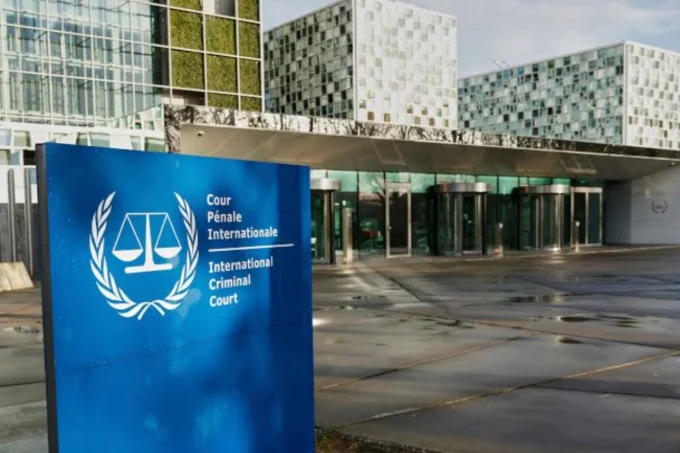

The institutions that are most difficult to question are those that present themselves cloaked in an indisputable moral purpose. No one wants to defend war criminals, genocides, or torturers. Precisely for this reason, it is wise to be wary when a just cause begins to be used to justify increasingly broad powers. The nobler the mission that an institution claims, the more necessary it is to ask who controls the means it employs to fulfill it.
The discussion resurfaced this week in Panama. Pete Hegseth urged members of the Coalition of the Americas against the Cartels to abandon the International Criminal Court. This proposal is part of a broader offensive by the Trump administration against a permanent court that currently includes 125 member states and can investigate some of the most serious crimes under international law.
But reducing the debate to Trump versus the ICC would miss what is truly interesting. The fundamental question is whether concentrating more and more capacity to judge and punish in an international institution necessarily improves justice or simply creates a more distant coercive monopoly.
There is a deeply rooted presumption that global problems require global authorities. If a crime transcends borders, it is concluded that the body responsible for pursuing it must also do so. The reasoning seems intuitive, but it contains a logical leap. That certain crimes require international cooperation does not prove that this cooperation needs to culminate in a permanent structure with an increasing claim to jurisdiction.
Cooperating is not the same as centralizing. People, companies, and institutions cooperate daily without handing over to a single organization the exclusive power to resolve all their disputes. There are contracts, arbitrations, agreements between parties, and multiple mechanisms capable of coordinating behaviors without turning every complex problem into a new central bureaucracy.
Justice also does not escape the problem of knowledge. A distant court must reconstruct facts that occurred in different societies, interpret complex chains of command, and determine individual responsibilities based on inevitably incomplete information. No judge possesses omniscient knowledge. When institutional competition and effective mechanisms to correct errors also disappear, a mistake ceases to be merely a judicial ruling and can become permanent policy.