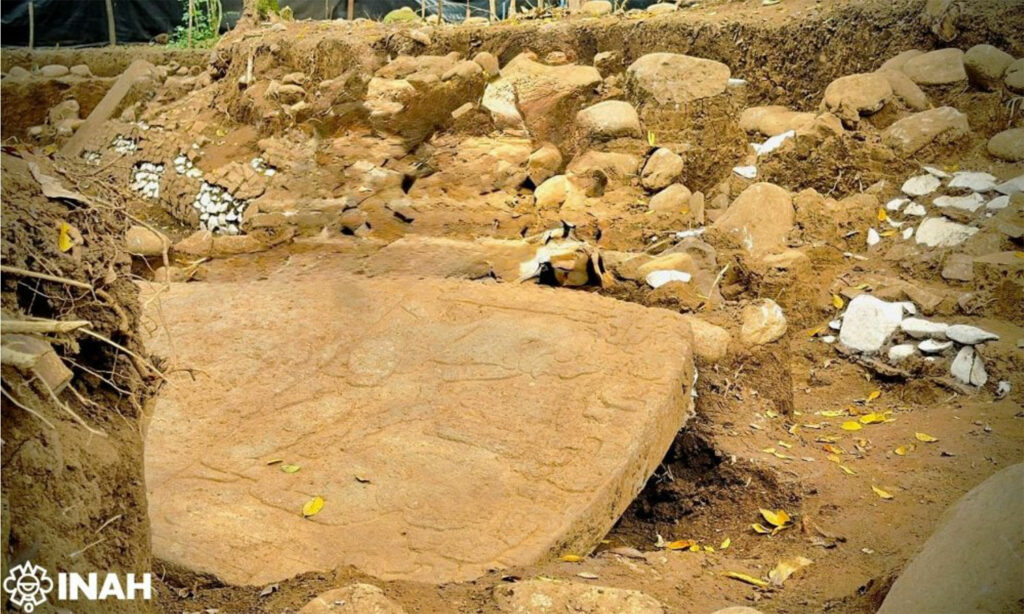

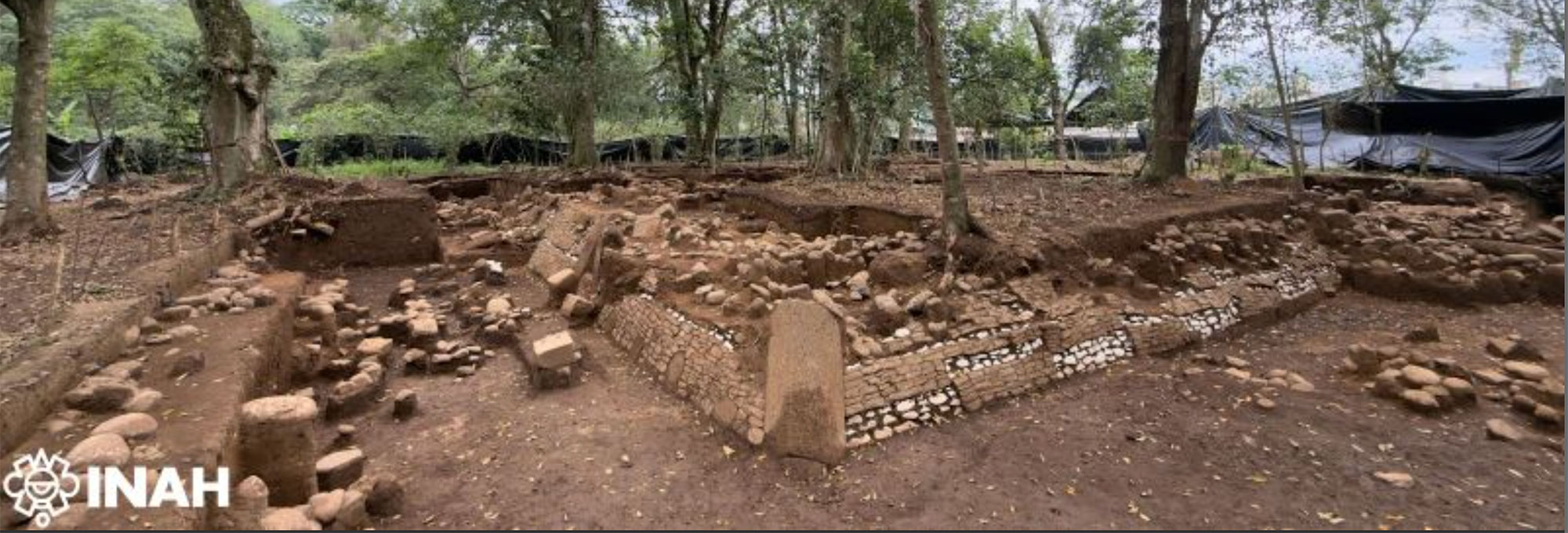
At the archaeological site of Campo Viejo, located in the state of Veracruz, a team of researchers from the National Institute of Anthropology and History (INAH) found a circular stone platform and a monolith with possible Maya influences. The finding, corresponding to the Early Classic period, between the years 200 and 600 A.D., provides new data about the cultures that inhabited eastern Mexico.
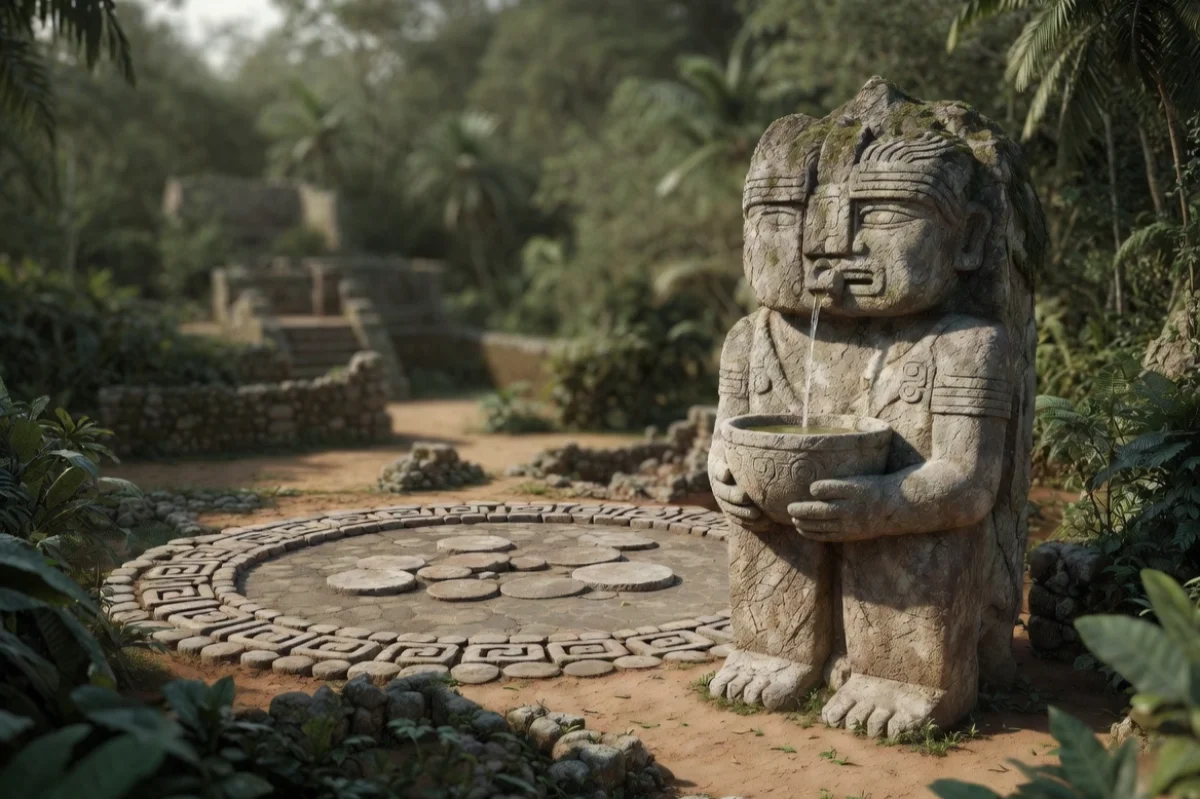
The platform is constructed with stones arranged in a circular shape and decorated with lines or square figures. According to specialists, there are currently no direct correlations with other ancient sites in the region, making this discovery unique and relevant for understanding the construction practices of the time.
The monolith, which exceeds two meters in height, features engravings of two characters. One of them shows Maya traits. The figures appear to be receiving a liquid from a deity, possibly water, in a context that archaeologists link to periods of drought.
Interpretations of the Findings
“They have a container and are receiving something, we think it is a liquid,” explained Lino Espinoza García from INAH. This representation may have been carved at a time when the community faced water scarcity, highlighting the importance of the resource in ancient beliefs.
The researchers point out that the two individuals, one with Maya characteristics, receive a divine liquid, perhaps water, from a deity. This scene reinforces the idea of rituals associated with water and fertility in the Mesoamerican context.