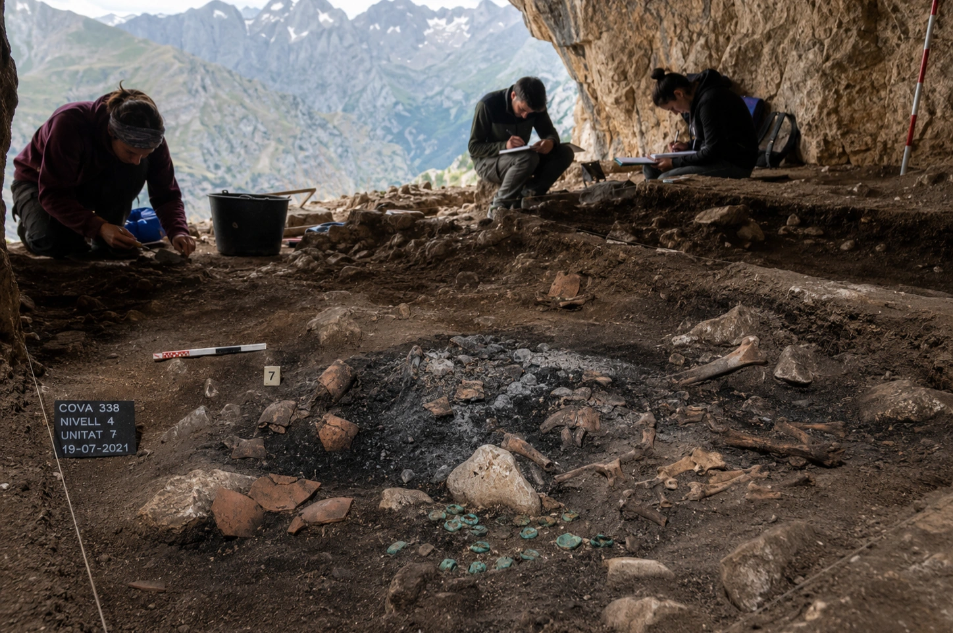
An international team of researchers, led by specialists from the Autonomous University of Barcelona (UAB) and the Catalan Institute of Human Paleoecology and Social Evolution (IPHES-CERCA), discovered evidence of human occupation in Cova 338, a cavity located more than 7,000 feet high in the Pyrenees.
The findings include homes, animal bones, ceramics and fragments of a green mineral identified as malachite, indicating that the place was visited on a recurring basis for thousands of years.
For the first time in the Pyrenees, prehistoric high mountain occupations are being documented with significant intensity, according to the scientists.
Complex activities at height
Carlos Tornero, a researcher at the UAB and IPHES-CERCA, explained that people returned to the site over and over again between 7,000 and 3,000 years ago. The green minerals seem to have been taken to the cave for processing, which shows a direct exploitation of local resources.
In addition to the remains of everyday use, two pendants were found: one made with a seashell and the other with a brown bear's tooth. These objects suggest symbolic or ornamental practices on the part of the groups that occupied the
cave.
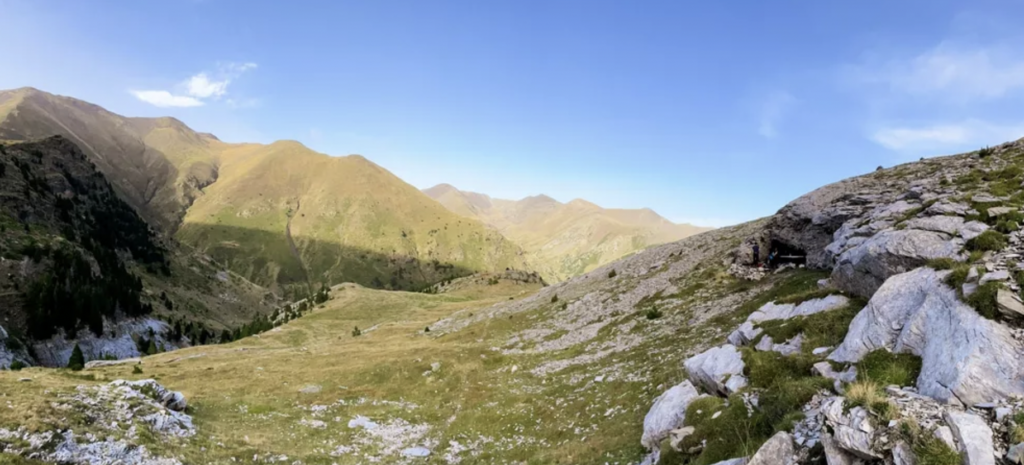
“For a long time, these spaces were thought to be marginal. What we document here is a recurring occupation, with complex activities and a clear use of mineral resources,”
Tornero said.
Importance of the finding
The discovery changes the traditional view of the use of high mountain environments in the prehistory of the region. Until now, there has been no such clear evidence of an intense and repeated human presence at these altitudes in the
Pyrenees.
The researchers highlight that the site reveals not only livelihood activities, such as animal processing, but also a deeper link with the environment through the obtaining and working of minerals.
This type of occupation demonstrates that prehistoric groups had the capacity and interest to exploit areas that were difficult to access, integrating them into their mobility and economic patterns.
Context and next steps
The study is based on the analysis of materials recovered in Cova 338 and was published in the journal Frontiers in Environmental Archaeology. Specialists continue to research to better understand the dynamics of these ancient inhabitants in mountainous environments
.
The finding provides new data on how prehistoric humans adapted and used different landscapes in the Iberian Peninsula, expanding knowledge about their mobility and survival strategies thousands of years ago.
With these types of discoveries, archaeologists can more precisely reconstruct the way in which mountain territories, which were previously considered to be of little relevance to ancient societies, were populated and exploited.