

A hiker found near Austrått a rare piece that adorned the sheath of a ceremonial weapon of a ruler from that era, with animal details crafted by expert goldsmiths.
Nuevo
Agregar La Derecha Diario en
Compartir:
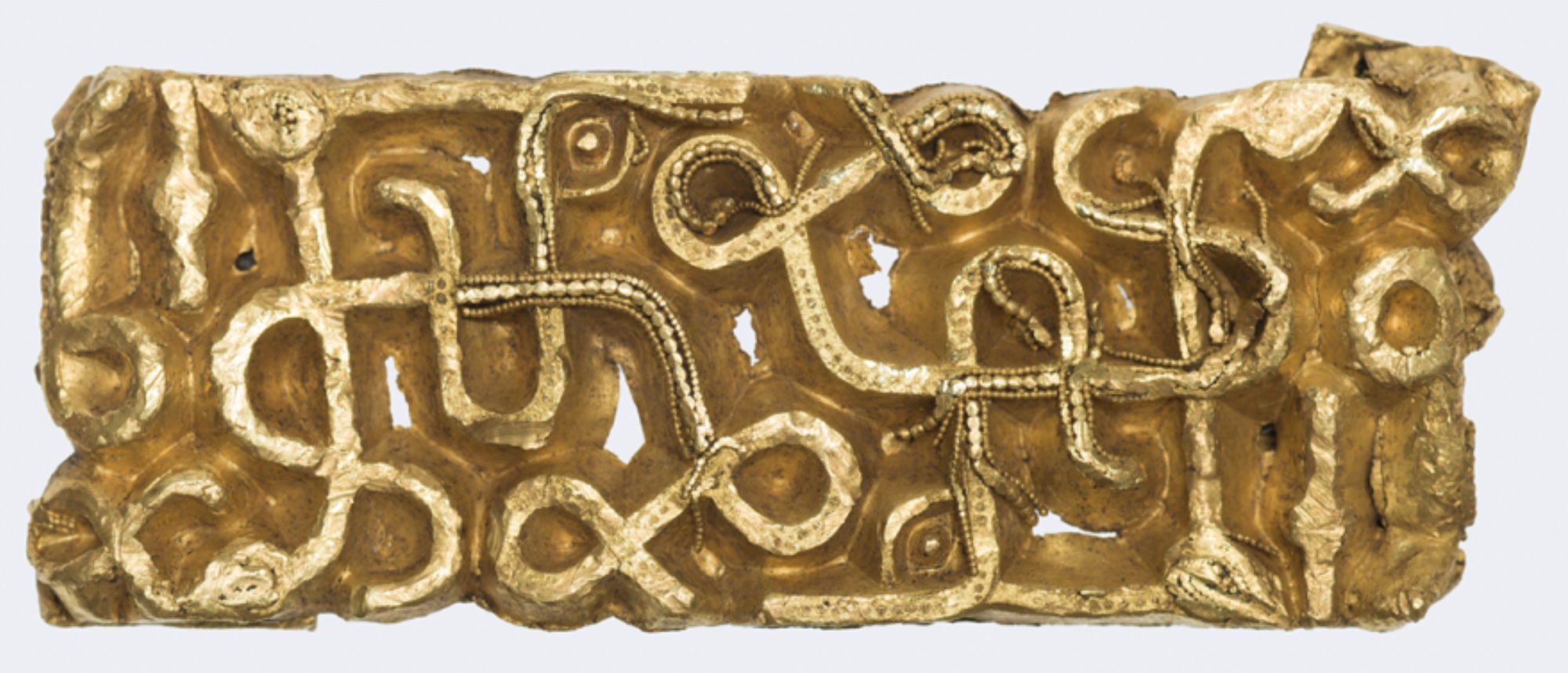
A hiker discovered a piece of gold of great historical value in southern Norway that dates back to the first half of the 6th century. The find occurred near Austrått, in the southwestern part of the country, and it is an accessory for a sword sheath or ceremonial scabbard.
The piece is made of fine twisted gold threads that create bright and striking patterns. According to specialists, this type of technique places it among the best works of goldsmithing of its time, crafted by highly skilled artisans.
The motifs represent stylized animals, with two heads facing each other in profile. One is located at the top edge and the other, inverted, at the bottom, creating a symmetrical and dynamic design typical of that era.
Experts believe that the object, which shows significant wear from use, belonged to the ceremonial sheath of a regional ruler. Its quality and the materials used indicate that it was part of a high-status burial outfit.
The Importance of the Discovery
Archaeologist Siv Kristoffersen, who retired from the Archaeology Museum of the University of Stavanger, highlighted the excellence of the piece. “This places the object among the best works of the period, created by highly qualified goldsmiths,” she noted.
She added that these patterns with animals were common in the goldsmithing of the time and served to convey symbolism and power. In this particular case, the facing heads reinforce that idea of duality and strength.
The find provides new information about the elites of southern Norway during the transition between Late Antiquity and the early Viking Age. Although the region was already known for other remains, this piece highlights the artisanal sophistication and cultural exchange of the time.
Archaeological authorities are already analyzing the context of the site to better understand how the ornament ended up there and what else it may reveal about customs and power in that area fifteen hundred years ago.
These types of objects not only served as decoration but also symbolized authority and prestige. Their presence in a ceremonial sheath suggests that it belonged to someone of high rank, possibly a local leader with influence in the region.
The technique of twisted gold threads demonstrates an impressive mastery of metallurgy, capable of generating luminous effects and textures that still impress today.