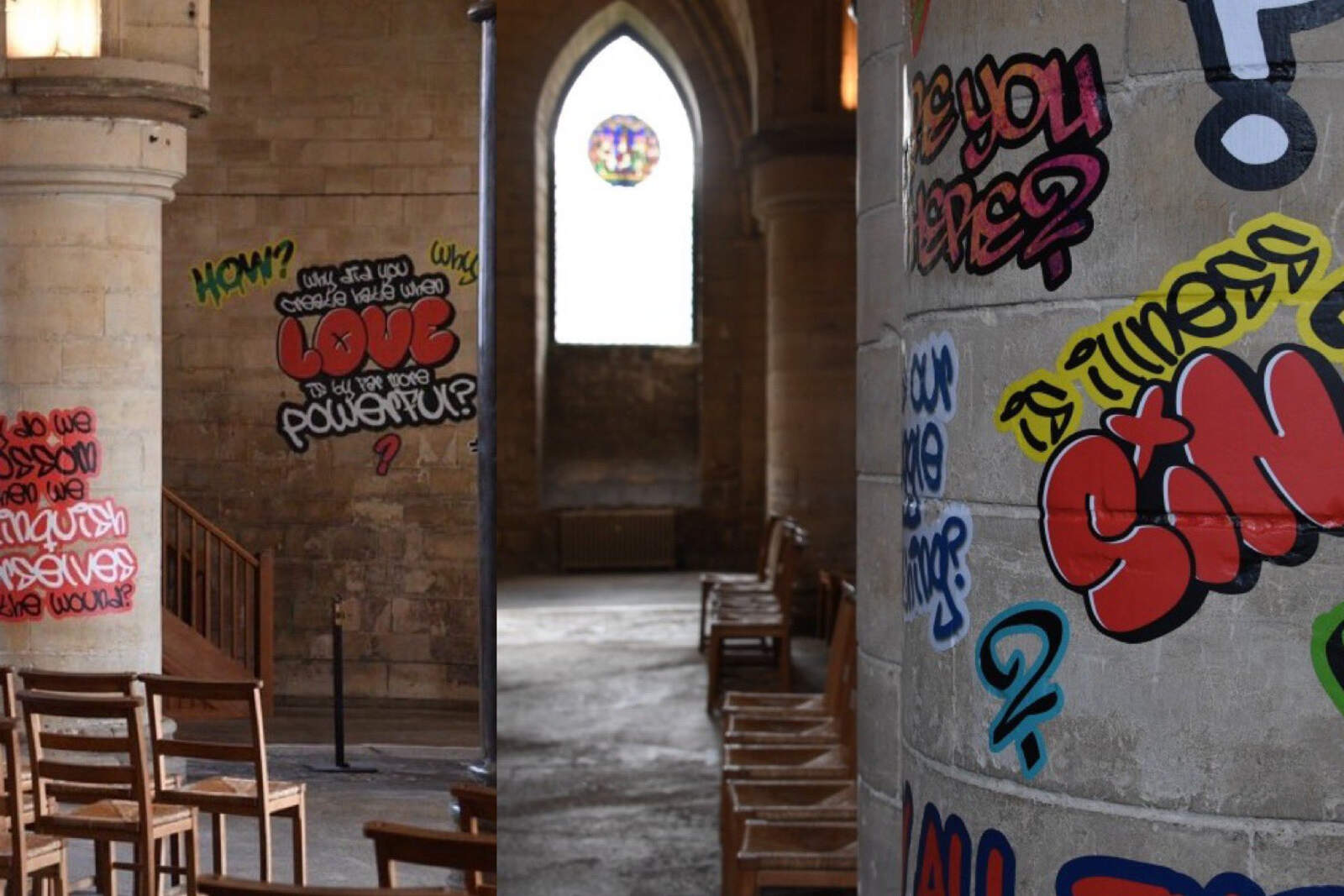
Canterbury, a symbol of Christianity worldwide, has been targeted with political messages and LGBTQ+ slogans
Nuevo
Agregar La Derecha Diario en
Compartir:
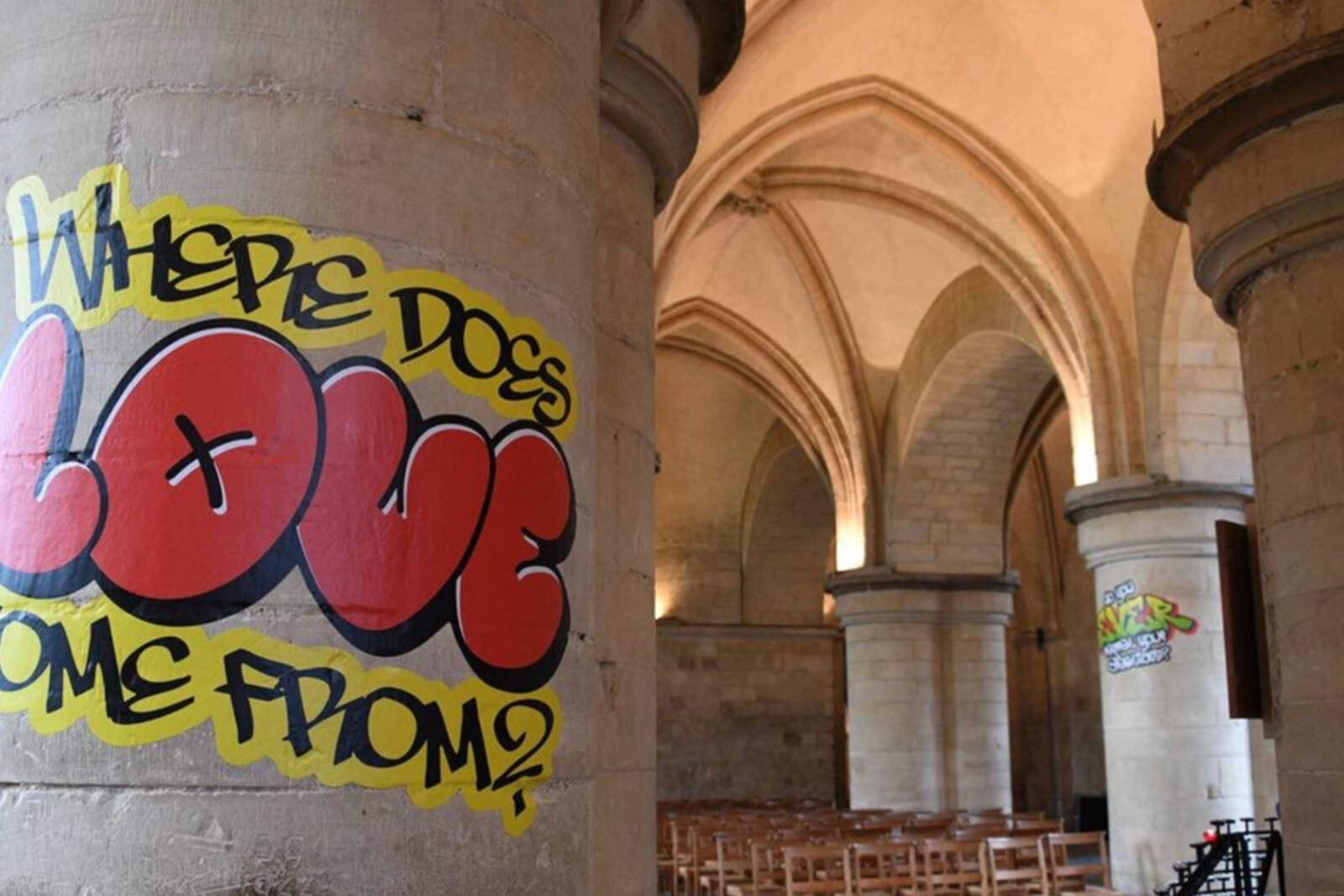
Canterbury Cathedral, founded in 597 AD and considered the oldest temple in England, fell victim to an intervention authorized by the Church of England. Its walls and columns were covered with graffiti-style messages as part of an "exhibit" organized by trans activists, under the idea of "reflecting marginalized communities."
The temple was covered with slogans consisting of questions to God, ranging from existential reflections to political demands. The choice to "scribble" or "mark" the surfaces of the historic cathedral quickly ignited outrage among believers and defenders of the world's historical and cultural heritage.
Interior de Canterbury
The Dean of Canterbury, David Monteith, defended the initiative. He acknowledged its "disruptive" nature, argued that it is temporary, and assured that "it will not leave marks" on the historic stone. "Instead of being distracted by the aesthetics of the graffiti, I hope people will want to reflect deeply on the questions raised by the works," he declared. In his view, bringing those slogans to the heart of worship "should not be understood as sacrilege," while the use of graffiti was decided to amplify the impact.
On social media, thousands of users described the decision as a symbolic desecration of Christian heritage. The Vice President of the United States, JD Vance, questioned whether "honoring the marginalized by making a historic building ugly" is appropriate. Elon Musk was more blunt: "Whoever approved this atrocity should be fired immediately."
Comparing medieval devotional graffiti, inscribed centuries ago, with contemporary vandalism is an unjustified leap: the former is heritage; the latter, a trivialization of the history and faith of millions. What was presented as "inclusion" in practice appears to be a desecration of a central symbol of Christianity and Western civilization.
Alex Vellis, creador de la intervención.
Alex Vellis, the LGBTQ+ activist behind the organization of the event, defines himself as antifascist, vegan, and "queer". With a controversial history of political activism, including demands for early education in gender ideology for infants, he celebrated having provoked the indignation of Vice President Vance.
In the name of a misunderstood "diversity," the Church of England endorsed an intervention that offends faith, degrades heritage, and confuses art with activism. What fell in Canterbury was not its heritage, but the moral authority of those who were supposed to safeguard it.