Employees claimed non-existent faults in the machines.



After acquiring a mill on the brink of bankruptcy to preserve jobs, the businessman reported that some staff obstructed production and caused millions in losses during the first months of management





Employees claimed non-existent faults in the machines.
In an Argentina that for decades of Kirchnerism rewarded the litigation industry and litigation speculation over productive investment, the case of the mill emerges as a stark reminder of why the labor reform and the paradigm shift driven by the government of Javier Milei are the only paths to freedom. The story, recently revealed by a businessman in a streaming channel interview, highlights the cultural resistance to genuine progress.
The protagonist is Gabriel Fernández, owner of the firm AFG Ingeniería, who in 2016 made the impulsive decision to try to change the history of his hometown, Irigoyen, in the province of Santa Fe. Warned by his relatives that the local mill, Alimento Irigoyen, was in the process of going bankrupt, Fernández understood the gravity of the situation: “If the town's mill goes bankrupt, the town is finished”.
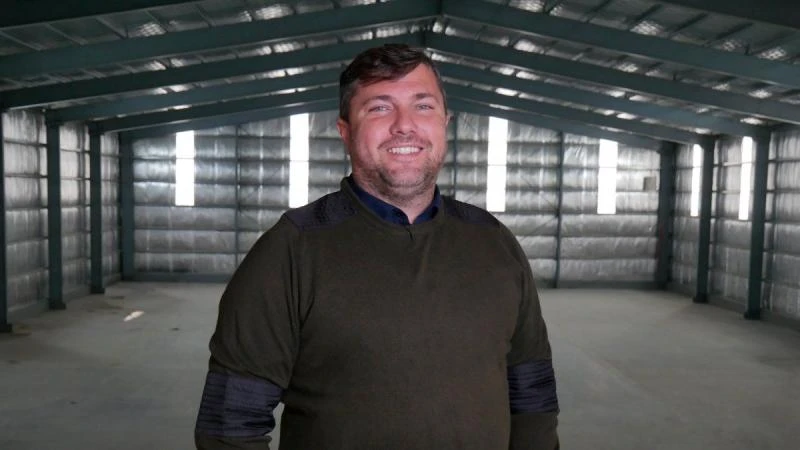
What began as an act of business patriotism soon encountered the barrier of union vices and the lack of a work culture. After acquiring the mill from a cooperative in just 30 days, the businessman took on a liability of approximately $300,000. While half of the population celebrated the rescue of the job source, the other half —composed of the employees themselves— received the news with hostility.
The conflict lay in the fact that the workers, some with 20 or 30 years of seniority, were not seeking job stability, but rather severance pay. As Fernández recounts on the streaming channel, the employees already had plans for that money that had nothing to do with economic growth: “Each one had their story: one was going to buy a horse, the other was going to buy a greyhound... they didn’t want the mill to be bought, they wanted to collect their severance pay”.
Under the new management, a system of indicators, screens, and productivity in the automotive style was implemented, managing to increase production from 14,000 to 25,000 bags daily. However, this increase in efficiency was met with systematic sabotage:
They deliberately omitted the use of additives necessary for the strength of the flour, damaging the final product.
A massive commercial fraud was generated by selling flour to individuals who provided stolen or insufficient funds checks, taking advantage of the owner's initial ignorance of the industry.

As a direct consequence of this behavior, the company suffered a loss of half a million dollars ($500,000) in just six months. Faced with the crisis, Fernández confronted the 14 or 16 workers, even breaking a board with a shovel in a moment of desperation: “It wasn’t that the mill wasn’t working, the people who were working didn’t want it to function”.
Finally, after threatening with a definitive closure and liquidation of the asset, the labor sector yielded and a "line was drawn" to start anew under mutual agreement and productive discipline. Today the mill operates in a competitive market, but the lesson for Argentina is clear: without a legal security that protects the investor from labor extortion, progress will continue to be held hostage by private interests.



