Meanwhile, the university union movement seeks to put pressure to reverse the presidential measure. Jorge Anró, deputy secretary of Fatun, stated:"On Wednesday, the deputies have the opportunity to make history with the enormous responsibility of guaranteeing a quality public university".
He criticized the Executive's announcements: "This week's announcement by the President about the increase in the budget for universities is nothing more than another staging by this Government, without any real substance. Practically, the budget for 2026 is the same as for 2025, a year in which we lived in danger".
Marcha Federal Universitaria convocada por gremios docentes, estudiantiles y agrupaciones políticas opositoras..
The ruling party rejects these arguments, considering them part of a political strategy aimed at blocking the deficit adjustment plan. According to parliamentary sources, the opposition is seeking to force the approval of laws that increase structural spending, without genuine funding, with the aim of undermining the Government ahead of the elections.
In contrast, the Executive insists that the fiscal course is non-negotiable and that the priority is to "preserve the country's economic stability in the face of initiatives that, under social slogans, actually seek to reinstate the deficit and break the Argentine State".
The march will take place in parallel with the legislative debate, in a context of maximum political tension. While opposition groups hope that street pressure will influence the vote, the ruling party seeks to uphold the presidential vetoes as part of its central fiscal discipline strategy.
The Congress's decision will mark a turning point in the standoff between Casa Rosada and the opposition, which is promoting initiatives that, according to the Executive, represent"spending laws without financial backing and an attempt to change the economic course".
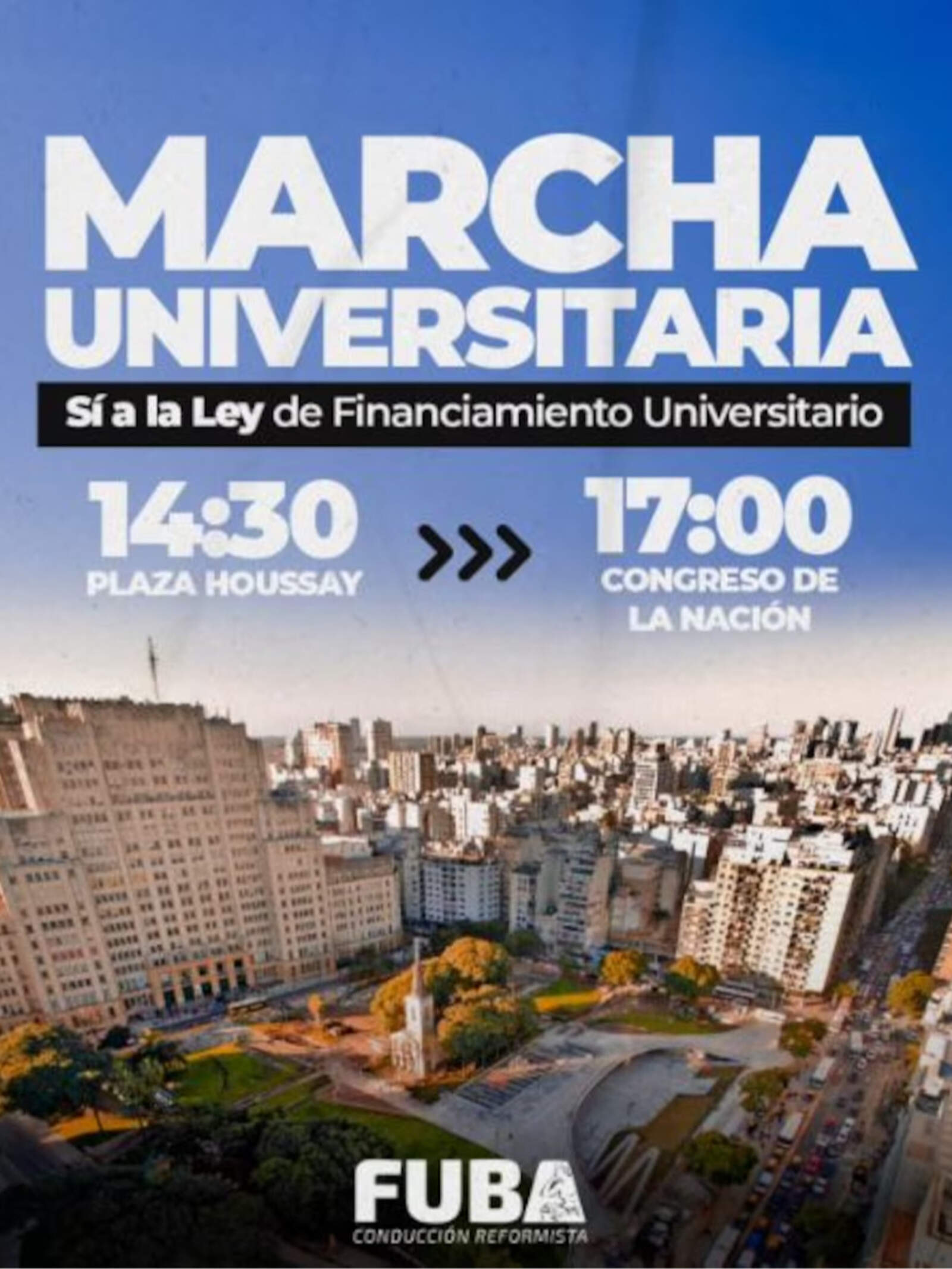
The City of Buenos Aires will be the stage this Wednesday for a new Federal University Marchcalled by teachers' unions, student groups, and opposition political organizations. The protest coincides with the session in the Chamber of Deputies where the insistence on the laws vetoed by President Javier Milei regarding university funding and pediatric emergency is being debated.
The ruling party keeps that these regulations are unfeasible, since they require expenditures not included in the budget and lack funding sources, in contradiction with Article 38 of Law 24.156 on Financial Administration.
Under the slogan"Our future can't be vetoed", the organizers began activities on Tuesday night with a blackoutin several educational institutions. Since noon, different groups have started gathering at various points in the City to converge at 6:00 p.m. in Plaza del Congreso, where a central event is planned with speeches from university, union, and social leaders.
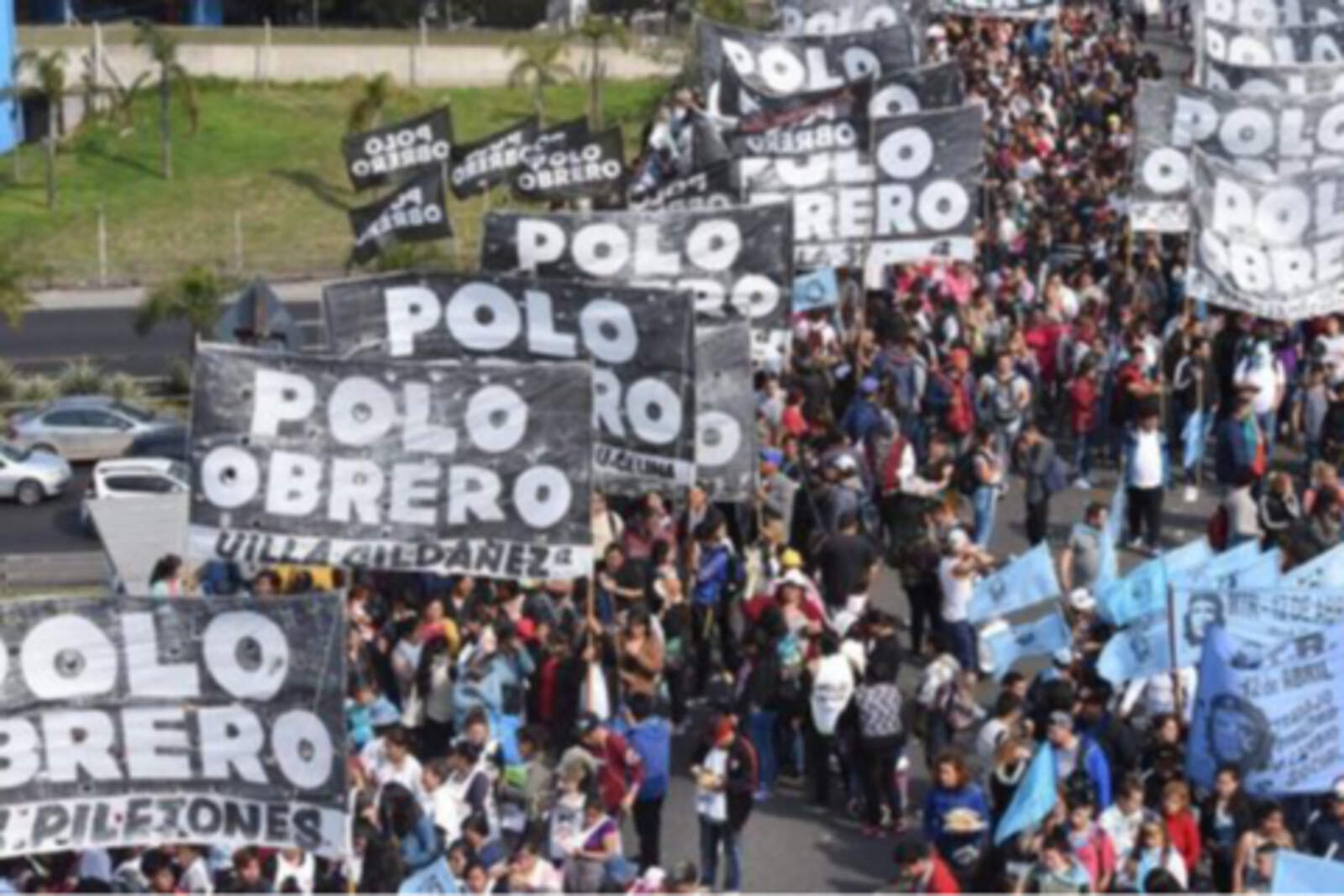
Entre los presentes estara el Polo Obrero (PO).
The protest brings together student and union sectors along with piquetero organizations and left-wing parties. Among those present are confirmed the Asociación Trabajadores del Estado(ATE), the Asociación de Abogadas y Abogados de Buenos Aires(AABA), workers from Hospital Garrahan, the Polo Obrero(PO), the Movimiento Socialista de los Trabajadores (MST), and the Unión de Trabajadores de la Economía Popular(UTEP). In addition, non-teaching university unions are participating under the slogan of guaranteeing additional resources.
The mobilization coincides with the legislative consideration of the vetoes sent by the Executive Branch. The Government argues that the regulations promoted by the opposition represent a setback in fiscal matters: they require committing resources without defining their origin, which would increase the public deficit and put the ongoing stabilization program at risk.
In this regard, Casa Rosada emphasizedthat the recently announced increase in allocations for hospitals and universities seeks to respond in a targeted manner to social demands, but within a framework of budgetary balance.