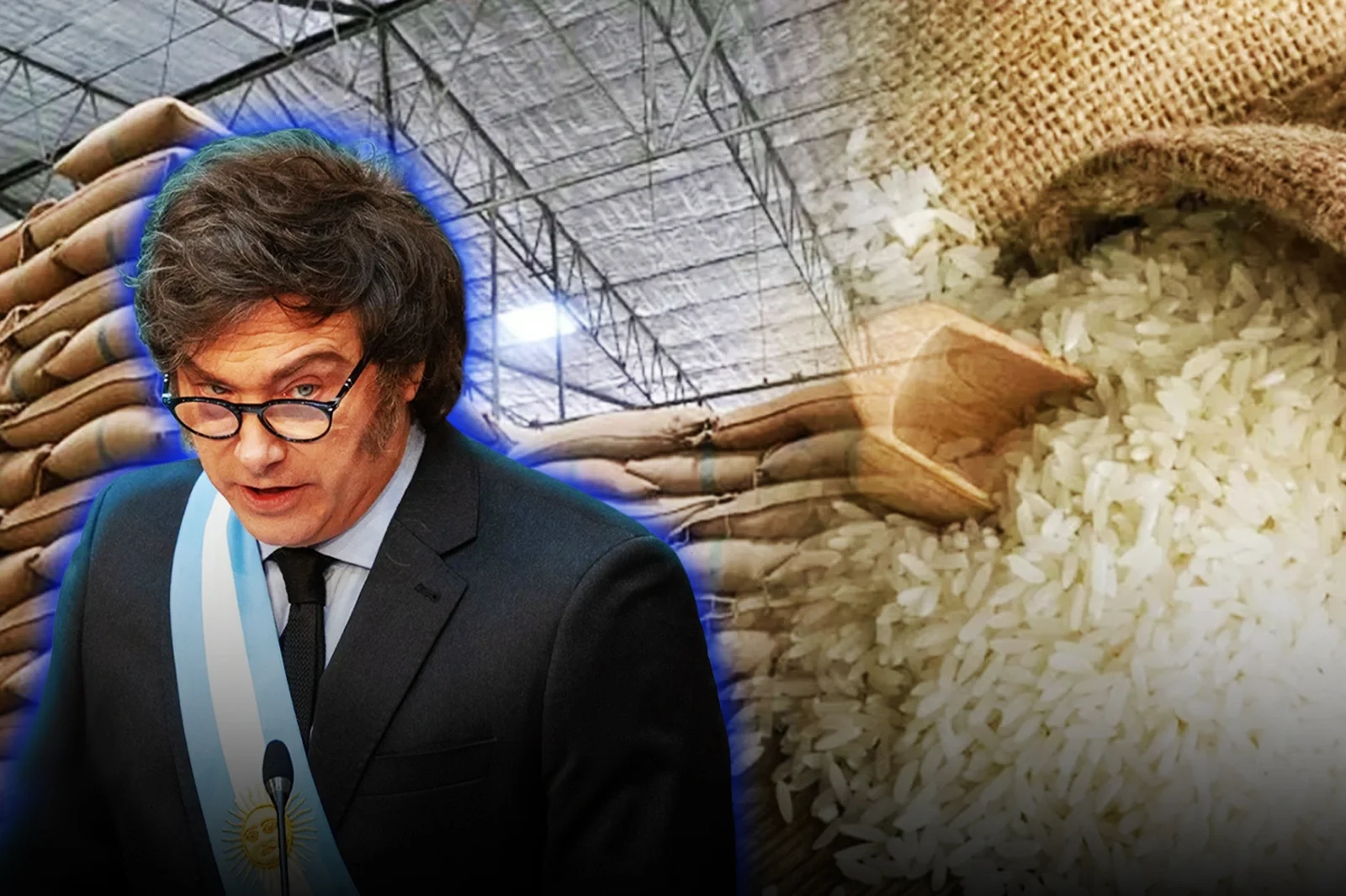

At last the State stops treating you as guilty

At last the State stops treating you as guilty
At last, the State stops treating you as guilty
porEditorial Team
Argentina

A new brake on the inquisitorial State

Compartir:

For years, Kirchnerism built a perfect machinery of expulsion and punishment. It was not a mistake or an unintended consequence: it was a deliberate system that combined tax pressure, chronic inflation, currency controls, and arbitrary regulations to suffocate those who produced. First, they impoverished millions of Argentines through confiscatory taxes and a monetary policy that diluted their effort. Then, when those same citizens tried to protect the little they had managed to save, they were treated as permanent suspects. That was the logic of the old regime: they impoverish you and then they persecute you for trying not to sink with them.

The so-called "Fiscal Innocence Law" marks a deep break with that culture of structural suspicion. It is not simply a technical tax amnesty or an accounting device designed to improve short-term indicators. It is, above all, a change of philosophy that redefines the relationship between the individual and power. Where there once ruled the implicit presumption of guilt—the idea that every citizen had to justify every economic decision before the State—there is now a limit drawn on persecutory power. The State can no longer dig endlessly into your past or treat your savings as if they were assets under its guardianship. The rule becomes clear again: the fruit of your work doesn't belong to politicians. And that, in Argentina's inquisitorial statism, is a transformation of enormous scope.

For two decades, progressivism consolidated a State that operated as a forced partner in every Argentine's life. If you worked, it squeezed you through an increasing tax burden. If you invested, it punished you with legal uncertainty and regulatory costs. If you decided to save in a currency other than the peso to protect yourself from the inflation that the State itself caused, you were branded as an enemy of the "model". The message was brutal and consistent: your property was not truly yours, it was the State's, and you could use it only as long as power tolerated it.

That paradigm is beginning, slowly, to crack. Indiscriminate retroactive reviews are eliminated and a concrete limit is set on persecution of the past. The State stops behaving like an omnipresent auditor of private life and abandons the obsession with scrutinizing assets, personal consumption, or every bank movement as if they were, by definition, indications of a crime. It is not a gesture of state generosity or a political concession: it is a retreat of power from a sphere that should never have been invaded.

The contrast with Kirchnerism is striking. For years, the idea was defended that AFIP had to function as a tool of political and social discipline. Selective inspections, arbitrary fines, and criminal cases over minor amounts were not system anomalies: they were part of its operating logic. The taxpayer was treated as potential prey, while the bureaucracy erected itself as the hunter with discretionary power. The unwritten slogan was simple and effective: whoever doesn't submit, pays.

Fiscal Innocence doesn't eliminate the underlying problem—the very existence of a tax system based on coercion—, but it does reduce its intensity and limit its most obvious abuses. By restricting retroactive punitive power, expanding exemptions, and narrowing administrative arbitrariness, the margin of state intervention in individuals' economic lives is reduced. In concrete terms, it means shrinking the space of institutionalized aggression. And every inch by which political power retreats is, in itself, a moral victory in defense of private property.

The reaction of the left is not surprising. Its political project needs an omnipresent State, with the capacity to monitor, intervene, and punish. Without that tool, the framework of so-called "social justice," understood in practice as a mechanism of forced redistribution, is weakened. That's why any attempt to limit fiscal power is presented as a threat, not to the State, but to a model that structurally depends on its expansion.

However, something deeper is changing. Argentine society is beginning to understand that economic freedom is not a privilege of a few, but a basic condition of dignity. It is beginning to understand that saving is not a crime, but a legitimate expression of foresight. It is beginning to understand that investing is not a betrayal, but the engine of growth. It is beginning to understand that the fruit of work can't continue to be considered loot available to a political caste accustomed to living off others' effort.

The slogan that synthesizes this change is as simple as it is powerful: now what is yours is yours. Not because the State has decided to be benevolent. Not because it has chosen to "forgive." But because, for the first time in a long time, it is beginning to retreat. Every time the State retreats, freedom stops being an abstract promise and becomes a concrete reality.


Noticias relacionadas

A24 and Infobae: the only media that handed over those responsible for the Russian operation

A24 and Infobae: the only media that handed over those responsible for the Russian operation

The role of Realpolitik and Santiago Sautel in the Russian network against Milei

The role of Realpolitik and Santiago Sautel in the Russian network against Milei

Foreign Minister Pablo Quirno responded to the Russian embassy

Foreign Minister Pablo Quirno responded to the Russian embassy

Communist corruption in Sunca. Slow progress in the Attorney General's Office

Communist corruption in Sunca. Slow progress in the Attorney General's Office

The United States praised Argentina's role in the joint fight against drug trafficking

The United States praised Argentina's role in the joint fight against drug trafficking

Argentina thanked Bolivia for supporting the Falkland Islands cause before the United Kingdom

Argentina thanked Bolivia for supporting the Falkland Islands cause before the United Kingdom

La Derecha Diario logo
ESX logoInstagram logoYouTube logoTikTok logo
ARGENTINABOLIVIAECUADORISRAELMEXICOURUGUAYDERECHA DIARIO TV
  • ESXInstagramYouTubeTikTok
  • DERECHA DIARIO TV
  • Secciones
  • ARGENTINA
  • BOLIVIA
  • ECUADOR
  • ISRAEL
  • MEXICO
  • URUGUAY
  • Países
  • La Derecha Diario logoLA DERECHA DIARIO
  • La Derecha Diario México logoLA DERECHA DIARIO MÉXICO
  • La Derecha Diario Uruguay logoLA DERECHA DIARIO URUGUAY
  • La Derecha Diario Ecuador logoLA DERECHA DIARIO ECUADOR
  • La Derecha Diario Bolívia logoLA DERECHA DIARIO BOLÍVIA
  • La Derechadiario República Dominicana logoLA DERECHADIARIO REPÚBLICA DOMINICANA
  • La Derecha Diario Israel logoLA DERECHA DIARIO ISRAEL
  • La Derecha Diario Estados Unidos logoLA DERECHA DIARIO ESTADOS UNIDOS
  • Temas
  • GUERRA EN IRÁN
  • JUICIO POR YPF
  • El Diario
  • QUIENES SOMOS
  • AUTORES
  • PUBLICIDAD
  • DONAR
La Derecha Diario logo
TwitterInstagramYouTubeTikTok
Derecha Diario TV

Nosotros

  • Quienes Somos
  • Autores
  • Donar

Privacidad

  • Protección de datos
  • Canales
  • Sitemap

Contacto

  • info@derechadiario.com.ar
PUBLICIDAD