The United States recorded negative net migration in 2025 for the first time in at least five decades, according to a report published by the Brookings Institution. The figure reflects a deep change in the country's migration dynamics and marks the concrete impact of the tightening driven by the Trump administration. The president had promised during the campaign to put an end to mass immigration and regain control of the borders.
According to the study, net migration flow stood between –295,000 and –10,000 people during 2025. In addition, the authors anticipate that, given the continuity of the policies implemented, negative net migration could be repeated in 2026.
Donald Trump.
What negative net migration means
Net migration measures the difference between the people who enter a country and those who leave during a given period. The fact that this indicator is negative means that there were more departures—whether through deportations or voluntary departures—than arrivals of new immigrants.
In other words, during 2025 the United States received fewer immigrants than it allowed to leave, something that had not happened for more than half a century.
The study emphasizes that the negative balance was not due exclusively to expulsions, but to a structural change in migration policy. Among the central factors are:
The suspension of most of the "humanitarian programs" that Americans were paying for.
The reduction of temporary visas.
The tightening of border and internal migration control, which discouraged new entries.
This shift put an end to years of policies that operated as an incentive for irregular immigration and massive entry without effective controls.
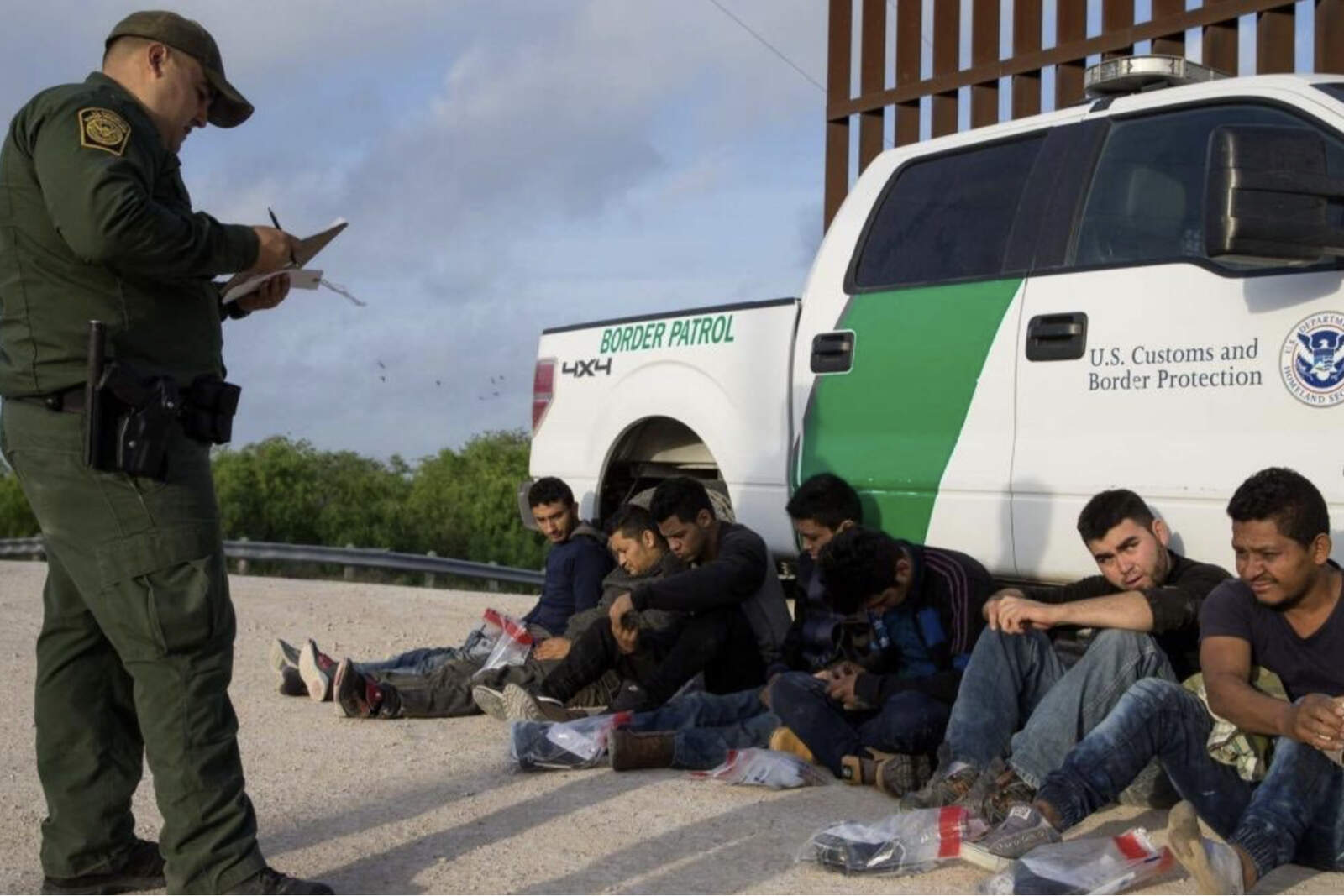
Las patrullas fronterizas de Estados Unidos vigilan la frontera con México para prevenir cruces ilegales
Deportations and internal control
According to the report, between 310,000 and 315,000 expulsions were recorded in 2025, a figure higher than that of the previous year. Unlike previous periods, most of these expulsions were initiated by U.S. Customs and Border Protection from within the country, reinforcing effective control over irregular stay.
The operational change reflects a more active policy by the state in enforcing migration law. In addition, it reflects the recovery of authority over its territory.
Agente de la Patrulla Fronteriza de Estados Unidos controla a un grupo de inmigrantes irregulares detenidos
More resources and continuity in 2026
The report also anticipates that the level of migration control will deepen in 2026, driven by the funding approved in the One Big Beautiful Bill Act. According to the analysis, this law will make it possible to expand infrastructure and personnel, consolidating a sustained enforcement framework.
The migration policy adopted in 2025 is aligned with the stated objective of Trumpism: to organize the system and reaffirm national sovereignty. Within that framework, it is possible to conclude that the migration shift was not circumstantial, but the direct result of a clear political decision.