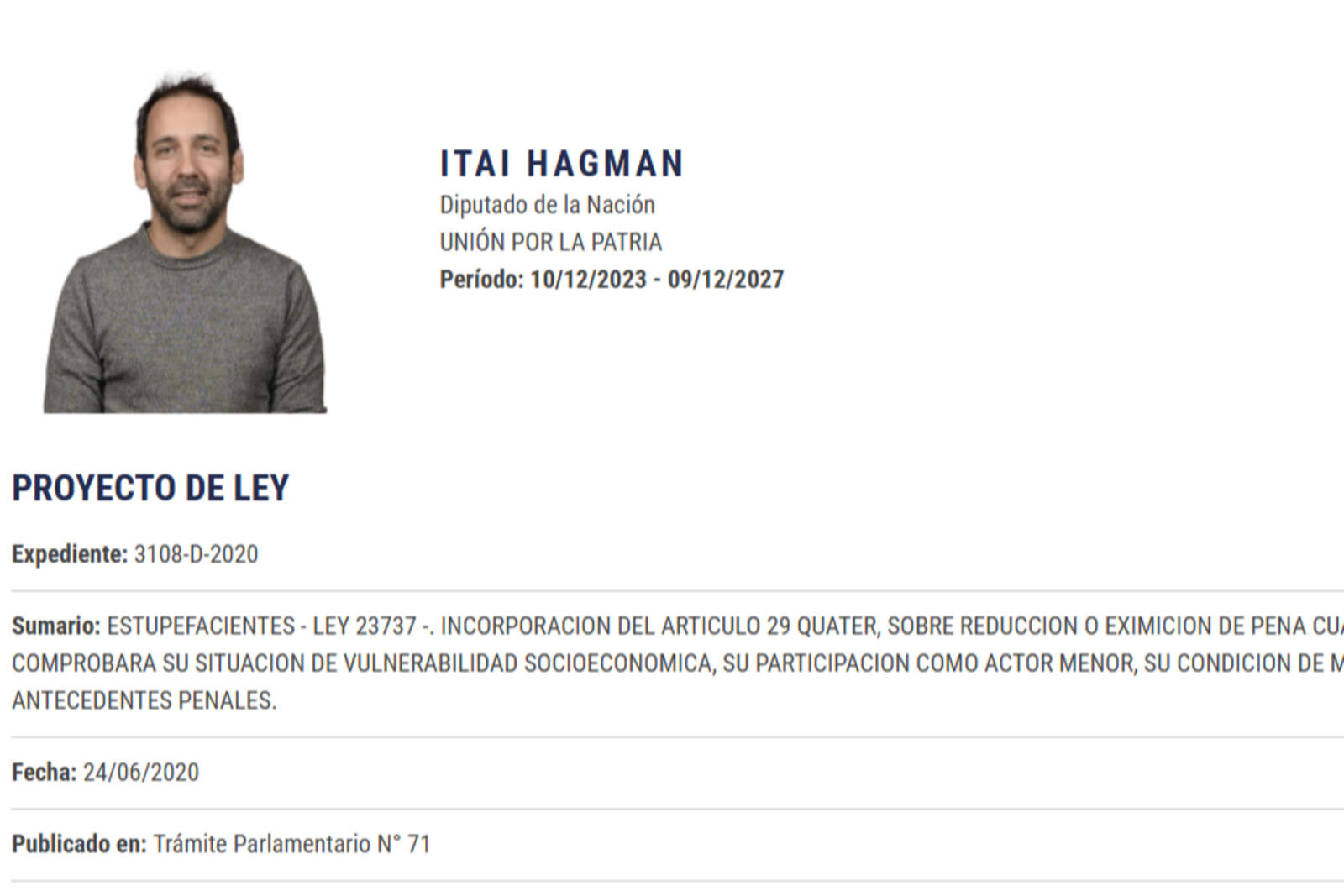
Kirchnerist deputy Itai Hagman, leader of Fuerza Patria and political ally of Juan Grabois, has submitted bill 3108-D-2020 to the Chamber of Deputies, which proposes to incorporate article 29 quater into Law 23.737 on Narcotics.
Proyecto de ley presentado por Hagman.
The text seeks to reduce or even exempt from punishment those who participate in drug dealing offenses if their "socioeconomic vulnerability" or their role as a "minor actor" is demonstrated. This is established without specifying very clearly what is meant by a "situation of vulnerability" nor the definition of "drug dealing".
In other words, if a criminal is engaged in selling drugs but claims to be poor, a mother, or has no criminal record, the bill opens the door for them to avoid prison.
Kirchnerism: leniency with the guilty
Although the bill was not discussed, it reveals a constant trend within Kirchnerism: the pursuit of mitigating punishment for criminals and justifying crime from a "social" perspective.
Instead of strengthening the law, border control, and the fight against drug trafficking networks, the narrative of the structural victim is insisted upon, as if selling drugs were an inevitable consequence of poverty and not a criminal decision.
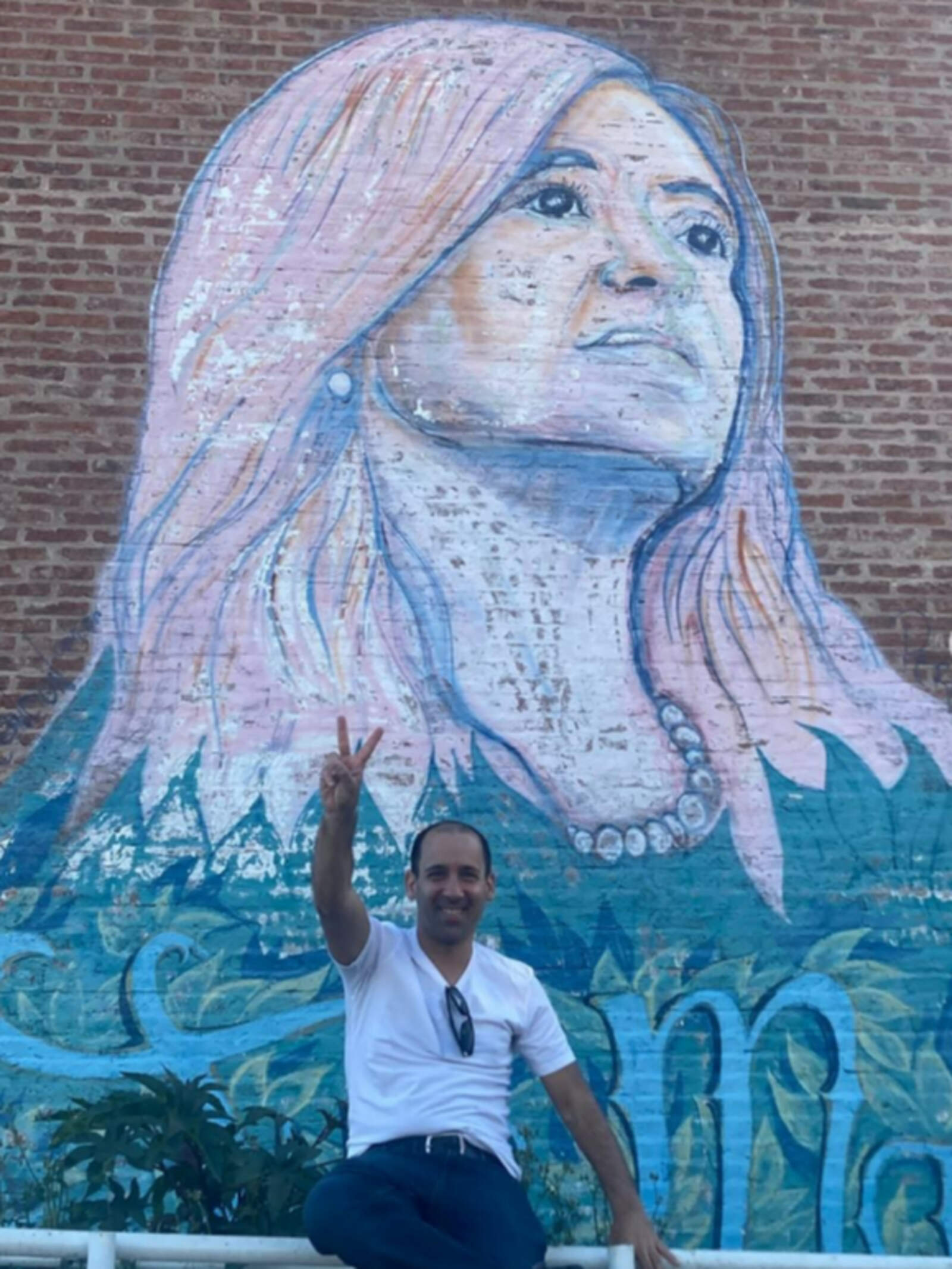
Itai Hagman en un mural de Cristina Kirchner, condenada por corrupción.
The result of that logic is clear: neighborhoods taken over by drug traffickers, young people destroyed by addiction, and families living in fear. Meanwhile, progressive sectors justify criminals, drug trafficking advances over the most vulnerable sectors, destroying communities and claiming lives.
Reducing sentences or exempting from punishment those who traffic, even on a small scale, is not an act of social justice: it is a signal of impunity. It is rewarding crime and abandoning the real victims: young people who fall into the networks of consumption, parents who lose their children, and neighbors who live besieged by drug traffickers.
An ideological reflection
Although it may seem like a minor bill, file 3108-D-2020 reflects the underlying vision of Kirchnerism: a State that empathizes more with the criminal than with the honest citizen. It is the same logic seen with the release of prisoners during the pandemic or with the constant delegitimization of security forces.
Meanwhile, Javier Milei's government is working to restore order and the authority of the State, Kirchnerism continues to show its true face: that of extreme garantismo, moral relativism, and complicity with crime.