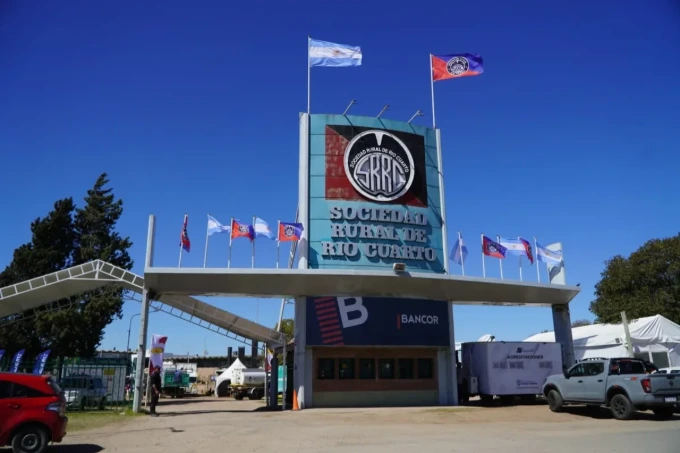

The field in Córdoba is synonymous with technology. On the same day as the closing of AgTech 2026 in Río Cuarto , the presentation of the Expo 2026 organized by the Rural Society in the south of the province took place.
Genetics can be seen in a ring, but its true impact is measured in the field. Behind a standout breeder are years of selection, productive information, evaluation, and knowledge. In modern livestock farming, choosing genetics also means incorporating technology: it is deciding which characteristics to multiply and what type of animal to produce for a specific environment and production system.
This concept runs through the 92nd Rural Exhibition of Río Cuarto, which is preparing to showcase, from September 2 to 6, a good part of the productive diversity of the region. But the Rural Society's commitment is not limited to exhibiting animals, machinery, or services. The goal is for the exhibition to serve as a meeting point for producers, companies, institutions, universities, students, and consumers.

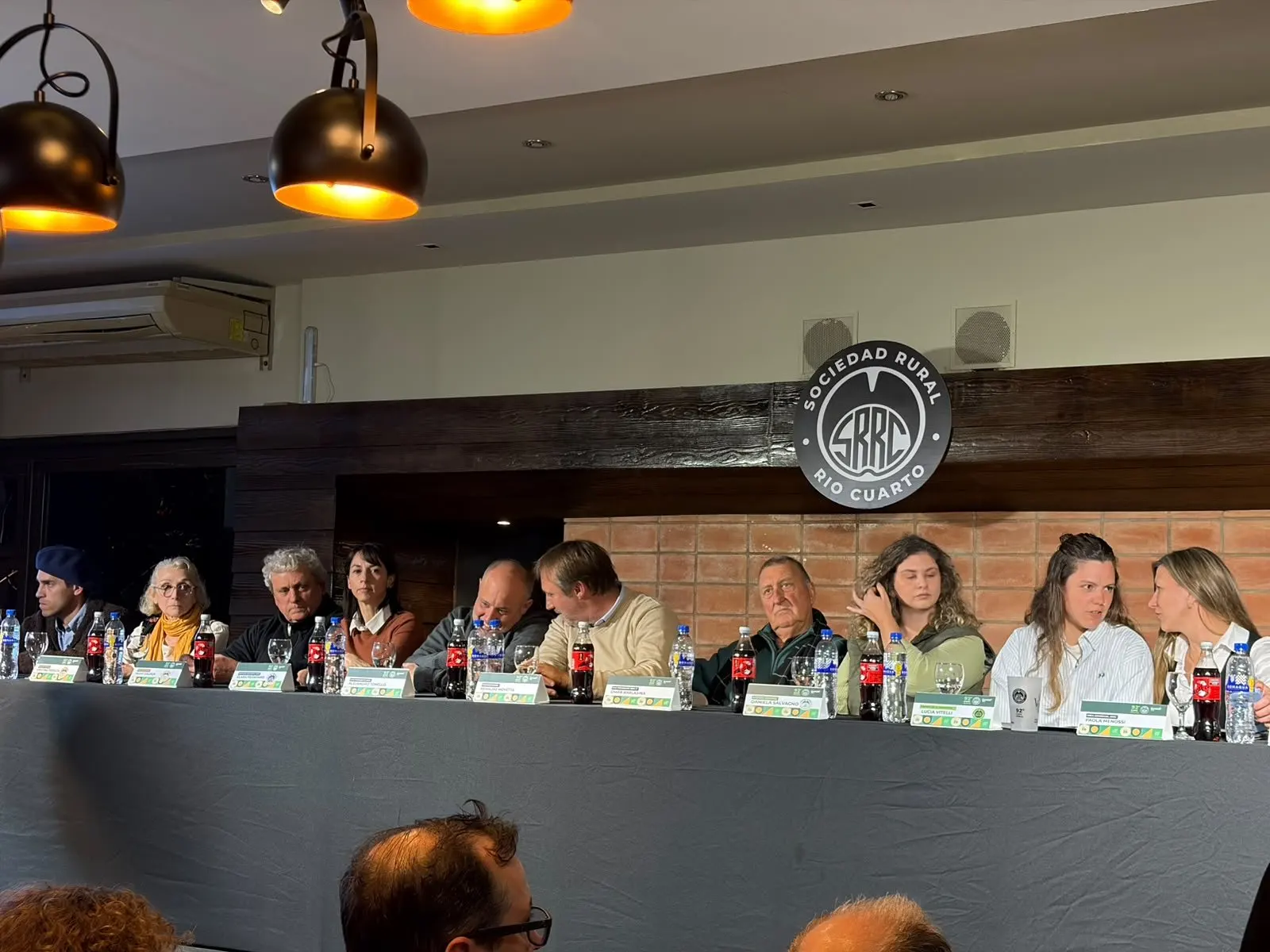
“We are committed to an inclusive exhibition to continue growing,” stated Heraldo Moyetta, president of the Rural Society of Río Cuarto, during the presentation of the exhibition. He added a definition that summarizes the change in profile the entity aims to achieve: the Rural has ceased to be solely for the agricultural sector to become a showcase for the entire community.
The idea of integration takes on particular relevance when linked to the technological transformation process affecting Argentine agriculture.
Genetics, a technology passed down from generation to generation
The main cattle breeds will be represented in the Rural's pens, with a strong presence of Angus and Hereford, in addition to other species and a genetic novelty that will surely attract attention: the presentation of Speckle Park, a breed that combines lines of Aberdeen Angus, Shorthorn, and White Park.
The arrival of new breeds and competition among farms express a search that goes far beyond animal aesthetics. In a commercial herd, genetics is one of the decisions with the greatest cumulative impact: a characteristic incorporated today can multiply over the years through offspring.
Fertility, growth, efficiency, adaptability, meat suitability, and product quality are some of the variables that explain why genetics has become a central tool for competitiveness.
The ring of an exhibition is, in this sense, merely the visible part of a much deeper process. The animal that arrives for judging is the result of a selection program. And behind that program are data, records, evaluation, and scientific knowledge.
Genetics is, perhaps, the oldest technology in agriculture, but also one of the fastest to incorporate new tools.
“We want science to be present at Expo 2026”
Moyetta particularly focused on the link with the National University of Río Cuarto.
“We want science to be present,” emphasized the rural leader, highlighting the participation of UNRC in the exhibition. He also valued the role of the Municipality as part of the institutional framework surrounding the exhibition.
This definition is not minor. The agriculture of the future will increasingly require scientific knowledge to solve production problems. From genetics and animal health to soil management, input use efficiency, precision agriculture, biotechnology, data management, and environmental impact, the boundary between production and science is becoming increasingly narrow.
Therefore, integrating a university into a rural exhibition should not be understood solely as an academic activity. It is a way to bring research closer to the producer and, at the same time, to convey the concrete demands of the production system to the areas where knowledge is generated.
From iron to data
For decades, a rural exhibition featured agricultural machinery and animals as its main protagonists. Today that scenario has changed. The iron remains fundamental, but machines are becoming increasingly intelligent. A seeder can work with variable rates; equipment incorporates positioning and monitoring systems; satellite images allow for observing the evolution of lots; sensors generate information, and management systems turn that data into decision-making tools.
In livestock, something similar occurs. Genetic selection, productive records, traceability and evaluation tools allow for advancing towards increasingly efficient herds. Technology has ceased to be an external element to production and has become part of everyday decision-making.
Therefore, the real challenge is no longer just to have technology, but to know how to integrate it.