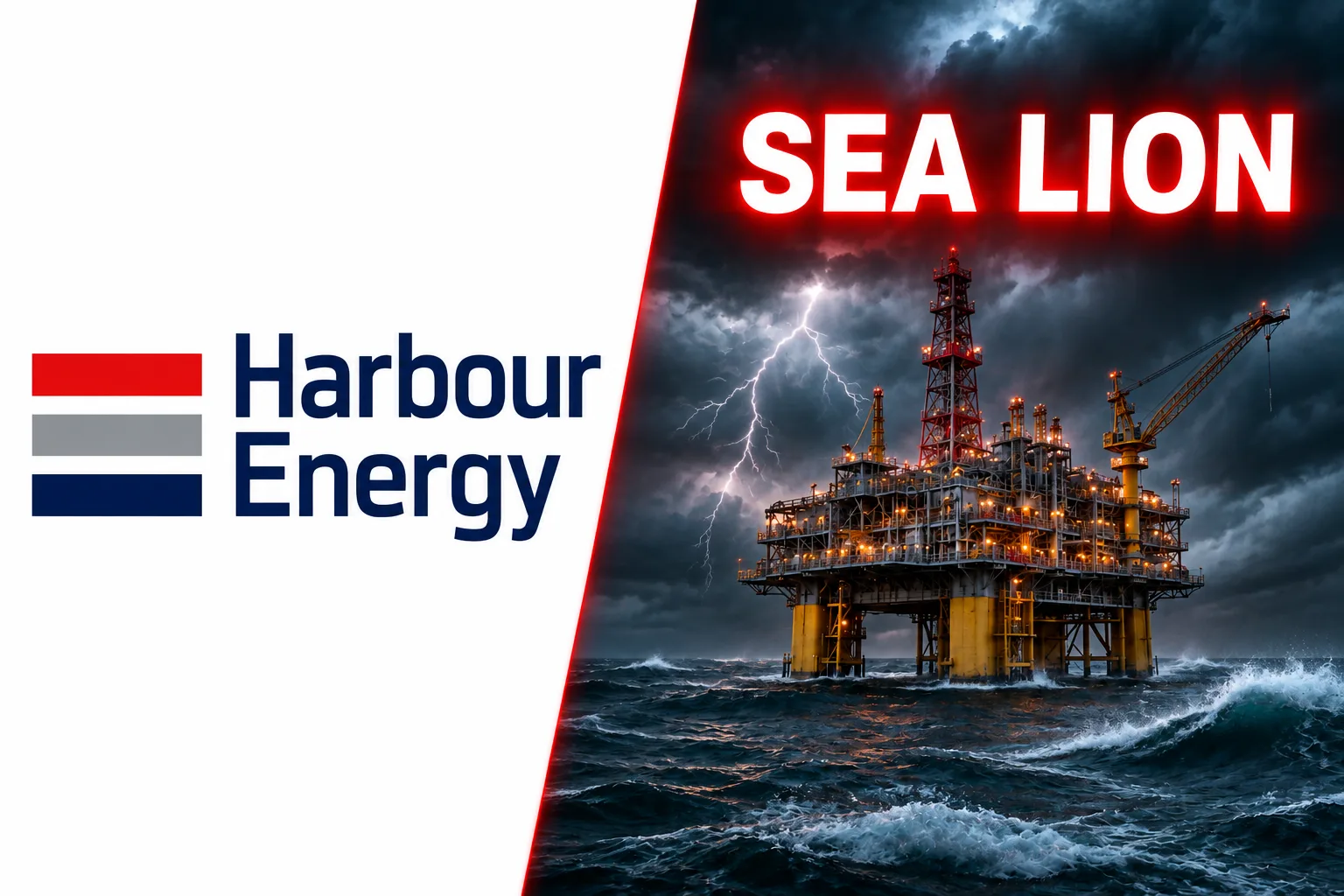

Harbour Energy distances itself from Sea Lion and reaffirms its commitment to Vaca Muerta: “Our focus is on Argentina”

Harbour Energy distances itself from Sea Lion and reaffirms its commitment to Vaca Muerta: “Our focus is on Argentina”

The company assured that it does not participate and will not participate in the oil project north of the Falkland Islands. Its local strategy includes Vaca Muerta, Tierra del Fuego, and a 15% stake in Southern Energy

Share:

Harbour Energy distanced itself from any activity related to the English oil project Sea Lion, located north of the Falkland Islands, and reaffirmed that its growth strategy is focused on Argentina. This definition came amid questions regarding the background of Premier Oil, a British company sanctioned by the Argentine government in 2013.

“Harbour has no interest in Sea Lion or activities related to the Falkland Islands, and it will not have any in the future. Our focus is on Argentina,” stated Martín Rueda, general director of Wintershall Dea Argentina, part of the Harbour group.

Harbour's bet on Argentine gas

The company currently ranks fifth among gas producers in the country. Its production is around 10.6 million cubic meters per day, equivalent to approximately 7% of the national total, with assets mainly concentrated in Vaca Muerta and the Austral Marine Basin, off the coast of Tierra del Fuego.

Harbour acquired these assets after completing the global acquisition of Wintershall Dea in September 2024.

Among its main Argentine holdings are the blocks Aguada Pichana Este and San Roque, in the Neuquén basin, as well as Austral Marine Basin 1.

It also holds a 15% stake in Southern Energy (SESA), a partnership with Pan American Energy, YPF, Pampa Energía, and Golar LNG to develop liquefied natural gas exports from Río Negro.

The project includes two floating liquefaction units with a combined estimated capacity of six million tons per year of LNG. According to Harbour's official information, the start of operations for the first vessel, Hilli Episeyo, is expected by the end of 2027, while the second unit is set to begin operations by the end of 2028.

Harbour Energy distances itself from Sea Lion and reaffirms its commitment to Vaca Muerta: “Our focus is on Argentina”

How Harbour's relationship with Sea Lion ended

The controversy originates from the company's corporate history. In 2021, Premier Oil and Chrysaor completed a transaction that led to the creation of Harbour Energy. Legally, the resulting company maintained continuity with Premier, although economic control and management passed to the shareholders and executives of Chrysaor.

Premier had participated in Sea Lion, a project developed without authorization from Argentine authorities and subject to national sanctions.
Harbour claims that, after formally understanding Argentina's position, it decided to divest from that asset and completed its exit in September 2022. The entire stake was transferred to Navitas Petroleum, which became the operator and holder of 65%, while Rockhopper retained 35%.

Rueda described that relationship as “brief and inherited” and assured that the company does not intend to participate again in projects related to the Falklands.

The Argentine regulation

The situation, however, keeps a legal front open. Article 18 of Provision 337/2019 prohibits the registration of companies directly or indirectly linked to hydrocarbon activities developed on the Argentine Continental Shelf without national authorization.

The regulation also states that companies that had past links must formally declare that these no longer exist and express their willingness to comply with Argentine legislation.

The acquisition of Wintershall Dea included a contractual condition related to Harbour's registration in the Argentine Oil Companies Registry. That clause, referred to in documentation of the process as “Argentine Pardon Condition”, is now under review in a complaint filed by the Office of Administrative Investigations.

The complaint questions authorizations granted to companies linked to Harbour. The accusations are under investigation and do not imply that irregularities or criminal responsibilities have been proven.

“Harbour chose Argentina”

In light of this scenario, the company insists that it has the necessary authorizations and complies with the current regulatory framework.

“Harbour chose Argentina,” Rueda stated, asserting that the intention is to develop current assets, increase production, and help turn the country into a major energy exporter.

The strategy places Vaca Muerta, Tierra del Fuego, and the Southern Energy LNG project at the center of its upcoming investments, while the company seeks to definitively sever any association of its name with Sea Lion and oil operations in the Falkland Islands.