The exported volume grew by 12.9% year-on-year and reached the highest level since 2010, driven by the recovery in production
Nuevo
Agregar La Derecha Diario en
Compartir:
The Argentine economy recorded in the third quarter of 2025 the highest level of export volumes in the last 15 years, according to official data from INDEC. The total volume of exported goods grew by 12.9% year-on-year and exceeded the previous 2010 record by 5.1%, reflecting a sustained improvement in the country's productive and logistical capacity.
The result coincided with a 6.3% increase in the terms of trade, according to the Institute of Economic Policy (IPCExt), reaching the best level since 2011. This simultaneous advance in prices and volumes consolidated a trade surplus of US$ 14.2 billion in the first nine months of the year.
Javier Milei y ''Toto" Caputo.
The export recovery: more production and efficiency
The INDEC report details that export volumes grew by 23.2% compared to the same period in 2022 and 12.9% year-on-year, led by the agribusiness and energy sectors.
The soybean sector recorded an 18% increase in volumes, driven by better yields and international prices, while Vaca Muerta set record shipments of oil and gas, consolidating the energy sector as one of the drivers of the external surplus.
The recovery of industrial exports also stood out, with increases in automotive (+7.5%), agricultural machinery (+6.8%) and high value-added food products. The growth was mainly due to the quantity effect, that is, a higher physical volume exported rather than price variations, which reflects a genuine recovery of productive capacity.
Exportaciones en cantidades crecieron 23,2% frente al mismo período de 2022
Lower imports and improved relative prices
Meanwhile, imports fell by 12.4% year-on-year to US$ 50.3 billion, due to the reduction in energy purchases (-22%) and capital goods (-10%). The stability of the international oil price and the increase in local production reduced the need for fuel imports.
This contraction, combined with the increase in exports, strengthened the terms of trade—the ratio between export and import prices—which improved by 6.3% year-on-year, marking its fifth consecutive increase since 2024.
According to IPCExt, this improvement "increases the country's external purchasing power and eases the external constraint," by allowing more imports with the same level of exports.
Macroeconomic impact: relief for the external constraint
The performance of foreign trade caused a surplus equivalent to 3.8% of GDP, the highest since 2010. This result helps strengthen international reserves and reduces pressure on the exchange rate, providing room for economic policy maneuvering.
According to IPCExt, each point of improvement in the terms of trade is equivalent to an additional foreign currency income of about US$ 700 million per year, consolidating the external stability achieved in the past year.
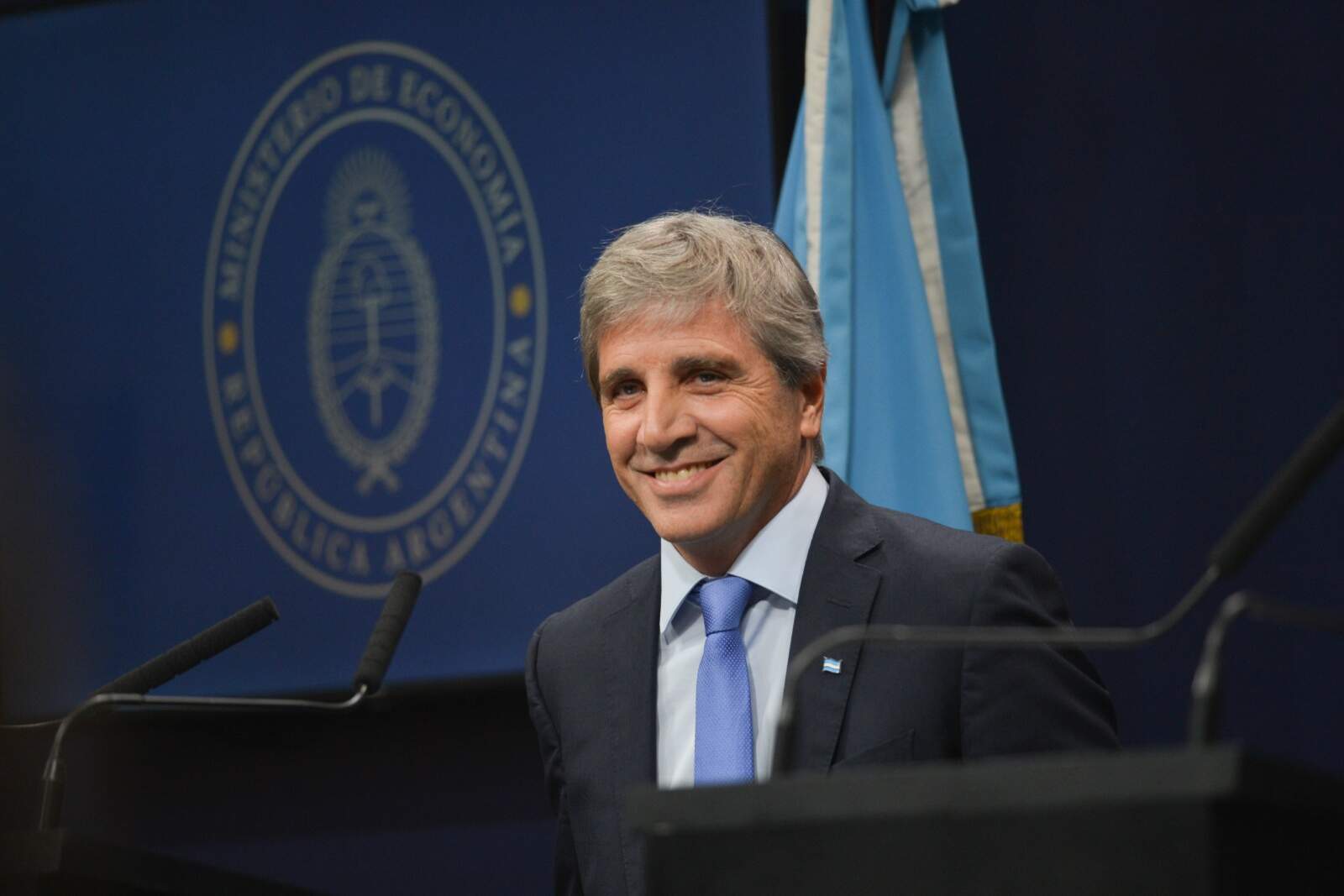
El ministro Luis Caputo.
The real multilateral exchange rate remains competitive in historical terms, and the combination of favorable prices and productive expansion reinforces the country's foreign currency generation capacity.
Projections for 2026 anticipate the continuation of the trade surplus, with moderate export growth (+5%) and a gradual recovery of imports (+4%) associated with the reactivation of investment.
IPCExt emphasizes that the current improvement has more balanced and sustainable characteristics than previous booms, with greater diversification among primary, industrial, and service sectors.
The combination of higher production, favorable prices, and fiscal discipline consolidates a new stage of external stability for Argentina, driven by a growth model based on efficiency and export competitiveness.