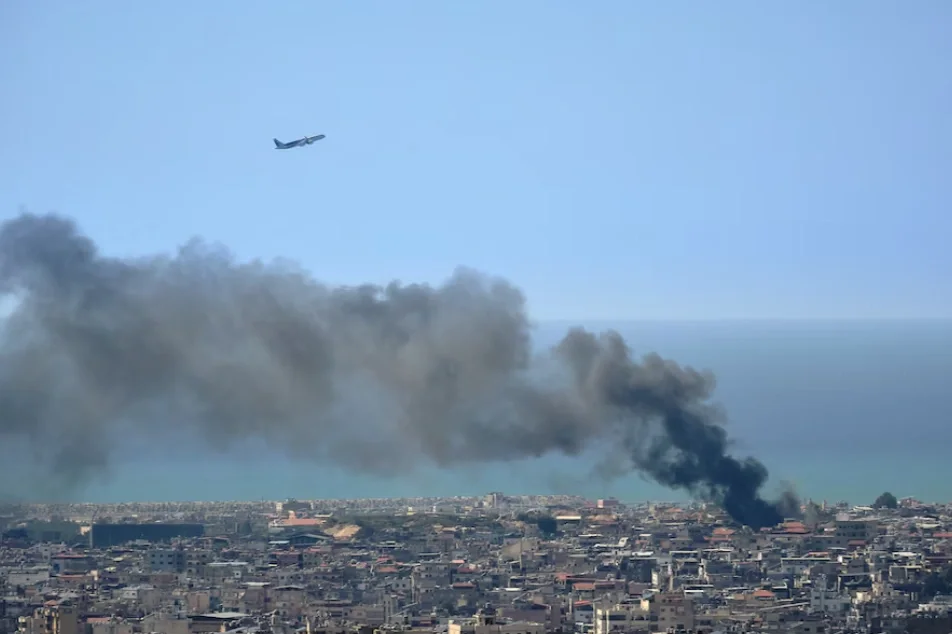
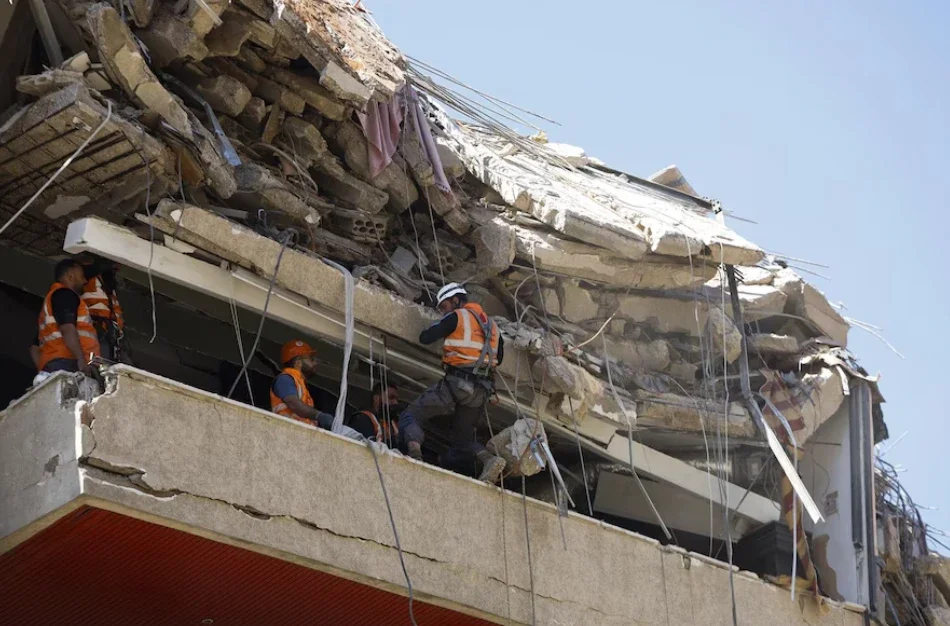
The Israel Defense Forces carried out precision strikes on Beirut for the first time in three weeks, in response to ongoing attacks by the terrorist group Hezbollah against Israeli territory.
The Lebanese terrorist group, considered one of the main armed organizations backed by Tehran, has increased its attacks in recent months using explosive drones and long-range rockets.
Israel has responded with a sustained military campaign against command centers, weapon depots, and operational structures of the group.
According to the IDF, over the past week, more than 550 targets linked to Hezbollah have been attacked in various areas of Lebanon.
Humanitarian crisis and mass evacuations
As Hezbollah continues to use urban and civilian areas as cover for its military operations, the humanitarian situation in southern Lebanon is rapidly deteriorating.
Israeli authorities ordered evacuations in areas considered combat zones and consolidated a military presence over strategic sectors near the border.
The Lebanese Ministry of Health reported thousands of injuries and over 3,200 deaths since the resumption of hostilities in March, although much of the data released in the country comes from organizations and structures under Hezbollah's influence.
Israel seeks to neutralize the terrorist threat
Israeli officials assert that the offensive aims to prevent Hezbollah from consolidating an offensive capability similar to that of Hamas in Gaza.
Israeli Finance Minister Bezalel Smotrich warned that Israel will respond with maximum force to every terrorist attack launched from Lebanon.
The operation in Beirut also occurs just days before new meetings between military delegations from Israel and Lebanon in the United States, where efforts will be made to prevent an even greater regional escalation.
The Israeli Army launched a new precision offensive on Thursday against targets of the terrorist group Hezbollah in Beirut, the capital of Lebanon, amid rising regional tensions and after weeks of continuous drone and rocket attacks against Israeli territory.
The Israel Defense Forces (IDF) officially confirmed the attack and stated that the operation was aimed at infrastructure linked to Hezbollah in the southern part of the Lebanese capital.
According to local media and security sources, one of the targets hit was a building used by members of Hezbollah's rocket unit in the Chueifate neighborhood.
Israel intensifies its offensive against Hezbollah
The bombing marks the first Israeli attack on Beirut since the ceasefire that came into effect in April, a truce that has weakened due to repeated violations by Hezbollah.
Israeli officials maintain that the Iran-backed terrorist group continued launching drones and projectiles at Israeli positions in the northern part of the country, necessitating a more forceful military response.
Prime Minister Benjamin Netanyahu stated that Israel will intensify operations until it completely neutralizes the threats coming from Lebanon.
"Israel has the right and the obligation to defend its citizens against terrorism," Israeli government sources stated.
Israel bombed targets of the terrorist group Hezbollah in Beirut for the first time in three weeks.
Hezbollah and the regional escalation
The offensive occurs in an extremely delicate regional context, marked by the conflict between Iran, the United States, and Israel, and by Hezbollah's growing military prominence on the Israeli northern border.