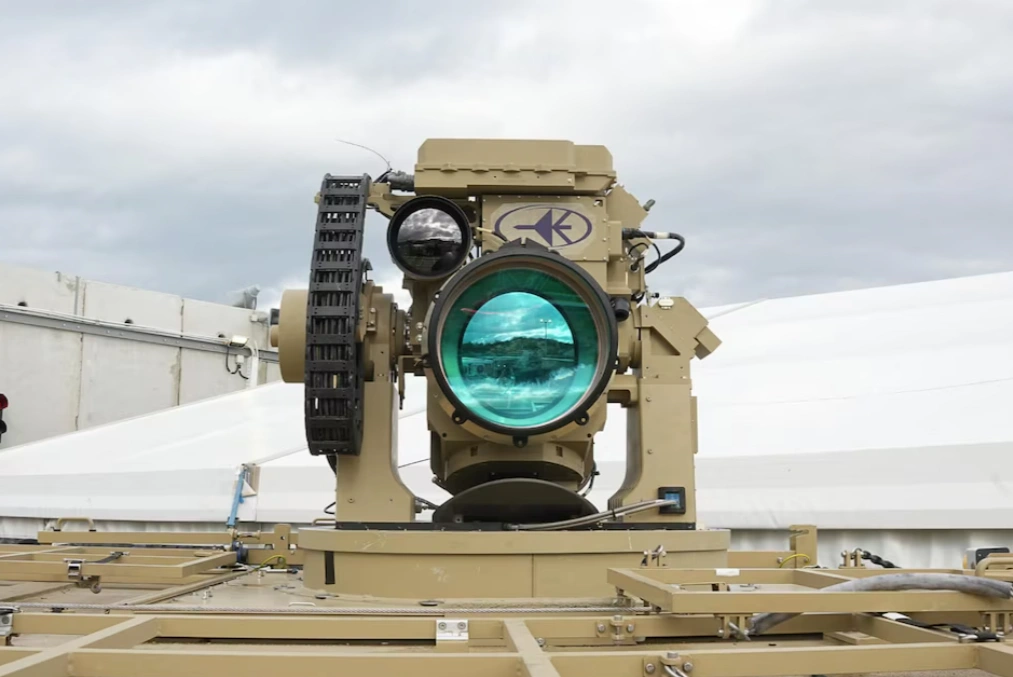
This system makes it possible to identify drones over long distances, even those with a low thermal signature, such as the Shahed models used by Iran. In a scenario where the threat is not always visible to traditional radars, this type of tool becomes essential
.
Real-time cooperation
.
Beyond equipment, the operation included intelligence sharing and direct coordination between forces from both countries. Even, as it transpired, Israel shared information in real time about possible launches from Iranian territory
.
This level of integration reflects a profound change in the bilateral relationship: it is no longer just about diplomatic ties, but about an operational strategic alliance.
A new balance in the Middle East
The deployment also reveals a regional reorganization. Emirates, one of the United States' main allies in the Gulf, is now positioned within an axis of cooperation that includes Washington and Israel
.
In parallel, the conflict left another key fact: the wear and tear of traditional systems. It is estimated that a significant portion of the stock of American interceptors was used during the offensive, accelerating the search for more efficient solutions such as laser-based ones
.
Technology, Strategy and Political Message
Beyond the immediate military impact, Israel's decision to share sensitive technology sends a clear message. In a context of growing tension with Iran, the alliance with the Emirates not only remains firm, but is deepening
.
Modern warfare is no longer defined solely by the quantity of weapons, but by the ability to adapt to new threats. In this area, Israel seeks to consolidate itself as a central actor, exporting not only defense systems, but also strategic influence
.
In short, the deployment of Iron Beam in the Emirates is not just a tactical response. It's a sign of how power is being redefined in the Middle East
Israel took a decisive step in consolidating its alliance with the United Arab Emirates by sending advanced defense systems, including laser technology, in response to the massive offensive launched by Iran in recent months.
The operation not only has an immediate military impact, but also a strong geopolitical weight: it is one of the first direct actions of defense cooperation since the signing of the Abraham Accords, which redefined the map of alliances in the Middle East.
A response to an unprecedented offensive
The shipment of these systems comes after a large scale Iranian attack that included hundreds of ballistic missiles and thousands of drones aimed at Emirati territory. While many of these threats were intercepted, the volume and sophistication of the attacks exposed the limits of traditional defense systems
.
That's where Israeli technology comes into play.
The international debut of the Iron Beam
Among the equipment transferred, the Iron Beam stands out, a defense system based on directed energy that allows drones and rockets to be destroyed in mid-flight at a cost significantly lower than conventional interceptors
.
Its deployment in the Emirates marks a milestone: it is the first time that this system leaves Israeli territory and is integrated into a real operation in another country.
Unlike solutions such as the Iron Dome, the Iron Beam does not rely on missiles to intercept threats, making it a key tool in the face of low-cost mass attacks, such as Iranian drones.
Detecting the invisible: the role of surveillance
Along with the laser system, Israel also provided advanced detection technology such as Spectro, developed by