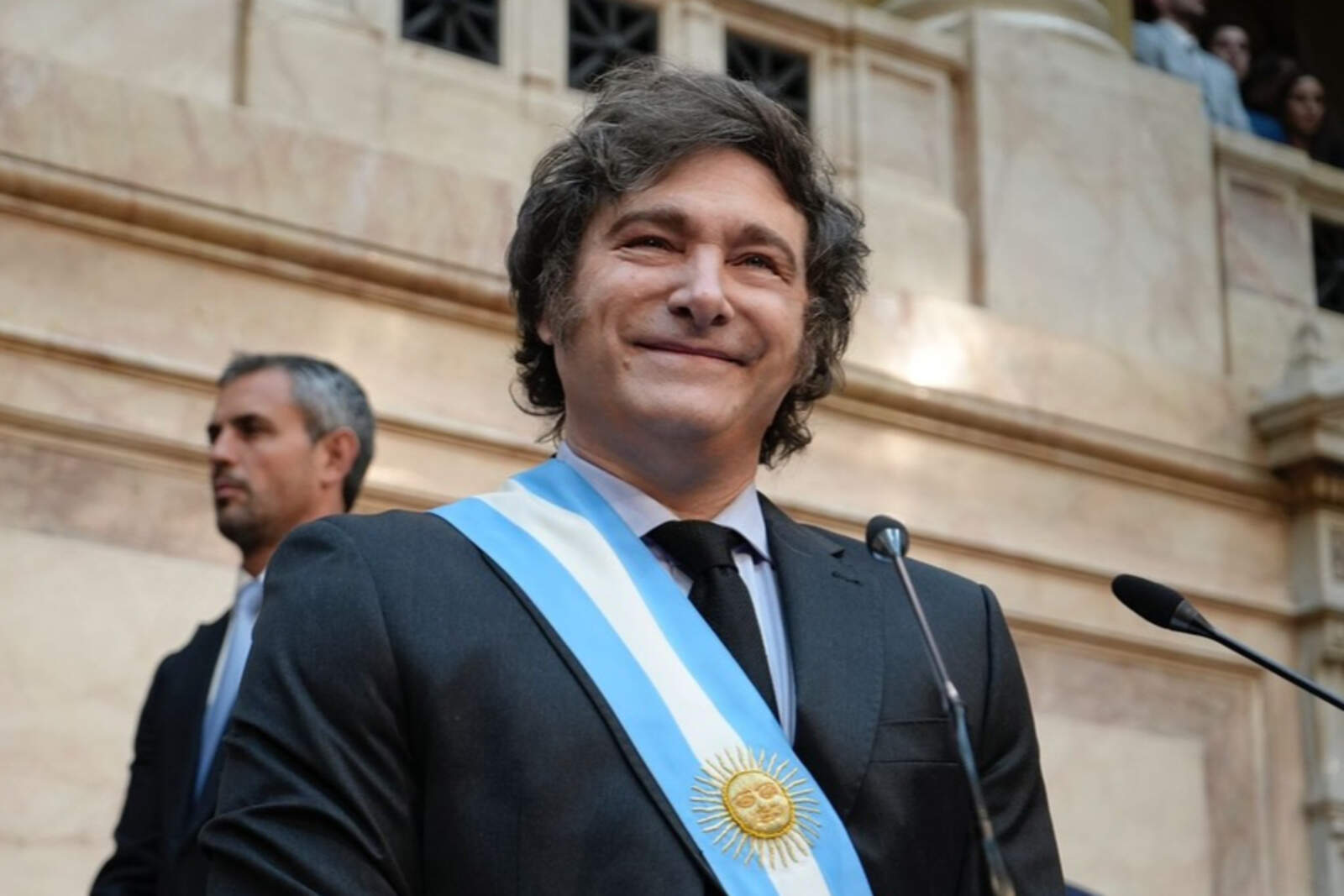
The President defended the agreement with the U.S. and stated that opposition groups are trying to sow confusion
Compartir:
President Javier Milei confronted the new disinformation campaign promoted by media and political sectors seeking to erode the stability achieved by the Government. This time, the operation revolved around the alleged elimination of the monotributo: "It's a lie invented by the media to create noise. They're enemies of the government because we cut off their advertising funds. They have no problem telling lies as long as they can smear the government," stated the president, in a direct message aimed at the heart of a system accustomed to financing itself with state privileges.
The Casa Rosada sees a repeated pattern in these maneuvers: every time the Government advances with structural reforms, operations aimed at generating uncertainty appear. The case of the monotributo is no exception. While the Executive consolidates fiscal order, reduces inflation, accumulates reserves, and improves financing conditions, the Kirchnerist opposition and the media orbiting around it resort to falsehoods to weaken the administration.
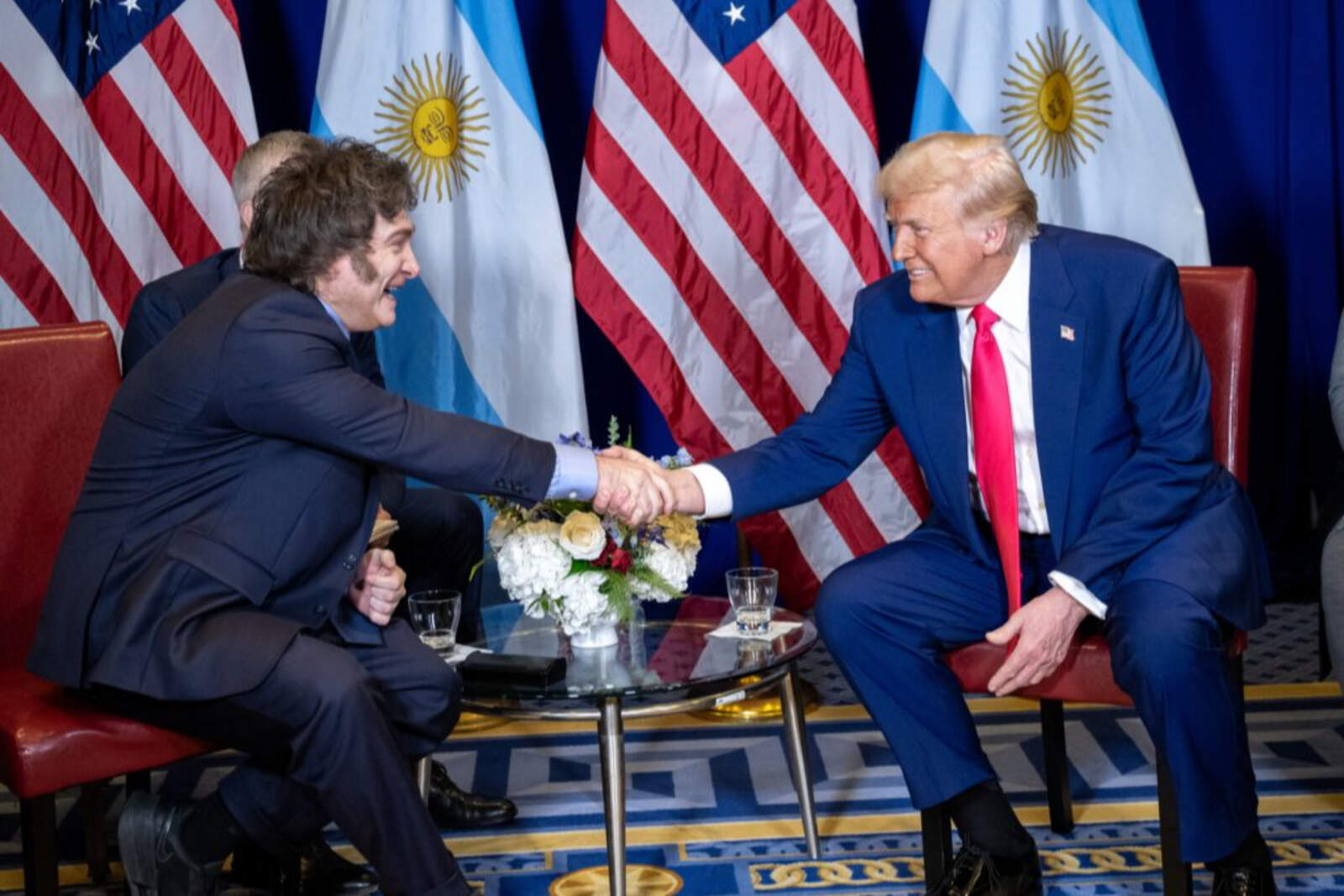
Javier Milei junto a Donald Trump.
In this context, Milei also explained the concept of "Kuka Risk," a term that has already become part of his economic narrative. "When we talk about Kuka Risk, it's the explicit intention of Kirchnerism to destroy everything. That generates Country Risk, that's Kuka Risk," he asserted. According to the President, markets react not only to economic variables but also to the real danger that the country could fall again under interventionist, isolationist, and destructive policies. The mere prospect of a Kirchnerist return raises the cost of credit, discourages investment, and threatens financial stability.
Milei took advantage of the interview to emphasize the importance of the recent trade agreement with the United States, highlighting that it is being manipulated by those who seek to confuse public opinion. He called on citizens to get information from official sources and read the actual text of the agreement, not the malicious interpretations circulating in some media outlets. The agreement, he recalled, promotes trade openness, improves investment conditions, and consolidates strategic alignment with Washington, an essential shift for Argentina's development.
The President also referred to the new anti-globalist bloc that, as he explained, was consolidated at the United Nations between Argentina, Israel, and the United States. "Look at the votes: United States, Israel, and us. When a minister didn't align with that, he was out... You can't vote in favor of Cuba," Milei pointed out, stressing that the country's foreign policy has left behind third-world isolationism to align with democracies that defend freedom, markets, and national sovereignty in the face of globalist agendas.
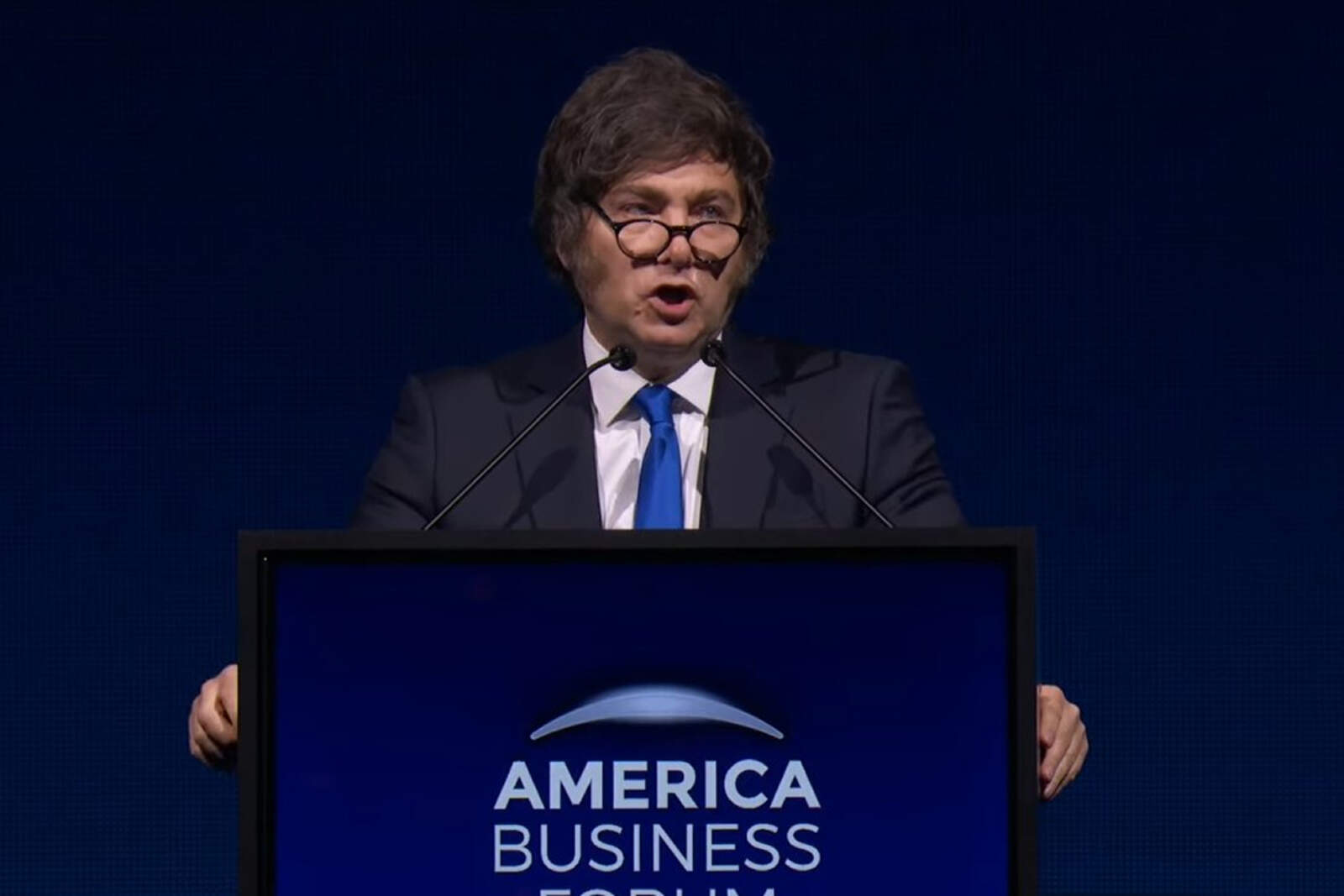
Milei brinda su discurso.
The Government warns that the disinformation about the monotributo and the distortion of the agreement with the United States are part of the same logic: sowing economic panic to erode recovery and halt growth. Milei again targeted those who "need the country to do badly in order to return to power," and reiterated that his administration will continue advancing with reforms that restore predictability, competitiveness, and economic freedom.
For the Casa Rosada, the answer is clear: Argentina's future is built with transparency and concrete data, not with operations or interventionism. Milei reaffirmed that he will continue personally explaining every important measure to prevent media manipulation from determining the country's direction.