Kicillof himself publicly defended the proposal after participating in a meeting of the Buenos Aires Justicialist Party Council. Although he clarified that the issue had not been discussed during the meeting, he expressed his support for modifying the current legislation and justified the possibility of allowing successive municipal terms due to the closeness of mayors to their voters.
The main obstacle for the governor lies in the Buenos Aires Legislature, where the project presented by Senator Ayelén Durán has not yet garnered the necessary consensus to move forward. The initiative requires a simple majority of 47 votes in the Chamber of Deputies and 24 in the Senate, assuming all members are present. If it needs to be treated urgently, the requirements increase to 62 and 31 votes, respectively.
To the legislative difficulties are added the differences within Peronism itself. The Renovation Front of Sergio Massa reaffirmed its rejection of indefinite re-elections, recalling that it was one of the groups that promoted the original legislation of 2016. However, provincial deputy Alexis Guerrera clarified that the Massa faction will not prevent the discussion of the reform.
Kicillof with quartermasters K.
For its part, La Libertad Avanza and the PRO also maintain their opposition to eliminating the limits on terms, while sectors of the Radical party hold similar positions. The lack of agreement among the different blocs complicates the chances of the project being approved before the end of the legislative period.
In this way, Kicillof faces a political struggle to modify the electoral rules in Buenos Aires and allow dozens of mayors to perpetuate themselves in power. For the governor, maintaining that municipal structure represents an important component of his strategy for the presidential elections of 2027.
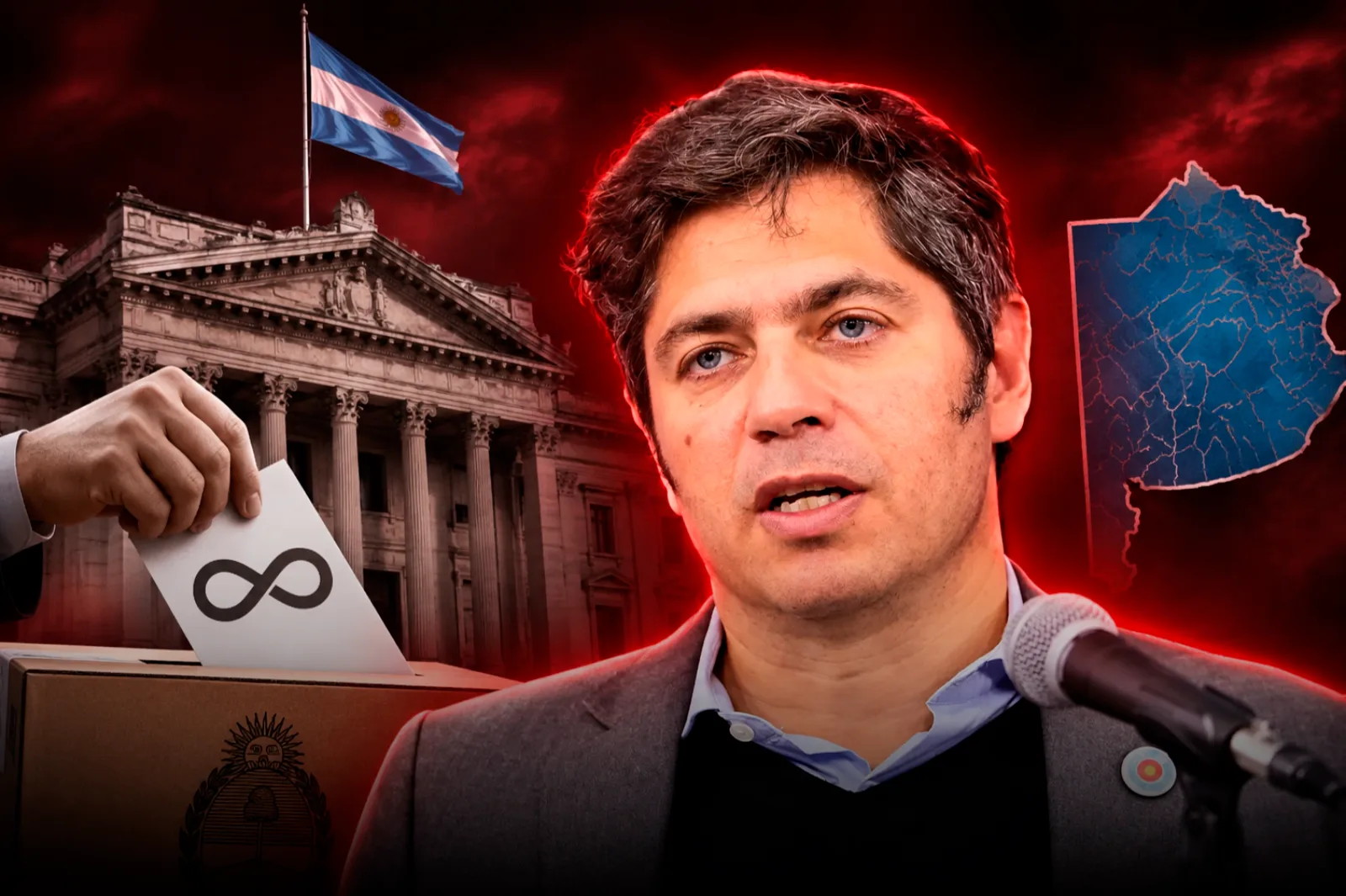
The Kirchnerist governor of the province of Buenos Aires, Axel Kicillof, is pushing for a reform to eliminate the limits on the re-election of mayors, a modification that would allow 80 local leaders to run again in the 2027 elections. The initiative aims to preserve the territorial structure of Peronism in Buenos Aires and strengthen the political framework of the governor, who intends to contest the Presidency next year.
Currently, the Law 14,836, enacted in 2016 during the governorship of María Eugenia Vidal, establishes a maximum of two consecutive terms for mayors, legislators, councilors, and school board members. However, Kicillof and the leaders of his group, the Movement for the Right to the Future (MDF), aim to eliminate this restriction to allow municipal officials to remain in their positions indefinitely.
Axel Kicillof with Alberto Espinoza.
The reform would benefit 80 of the 135 mayors in Buenos Aires, who are currently barred from competing for another consecutive term in 2027. Among them are 51 leaders from Unión por la Patria, as well as representatives from the Unión Cívica Radical and other political forces.
From the Kirchnerism camp, they recognize the electoral importance of the initiative for the provincial ruling party: "If we want to win in 2027, the re-re has to pass". A statement that reflects the interest of Kicillof's faction in maintaining control of the municipalities, whose mayors represent a fundamental piece for territorial organization, electoral mobilization, and economic financing of Peronism.