
La Derecha Diario logo
ESX logoInstagram logoYouTube logoTikTok logo
ARGENTINABOLIVIAECUADORISRAELMEXICOURUGUAY
  • ESXInstagramYouTubeTikTok
  • Secciones
  • ARGENTINA
  • BOLIVIA
  • ECUADOR
  • ISRAEL
  • MEXICO
  • URUGUAY
  • Países
  • La Derecha Diario logoLA DERECHA DIARIO
  • La Derecha Diario México logoLA DERECHA DIARIO MÉXICO
  • La Derecha Diario Uruguay logoLA DERECHA DIARIO URUGUAY
  • La Derecha Diario Ecuador logoLA DERECHA DIARIO ECUADOR
  • La Derecha Diario Bolívia logoLA DERECHA DIARIO BOLÍVIA
  • La Derechadiario República Dominicana logoLA DERECHADIARIO REPÚBLICA DOMINICANA
  • La Derecha Diario Israel logoLA DERECHA DIARIO ISRAEL
  • El Diario
  • QUIENES SOMOS
  • AUTORES
  • PUBLICIDAD
  • DONAR

Labor modernization: the end of the regime that expelled the worker

Labor modernization: the end of the regime that expelled the worker
porEditorial Team
Argentina

The reform that confronts the union caste.


For decades, Argentina lived under a comfortable and morally dangerous lie: that the more rigid labor law, the more protected the worker would be. The result is in sight. Millions outside the formal system, SMEs paralyzed by fear of trial and a litigation industry turned into a forced transfer machine

.

What was presented as “protection” was, in fact, a regime of expulsion.

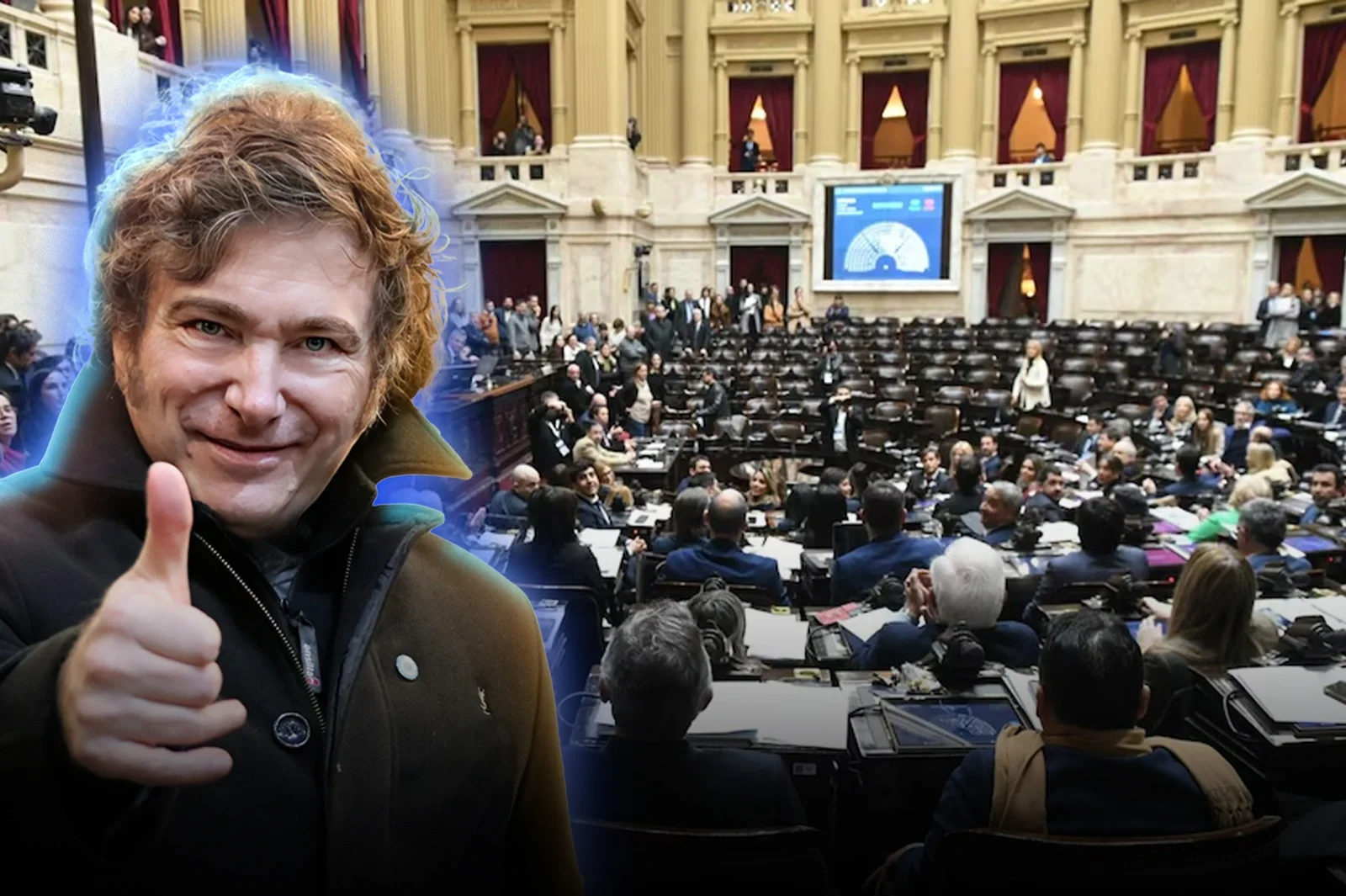
The “Labor Modernization” promoted by the government of Javier Milei is not a simple technical adjustment. It's a paradigm shift. It is the decision to stop treating the employer as a permanent suspect and the worker as a minor protected by the State and unions. It is, above all, the restoration of a basic principle: work is a contract between free parties, not a battlefield managed by bureaucrats

.

The old labor model is a framework of rigidities that turned every hire into a reckless bet. Unpredictable compensation, disproportionate judicial updating, automatic fines and fees that rewarded the conflict. It does not protect the worker but it funds the union caste. The consequence was clear: faced with the risk, thousands of small and medium-sized entrepreneurs chose not to hire or to close directly

.

Because when the State fixes artificial floors, it imposes increasing costs and blocks organizational flexibility, it doesn't raise salaries: it raises unemployment. The least qualified worker, the inexperienced young person, the mother who seeks to reintegrate, are left out. Not because the market despises them, but because the law closed the door on them. Rigidity is transformed into exclusion.

This “Labor Modernization” law aims to dismantle that suffocating logic. By extending the trial period, setting clear and predictable criteria for updating labor debts, and enabling alternative mechanisms — such as severance funds or insurance — to replace uncertain and explosive compensation, the reform reduces the legal risk that paralyzes hiring today. When the cost of a possible conflict ceases to be an unknown capable of multiplying without limit, the employer regains something basic:

predictability to decide.

That predictability is the difference between hiring or not hiring. If the legal framework turns every employment relationship into a latent threat, the rational reaction is not to expand. If, on the other hand, the rules are clear and the risk is limited, the incentive to generate formal employment returns

.

By incorporating tools such as the time bank, it also recognizes an uncomfortable truth for the old trade unionism: modern production does not work with rigid schemes designed for another era. Companies need adaptability; workers need real opportunities for integration, not regulatory corsets that

end up leaving them out.

And by reviewing the incentives that fueled chronic litigation, the reform attempts to defuse a perverse circuit where labor judgment ceased to be a last resort and became a business model sustained by legal distortion and corporate connivance.

Faced with this paradigm shift, the reaction of unions is not surprising. For years, they built power under the protection of legal privileges that guaranteed them monopolies of representation and capacity for pressure. They didn't defend the independent worker or the informal worker; they defended their savings and their influence. Every attempt to relax, every attempt to return room to direct negotiation, is read as a threat to that status quo

.

But there is something deeper at play. The previous regime rested on an implicit premise: that the State should intervene because the employment contract was, by definition, unfair. Under that permanent suspicion, any interference was justified. However, when the political power decides what is “just” above the will of the parties, it ends up imposing its judgment by force. And strength, in economic matters, almost always ends up hurting the weakest

.

Labor modernization does not eliminate conflicts or promise a tension-free utopia. What it does is run the axis: from privilege to agreement, from guardianship to responsibility, from preventive punishment to freedom to contract. It is a step towards making employment an opportunity again and not a legal risk.

In this context, Milei's leadership marks a historic rupture. It's not a cosmetic reform; it's a frontal challenge to the architecture of power that kept Argentina stagnant. For the first time in a long time, a government assumes the political cost of confronting entrenched corporations that presented themselves

as untouchable.

The left shouts “remove rights”. But the real right is to be able to work, to be able to hire, to be able to grow without fear that arbitrary regulation will destroy years of effort.

The real right is that the fruit of the voluntary agreement should not be confiscated by a system designed to support intermediaries.

If Argentina wants to generate genuine employment again, it needs rules that accompany production, not that punish it. Labor modernization is a first step in that direction. Not because it's perfect, but because it points in the right direction: less coercion, more freedom; fewer corporate privileges, more

real opportunities.

And in a country used to the State intervening to the point of suffocation, recovering the principle of freedom of contract is not a technical detail. It's a cultural revolution.


Noticias relacionadas

Donald Trump said that military operations against Iran had to be “advanced ahead of schedule”

Donald Trump said that military operations against Iran had to be “advanced ahead of schedule”

The alleged perpetrator of the attack on AMIA is named leader of the Iranian Guard

The alleged perpetrator of the attack on AMIA is named leader of the Iranian Guard

A bloody assault on the US consulate in Pakistan left at least nine dead

A bloody assault on the US consulate in Pakistan left at least nine dead

Fernando Pedrosa: “The fall of Khamenei could accelerate an implosion of the system”

Fernando Pedrosa: “The fall of Khamenei could accelerate an implosion of the system”

Javier Milei celebrated the fall of Ali Khamenei, Iran's supreme terrorist regime leader

Javier Milei celebrated the fall of Ali Khamenei, Iran's supreme terrorist regime leader

The Government of Milei has already eliminated more than 65,000 state jobs

The Government of Milei has already eliminated more than 65,000 state jobs

La Derecha Diario logo
TwitterInstagramYouTubeTikTok

Nosotros

  • Quienes Somos
  • Autores
  • Donar

Privacidad

  • Protección de datos
  • Canales
  • Sitemap

Contacto

  • info@derechadiario.com.ar
PUBLICIDAD