With the Single Ballot as a symbol of transparency and with almost 95 percent of the polling stations, La Libertad Avanza is leading with 41.53% of the votes
The 2025 legislative elections sent a clear political message: President Javier Milei's party swept the national legislative elections, winning with 40.84% compared to Kirchnerism's 24.50%, with 91% of the votes counted. The Government received massive support and achieved a resounding victory in the 2025 national legislative elections. The biggest surprise occurred in Buenos Aires province, where the list led by Diego Santilli surpassed Peronism's, which just a month and a half ago had won the local elections by a margin of 14 points.
President Javier Milei had stated last week that his goal was to secure "one third of the seats for his own legislators" in the Chamber of Deputies, enough to safeguard his structural reforms. With today's numbers, the president far exceeds that goal and consolidates his political and institutional leadership.
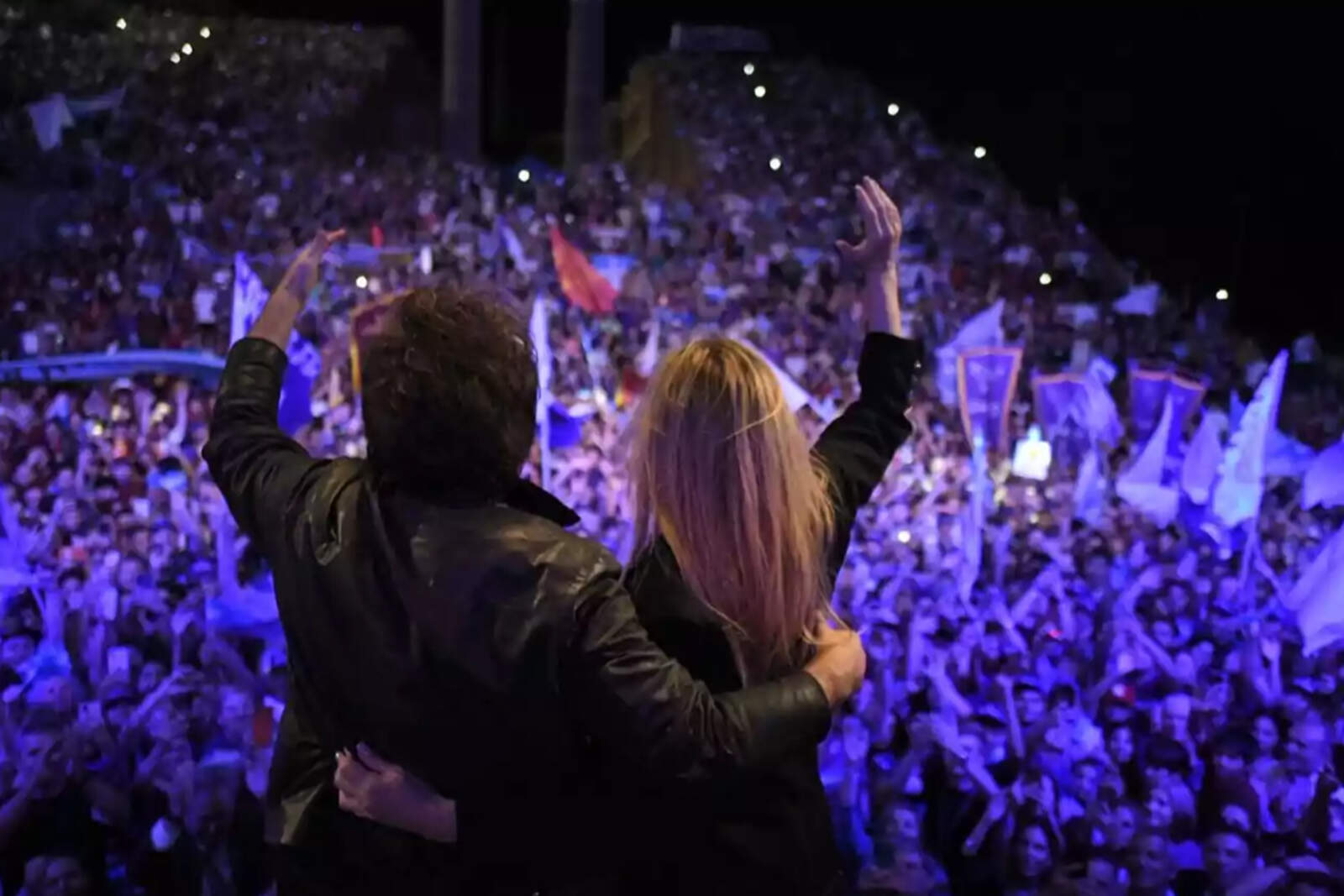
El presidente en su cierre de campaña.
As a result of this outcome, Milei will be able to restructure his Cabinet with greater stability. "It's always easier to correct mistakes as a winning government", sources from the Hotel Libertador headquarters said last night, where the atmosphere was euphoric and satisfied.
The electoral strategy designed by Santiago Caputo was key to the result. According to the presidential advisor, the ruling party aimed to revitalize the libertarian epic of 2023, strengthen Milei's territorial presence in the country's interior, and rebuild the connection with young people and with the activists of Las Fuerzas del Cielo.
The role of Pilar Ramírez, responsible for national political coordination, and Economy Minister Luis Caputo also stood out. Caputo played a decisive role in recent weeks through his management with the United States, which made it possible to avoid a dollar surge and maintain macroeconomic stability.
Javier Milei.
During election day, an unprecedented scene was witnessed: Karina Milei, accompanied by Martín Menem, took on a public role as spokesperson before the press, a gesture interpreted as a sign of internal cohesion after rumors about the future of Chief of Cabinet, Guillermo Francos.
Sources close to the President confirmed that his sister will be decisive in choosing the new head of the Cabinet, in a power structure that consolidates the Iron Triangle formed by Milei, Karina, and Caputo.
For Peronism, the defeat was catastrophic. Not even the most pessimistic sectors imagined such a wide margin, especially in Buenos Aires province. Cristina Fernández de Kirchner, who designed most of the lists and opposed splitting the elections, emerges as the main person responsible for the failure.
Governor Axel Kicillof and the Buenos Aires mayors failed to maintain the electoral structure, and the results show a protest vote against the lack of renewal and the exhaustion of the Kirchnerist model. Meanwhile, the Provincias Unidas bloc, promoted by Juan Schiaretti, Maximiliano Pullaro, and Ignacio Torres, also failed to establish itself as a third national force, showing that society opted for a clear polarization between change and the past.