The treacherous deputy who entered the chamber for La Libertad Avanza introduced her baby after a premature birth and surprised everyone by revealing the baby's name.
Marcela Pagano, the traitorous deputy who entered the chamber through La Libertad Avanza, is going through one of the happiest moments of her life. After giving birth to her second child with businessman and lawyer Franco Bindi, the legislator shared her joy with her followers about the arrival of the baby and revealed a detail that particularly caught attention: the name she chose for the newborn.
The little one was born on May 28 via a cesarean section performed at 36 weeks of gestation. Although the delivery had to be advanced due to some complications during the pregnancy, both the mother and the baby have progressed favorably and are already enjoying this new family stage.
The surprise came when Pagano revealed that the boy's name is Hipólito, an uncommon name among today's newborns and with a strong historical significance.
The first photo of Marcela Pagano's baby
The origin of Hipólito dates back to ancient Greece. It comes from the word Hippolytos, formed by the terms hippos (horse) and lyein (to free or to untie). Its meaning is often interpreted as “the one who frees the horses” or “the one who unties the steeds,” an image associated in antiquity with strength, preparation for battle, and leadership.
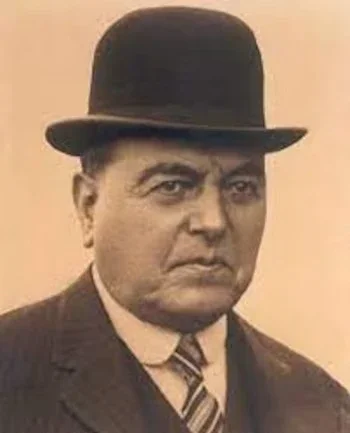
In Argentina, the name inevitably refers to Hipólito Yrigoyen, twice president of the Nation. His figure was also surrounded by controversies. During his administrations, he faced criticism for exercising a leadership considered excessively personalistic, with a strong concentration of decision-making in his figure and little delegation of functions. His opponents also questioned his reserved and secretive style, which earned him the nickname "El Peludo."
In his second term, which began in 1928, the criticisms deepened due to the economic difficulties arising from the global crisis of 1929. Business sectors, politicians, and parts of the press held him responsible for the lack of effective responses to the rising unemployment, the decline in economic activity, and the growing social unrest.
Hipólito Yrigoyen
He was also accused by his adversaries of using public office to strengthen his political structure and favor leaders close to the government. These criticisms were combined with questions related to his advanced age — he was 76 years old when he assumed his second term — and his health status, factors that some considered incompatible with leading the country in a crisis context.