After Wanda Nara announced that the Italian courts allowed her to process the passports of Francesca and Isabella without paternal consent, Mauro Icardi surprised everyone with an extensive statement
The legal dispute between Mauro Icardi and Wanda Nara over the future of their daughters has added a new chapter. After the businesswoman celebrated on her social media a ruling from the Italian court that authorizes the issuance of new passports for Francesca and Isabella without the footballer's signature, the striker broke his silence and gave a completely different interpretation of the ruling.
Far from appearing upset, Icardi surprised his followers by stating that the ruling also represents a favorable outcome for him.
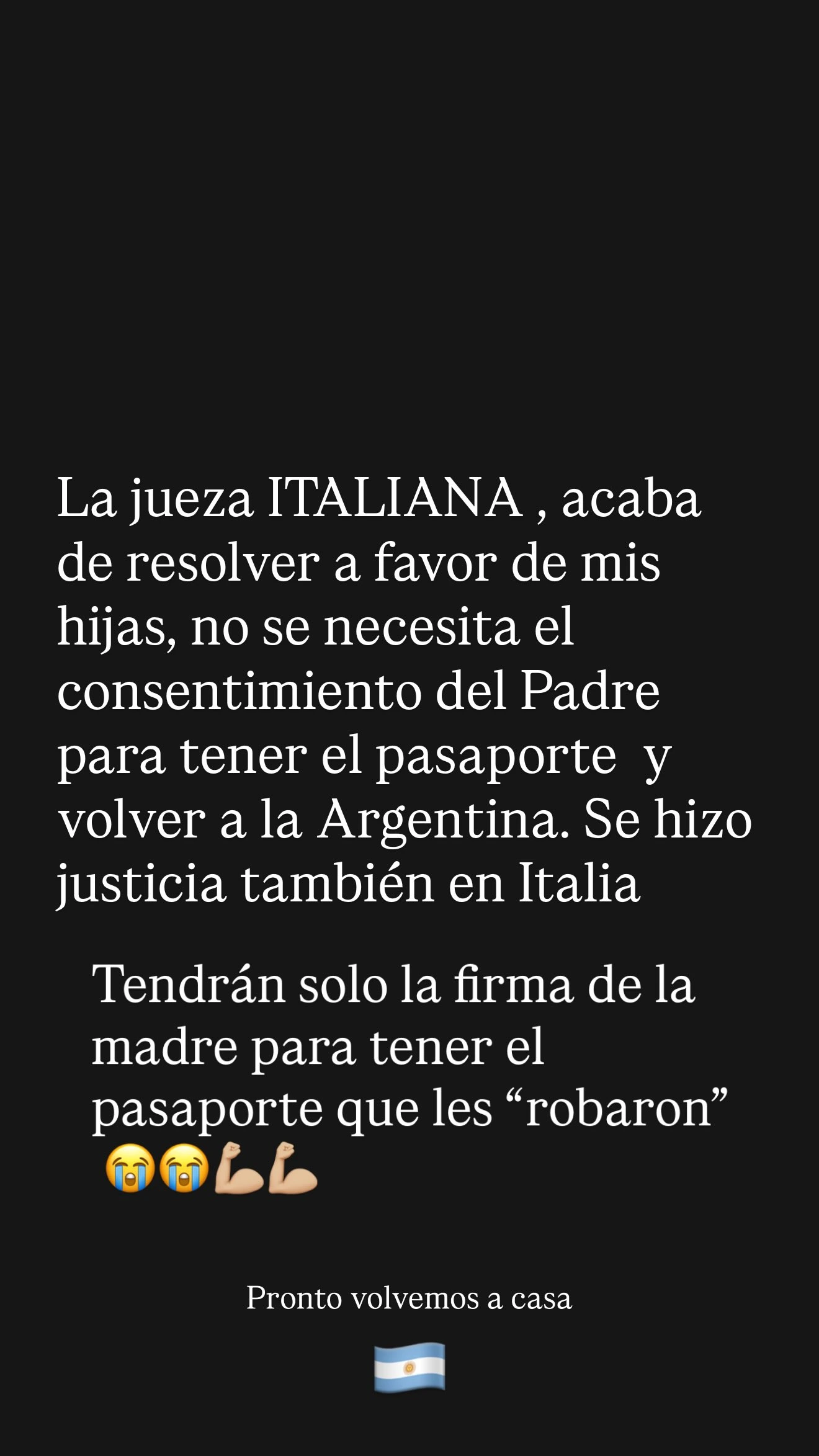
The first to communicate the judicial decision was Wanda Nara. Through her social media, the host celebrated that an Italian judge authorized the issuance of the necessary documentation for the girls to return to Argentina.
Wanda Nara's post
"The Italian judge has just ruled in favor of my daughters. The father's consent is not needed to obtain the passport and return to Argentina", she wrote.
Her post was interpreted as a victory in the judicial conflict she maintains with the Galatasaray striker.
The reaction of Mauro Icardi
Hours later, Icardi posted an extensive message on his social media in which he surprised by stating that the ruling also supports the position he has held for some time.
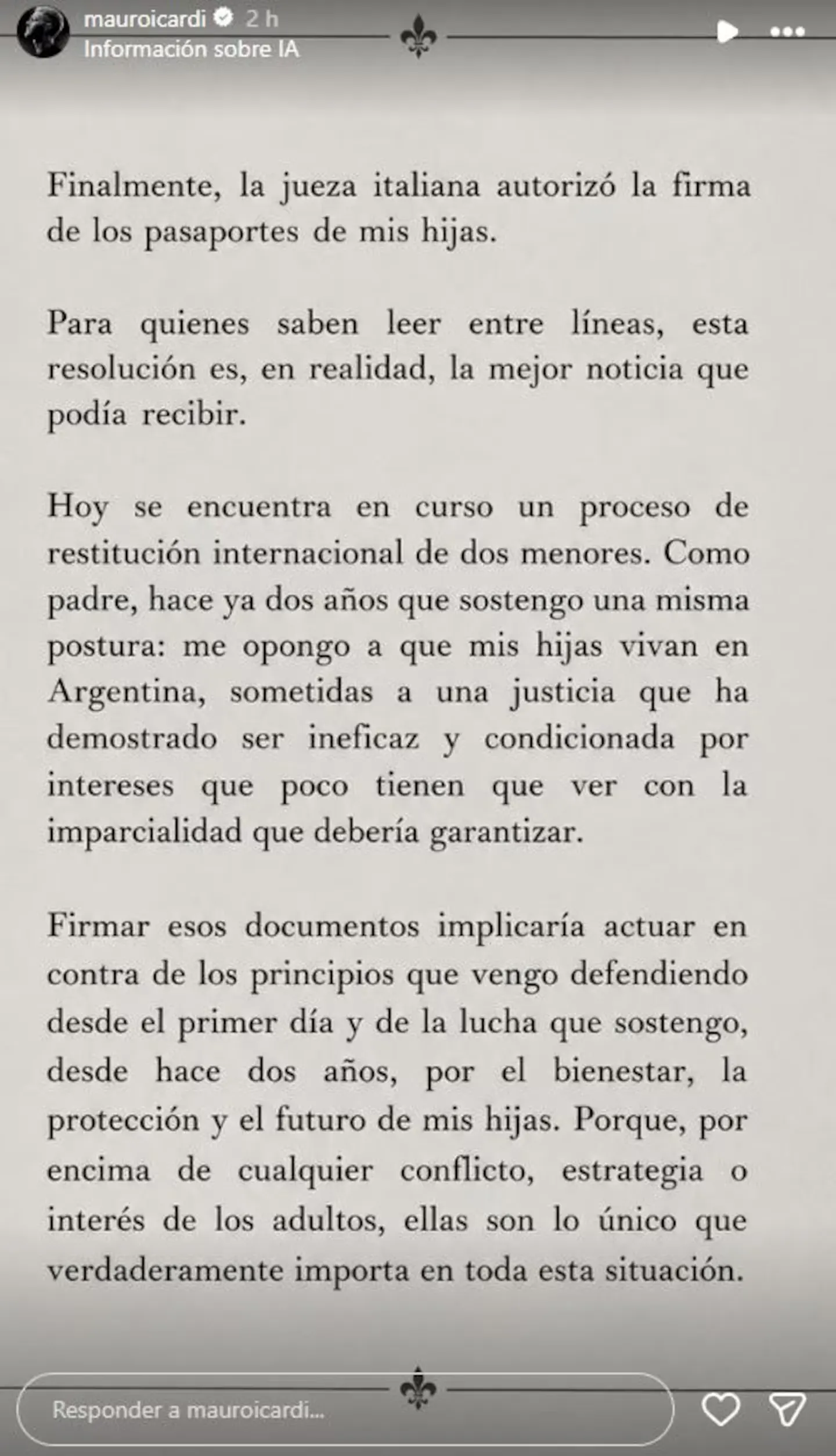
"Finally, the Italian judge authorized the signing of my daughters' passports. For those who can read between the lines, this ruling is, in fact, the best news I could receive," he expressed.
With those words, the footballer hinted that he interprets the ruling differently than what Wanda Nara has conveyed.
In his defense, the striker explained that the decision must be analyzed within the international judicial process that the family is undergoing. "There is currently an ongoing international restitution process for two minors", he stated.
Mauro Icardi's post
"As a father, I have been holding the same position for two years: I oppose my daughters living in Argentina, subjected to a justice system that has proven to be ineffective and conditioned by interests that have little to do with the impartiality it should guarantee," he wrote.
In that sense, he explained that he was never willing to voluntarily sign the documentation because he understood that it contradicted the position he holds in the case.
"Signing those documents would mean acting against the principles I have been defending since day one and the fight I have been waging for two years for the well-being, protection, and future of my daughters", he affirmed.