
A team led by Eduardo Vijande-Vila from the University of Cádiz analyzed bone remains found in two monumental stone tombs located at Cape Trafalgar. Radiocarbon dating indicates that these sepulchers were used for about 200 years, approximately between 1875 and 1625 BC. This period is striking because, by then, individual tombs had already become widespread in the south of the Iberian Peninsula.
The information, disseminated by La Brújula Verde and supported by a study published in PLOS One, provides concrete data on the architecture and funerary use of these constructions. The results suggest that the builders maintained collective practices long after other communities in the region had abandoned them.
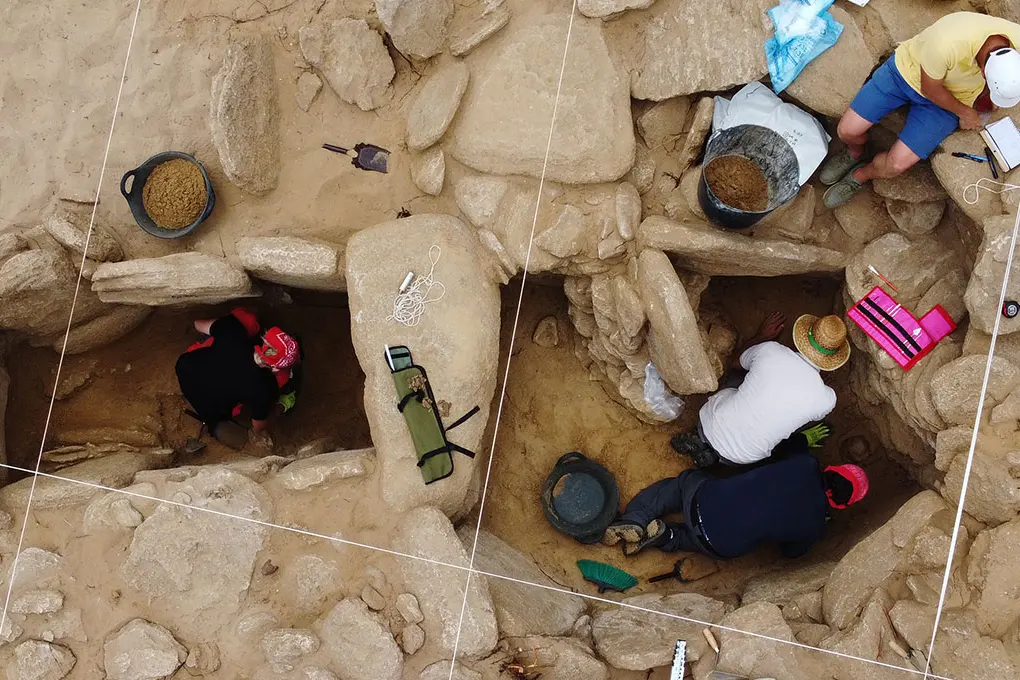
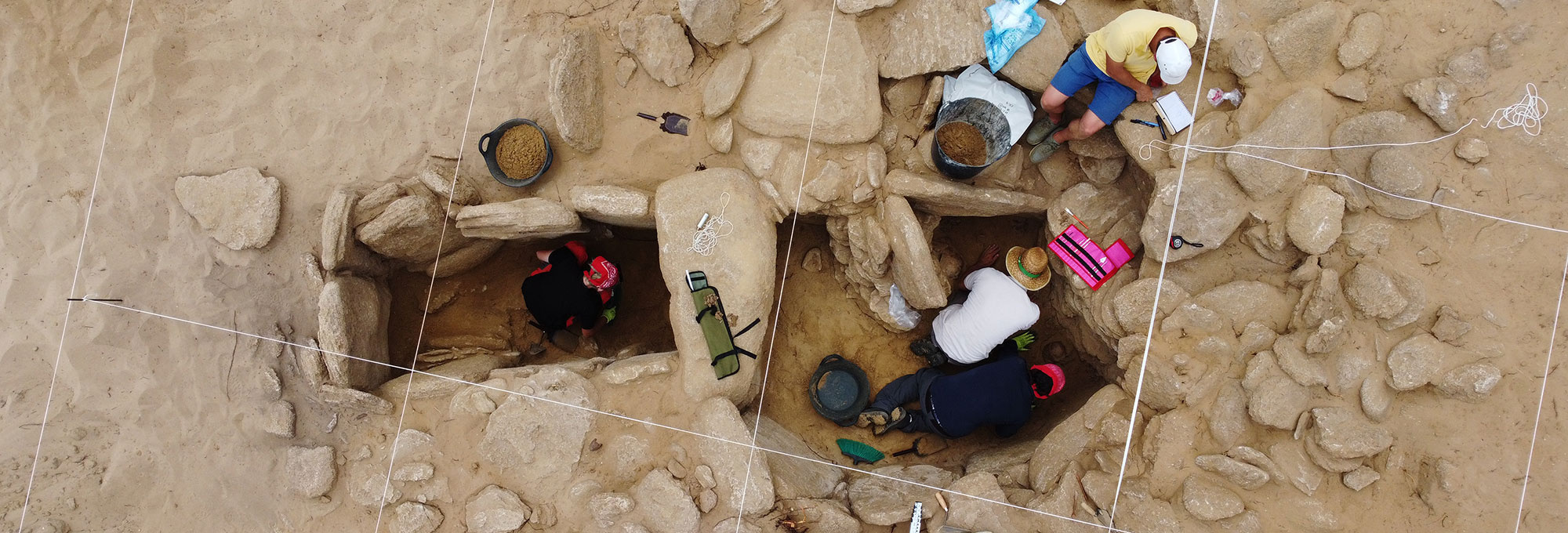
Tomb I features an oval chamber excavated in the rock, connected to a corridor lined with slabs and covered by large flat stones. The chamber was closed with a stone wall, the entrance was sealed with a slab, and the whole was covered with a mound of stones and sand.
Tomb II, on the other hand, has a circular chamber covered by layers of stones. When the original dome collapsed, a central pillar was installed, and half of the space was filled to stabilize the structure.
Human Remains and Funerary Goods
The analysis of the bones shows that in Tomb I, the remains of at least 13 people were deposited, while in Tomb II, at least seven individuals were identified. In most cases, the bones were rearranged after the bodies decomposed. The exception is the articulated skeleton of a young woman found in Tomb I. Dating of her remains indicates that her burial was the last before the chamber was definitively sealed.
Among the objects recovered in Tomb I are two gold earrings, three silver beads, a fragment of green mica, an ivory comb, and two perforated shells. In Tomb II, a single earring, a copper arrowhead, and a green mica bead were found.