Classification and routing of requests.
Information extraction.
Processing of lengthy documents.

The model can interpret documents, images, recordings, and videos, and work alongside more powerful AI systems





Classification and routing of requests.
Information extraction.
Processing of lengthy documents.
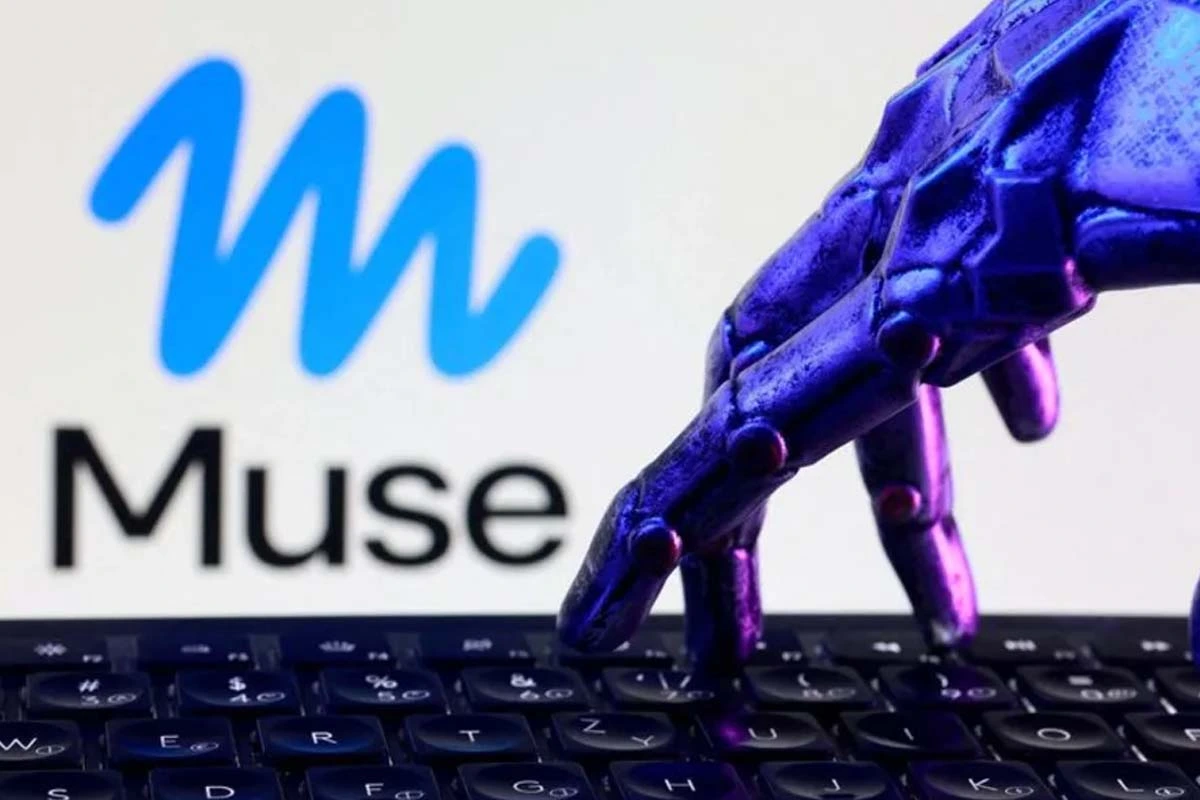
Meta presented Muse Ember, a new model of artificial intelligence developed to perform complex tasks at a lower operational cost. It is the lightest and most economical model from Meta Superintelligence Lab, the company's AI laboratory.
The proposal specifically targets the operation of autonomous agents, with tasks such as programming, information extraction, document processing, and tool usage. According to Meta, its main advantage is the cost-performance ratio compared to competitor models like Anthropic and OpenAI.
One of Meta's main arguments for presenting Muse Ember is its operating cost. The model is priced at US$ 0.10 per million input tokens, a figure that the company uses to highlight its competitiveness against other market alternatives.
In its presentation, Meta used the composite score from Artificial Analysis to compare the cost and capability of Ember with models like Haiku from Anthropic and Luna from OpenAI. It also noted that it competes in price with open-source alternatives like DeepSeek V4.1 Flash and GLM 5.3 Flash.
The strategy is aimed at companies that need to process large volumes of information without relying exclusively on more expensive models.

Meta designed Ember to work alongside higher-capacity models, such as Muse Wonder, within systems based on autonomous agents. The idea is to distribute tasks according to their complexity and reduce execution costs.
For example, in a customer service agent, a more powerful model can set the rules for solving specific problems. Then, Ember can apply those instructions to tens of thousands of cases.
The company summarized this strategy with a phrase: “Muse Wonder plans, Muse Ember manages the volume”.
Among the tasks for which it was developed are:
Tool usage and action execution.
Subtasks of programming.
Another highlighted feature is its multimodal capability. The model was trained to work with different information formats, in addition to text, such as images and audio.
This allows agents to interpret screenshots, graphs, and scanned documents. They can also process voice notes, meeting recordings, and videos without resorting to a separate model for each type of content.
This versatility aims to facilitate the automation of business tasks that require analyzing information from different sources.

Muse Ember is the fourth model of the Muse family presented by Meta. Its launch adds to a strategy that includes different alternatives based on the required capacity and type of use.
Muse Spark: intermediate capacity model presented in April 2026.
Glimmer: open-source version of Spark, launched in August.
Muse Wonder: flagship model with higher capacity, presented in October.
Muse Ember: lightweight and economical alternative, focused on large-scale task execution.
Additionally, Meta launched Muse Agent in September, its artificial intelligence product aimed at the general public. In November, it also began incorporating new features, including Spaces, a collaboration tool, and video chat.



