The Executive keeps that the measure guarantees the right to protest, has broad social support, and denounces political motivations behind the judicial decision
Nuevo
Agregar La Derecha Diario en
Compartir:
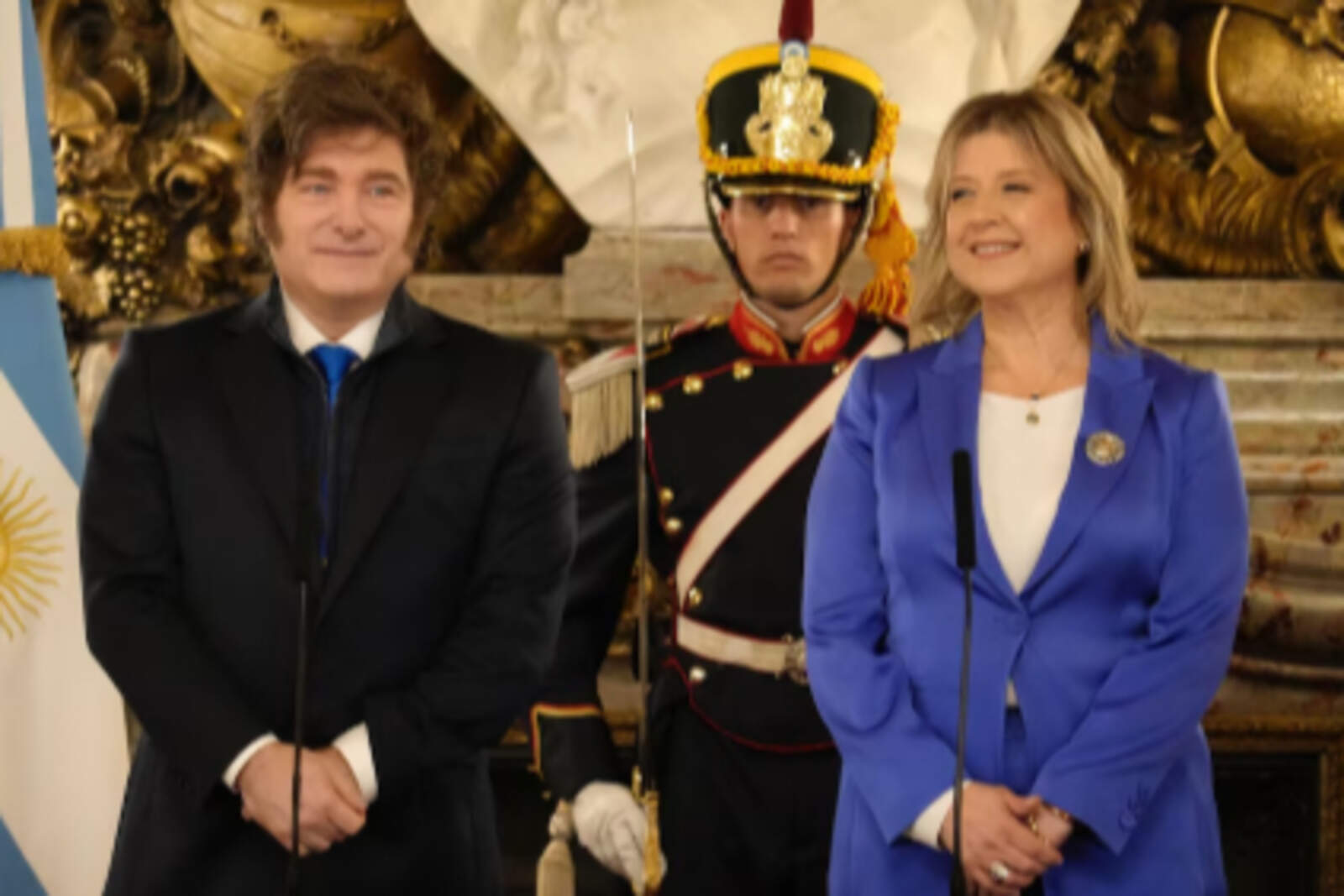
The Government of Javier Milei decided to appeal the court ruling that ordered the suspension of the anti-roadblock protocol, one of the central policies of the current administration in terms of security and public order. From the Executive Branch, officials believe that the decision is not only legally wrong but also fails to recognize the majority support in society for a measure that, they claim, made it possible to restore social peace and free movement.
The ruling was issued by the Federal Administrative Litigation Court No. 11, headed by Judge Martín Cormick, who upheld an amparo action and ordered the suspension of the anti-roadblock procedure on the grounds that it allegedly contains legal flaws. In response to this decision, the Government confirmed that it will turn to the National Court of Appeals in Federal Administrative Litigation Matters to defend a tool that has been applied since the first days of the libertarian administration.
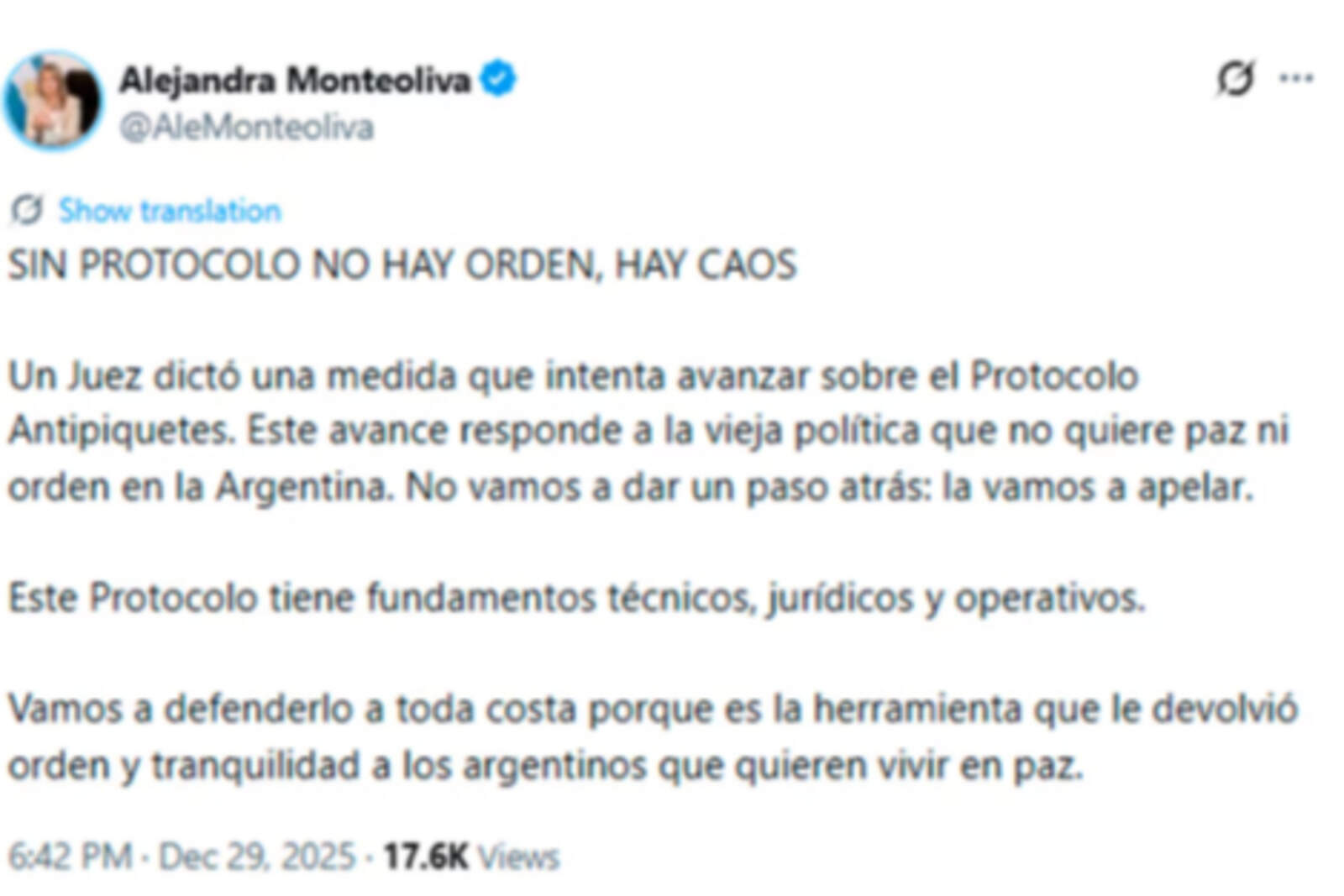
Alejandra Monteoliva en X:
Official sources consulted by the media emphasized that the operations "guarantee social peace" and flatly rejected the claim that the protocol lacks legitimacy. "It is false that it lacks legal grounds," they stated, in a direct response to the judge's arguments.
At Casa Rosada, officials were even more forceful and denounced a political backdrop to the ruling. "Seventy percent of Argentines support the protocol. This is political. It will be appealed. We won't take a step back. We will go against this measure that goes against Argentines. Without the protocol, disorder returns. Without the protocol, there is no order," they pointed out from the presidential inner circle.
Cormick argued that Resolution 943/2023, through which the Ministry of Security implemented the protocol, encroached on powers that the Constitution reserves for the Legislative Branch by legislating—according to his view—in criminal and procedural matters. However, from the Government officials replied that the Judiciary has already repeatedly validated the police operations, even when challenges were raised on grounds of alleged unconstitutionality.
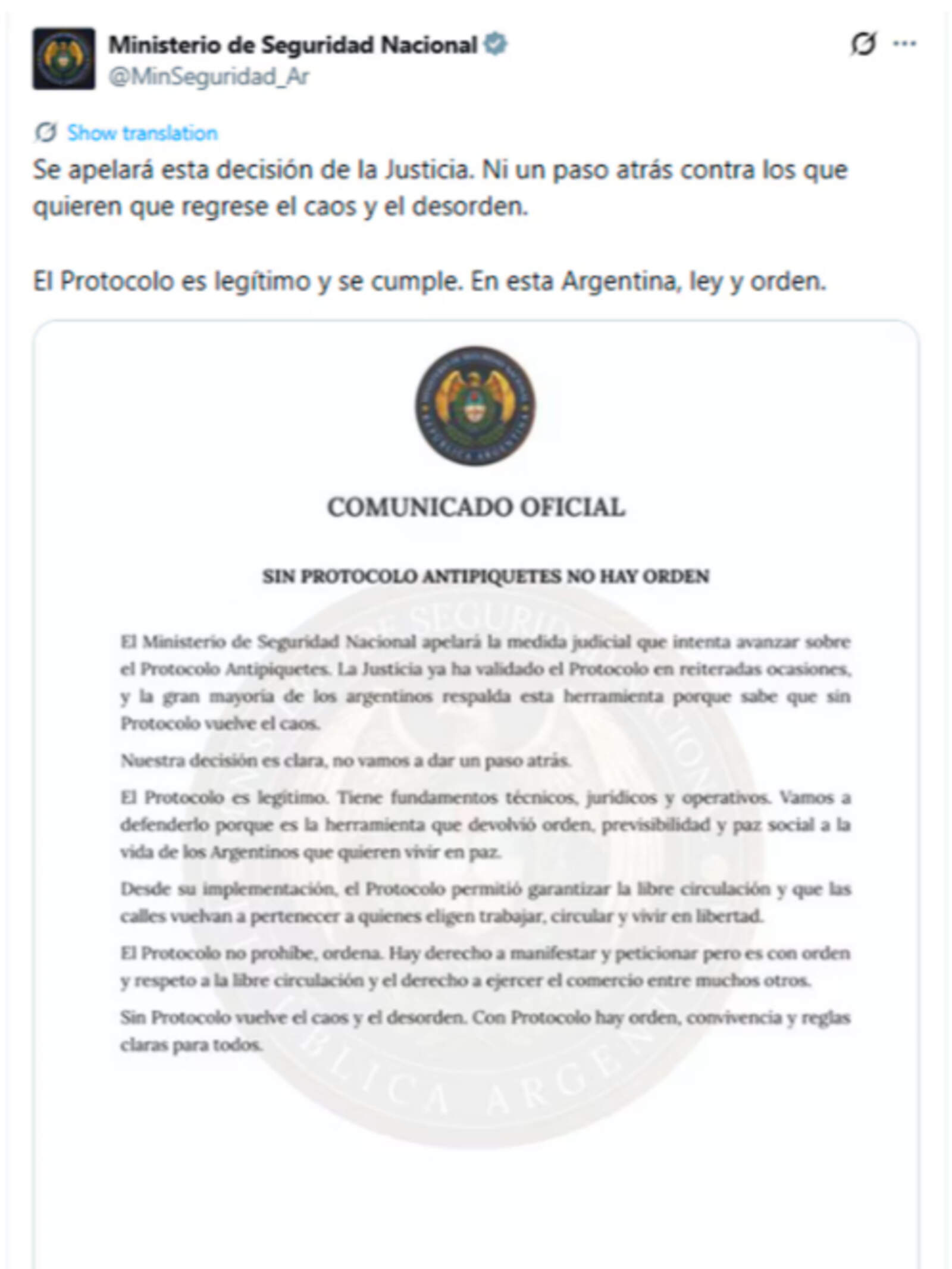
El ministerio de Seguridad Nacional en X:
Officials also recalled that the judge himself had refused last March to suspend the protocol and that he even personally attended a retirees' march to oversee its implementation. This time, however, he ruled in favor of a petition filed by the Center for Legal and Social Studies (CELS), an organization historically opposed to firm security policies.
From the Executive Branch, officials insisted that the protocol doesn't restrict rights, but rather that it "far from limiting them, guarantees the exercise of constitutional rights", such as the right to demonstrate, and that its sole objective is to organize the methodology of protests to ensure free movement and prevent abuses.
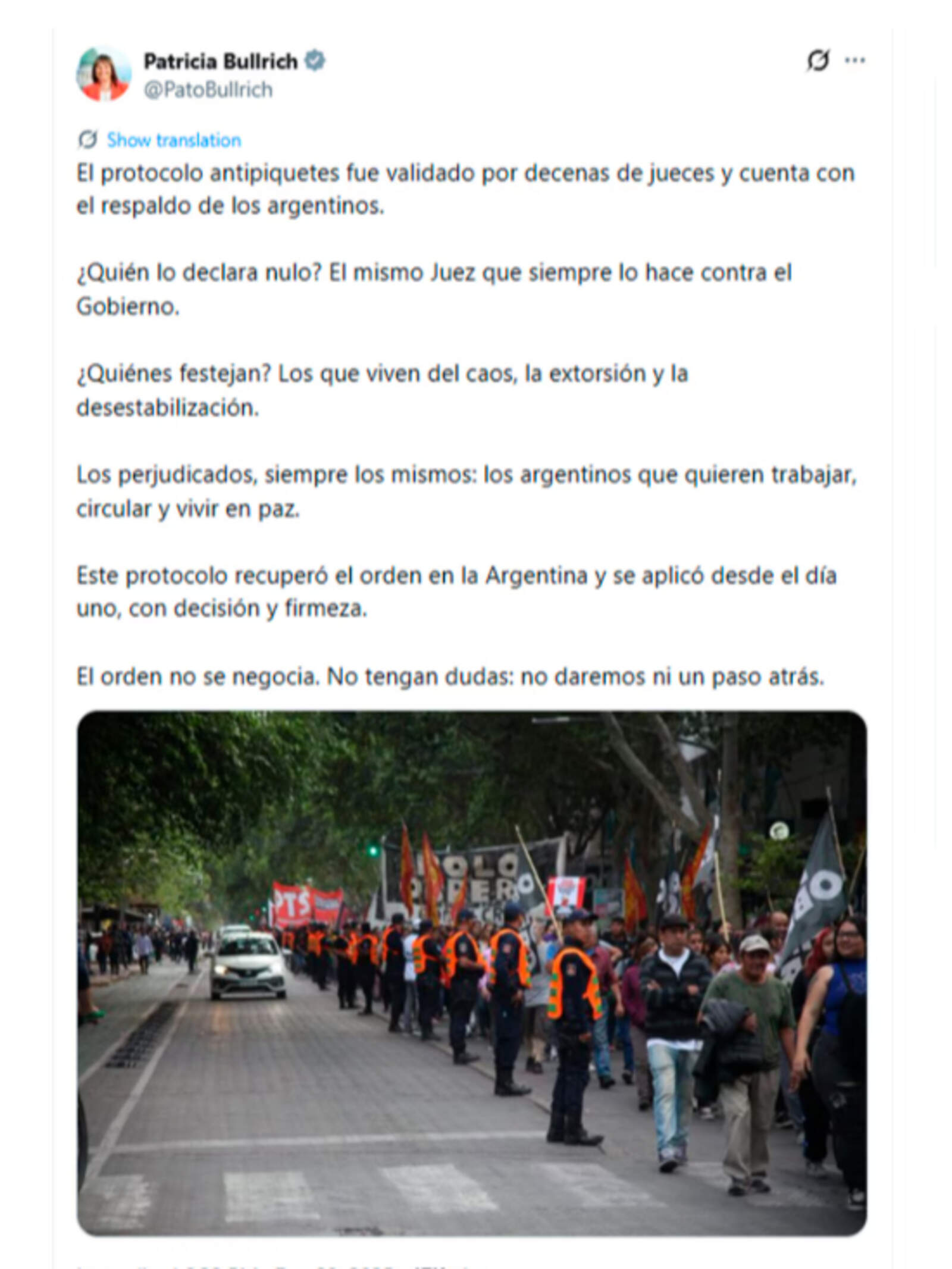
Patricia Bullrich en X:
In the same vein, the Ministry of Security, headed by Alejandra Monteoliva, released a statement in which it confirmed the appeal of the ruling and warned that if the procedure is struck down, "chaos will return." In the official text, the ministry stated that the protocol "is legitimate," has "technical, legal, and operational grounds," and that since its implementation, it "has made it possible to guarantee free movement and for the streets to once again belong to those who choose to work, move about, and live in freedom."
Monteoliva also expressed her views through her X account, where she stated that "this move responds to the old politics that doesn't want peace or order in Argentina.""We will defend it at all costs, because it is the tool that restored order and calm to Argentines who want to live in peace," wrote the official, in a message that was shared by President Javier Milei.
The person who also strongly criticized the ruling was former Security Minister and current deputy Patricia Bullrich, the original proponent of the protocol. "It was validated by dozens of judges and has the backing of Argentines," she stated, and suggested that the ruling responds to political interests. "Who declares it null? The same judge who always rules against the Government. Who celebrates? Those who live off chaos, extortion, and destabilization. The ones who are harmed are always the same: Argentines who want to work, move about, and live in peace," she wrote.