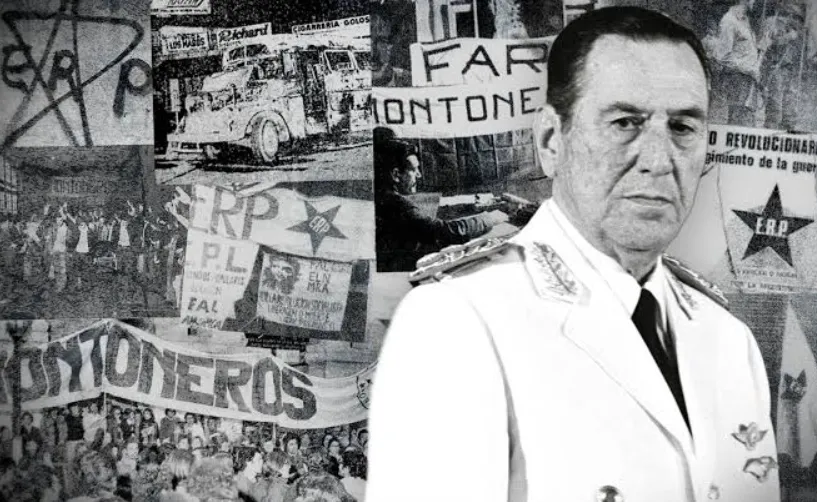
The proposal emphasizes the need to address recent history by considering both the crimes committed by the military dictatorship and the attacks carried out by the terrorist organizations that operated before and during that period
The Ministry of Defense will promote a day on complete memory for sixth-year students of the Dámaso Centeno Military College, an initiative aimed at providing a comprehensive view of the political violence that swept through Argentina during the 70s.
The proposal is part of the policy promoted by the government of Javier Milei, which asserts the need to address recent history considering both the crimes committed by the military dictatorship and the attacks perpetrated by terrorist organizations that operated before and during that period.
The activity will be directed at the students in their final year of secondary school and aims to broaden the historical debate, incorporating perspectives that have been sidelined from the educational system for decades.
A broader view of recent history
From the Ministry of Defense, they believe that complete memory seeks to recognize all victims of political violence, without excluding those who suffered attacks, kidnappings, and murders by armed organizations such as Montoneros and the ERP.
For the Government, the teaching of history must include the entirety of the events that occurred during the 70s, allowing new generations to understand the complete context of one of the most complex periods in Argentina.
The Dámaso Centeno Military College, which is administratively dependent on the Ministry of Defense, was chosen to develop this activity as part of a program aimed at strengthening a more balanced and plural historical education.
Complete memory as a state policy
Since Javier Milei took office as President, the Government has repeatedly expressed the need to end a partial view of the 70s that, according to the ruling party, has rendered invisible thousands of victims of terrorism for decades.
The complete memory policy proposes to incorporate all dimensions of the conflict, recognizing human rights violations committed by the State, but also the crimes perpetrated by armed organizations that spread terror before the 1976 coup.
Complete memory as a state policy
Under this premise, the Ministry of Defense promotes academic activities aimed at enriching the historical debate and ensuring an education based on a plurality of perspectives.
Specialists will present on the 70s
The day will feature specialists related to the theme of complete memory, who will present to the students about the political and social context that the country experienced during that decade.
The goal is for students to analyze events from a broader perspective, incorporating testimonies and approaches that allow for a comprehensive understanding of the events that occurred during those years.
From the Defense portfolio, they emphasize that historical knowledge must be built on access to different interpretations, fostering critical thinking and avoiding singular narratives about the past.
The Government seeks to broaden the historical debate
The initiative is part of an agenda promoted by the administration of Javier Milei, which seeks to promote a more balanced discussion about recent Argentine history.
For the ruling party, complete memory does not imply denying the crimes of the dictatorship, but rather also incorporating the recognition of the victims of terrorism and the political violence exercised by armed organizations, allowing for a comprehensive understanding of the events.
In this sense, the Ministry of Defense believes that this type of activity contributes to forming citizens with a more complete view of the past, strengthening pluralism and democratic debate in the educational sphere.