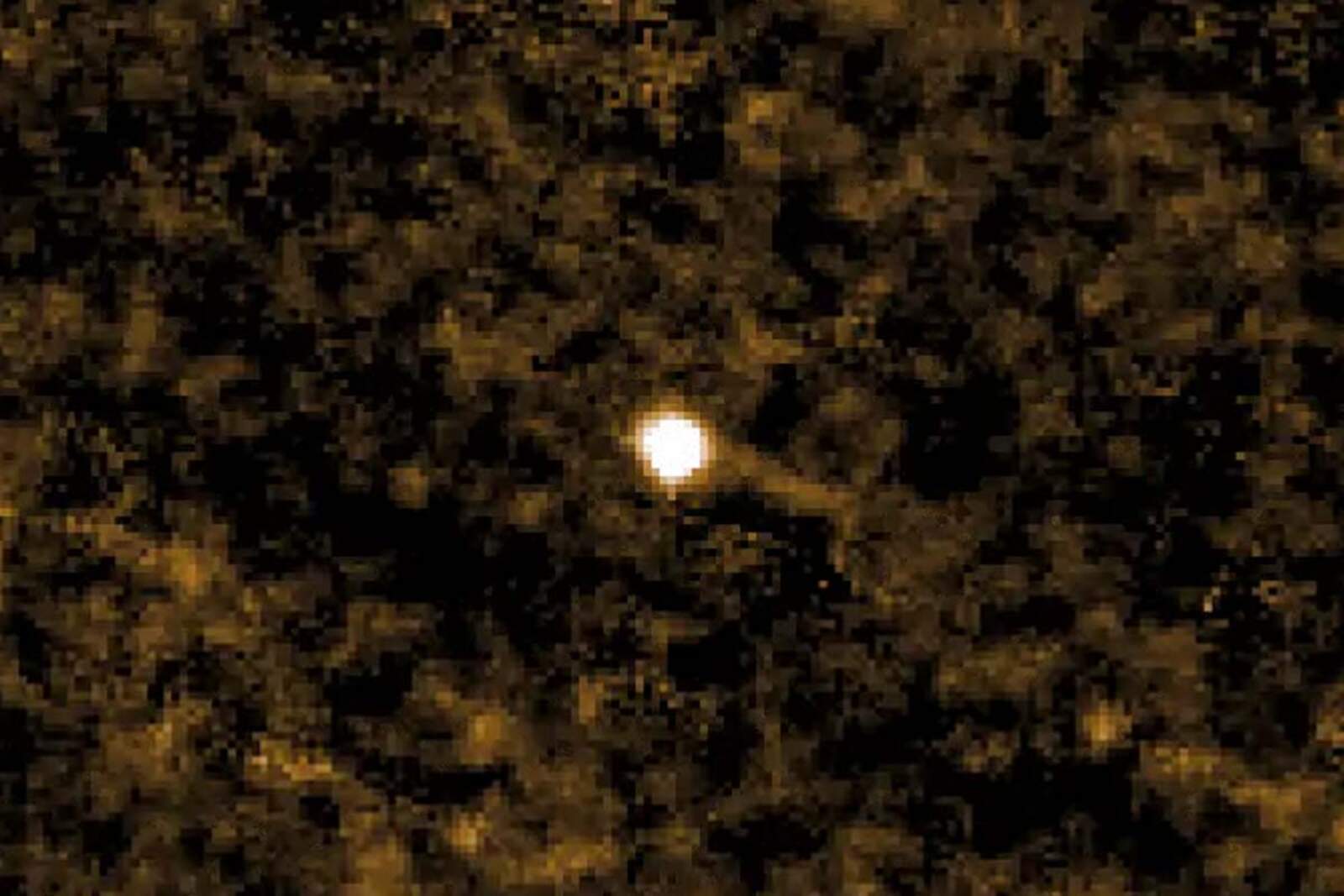





Composition different from local comets
Ultraviolet studies detected unusual proportions of CO₂ and other volatiles. This suggests that the comet comes from an environment with chemical and thermal conditions very different from those of the solar system.
In addition, the intensity of the coma and the luminous structure of its tail indicate that 3I/ATLAS did not form in our cosmic neighborhood.

An interstellar visitor at its closest approach
The refined trajectory confirms that the closest approach to Earth will be on December 19, when it will pass at 274 million kilometers (170.3 million miles). This doesn't pose a risk, but it represents an exceptional scientific opportunity to analyze how solar radiation interacts with an exosolar object.
NASA highlighted that this is the first interstellar body studied so close to the Sun with heliophysics missions. This will allow its behavior to be compared with that of local comets and to deepen the understanding of its remote origin.