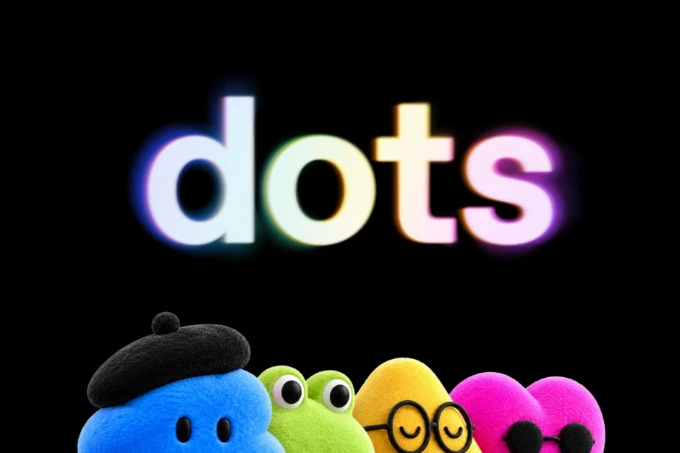
OpenAI introduced Dots this Tuesday during its DevDay event, a new generation of artificial intelligence assistants designed to operate continuously and in the background. The company describes them as agents capable of performing almost any task through connected applications while learning the user's preferences over time.
These assistants are powered by the GPT-6 Astra model and operate from their own cloud computer. From there, they can browse the web and access over 4,000 compatible applications. The main interaction occurs through a chat-like interface, similar to what Meta's Muse offers, although it is also possible to speak to them via voice from ChatGPT on the web, on a computer, or on a mobile device.
Dots also connects with Microsoft Teams and Slack, and carries over the context of previous conversations across different apps and devices. Soon, it will also be able to respond via text messages. For now, each user can create only one Dot, although OpenAI has already indicated that in the future it will allow multiple agents to be deployed simultaneously.
Once a task is assigned, the assistant sends updates and queries while it works. OpenAI provided the example of a developer asking the Dot to gather customer feedback, build and test improvements, and then show a video of the changes made. It also envisioned a content creator asking it to review the transcription of an interview, select moments to cut, create episode notes, and draft social media posts.
How to Control the Assistant's Work
It is possible to track the Dot's progress by accessing its cloud computer. As it performs tasks, the system learns and personalizes its responses. According to OpenAI, over time it can even propose new tasks before the user requests them.
Users and their colleagues can also collaborate with the Dot within ChatGPT Space, a new shared workspace within the application. The launch comes just weeks after Meta introduced Muse, a customizable assistant that browses the web, makes purchases, generates documents, and tracks goals. Despite its rapid adoption, Muse faced criticism over security issues: a user reported that the system shared their address with a buyer on Facebook Marketplace without their consent.
OpenAI claims that Dots include built-in rules about when to act independently. Users can add custom rules that block certain actions or indicate when permission should be requested. It also features an automatic review function that checks if each action complies with its own rules and security requirements. Because of this, the system decides which tasks to deliver to the user, such as changing a password.
Availability starts today for subscribers of ChatGPT Pro, Business Premium, and Enterprise. The company is also testing a feature that allows businesses to create specialized Dots for specific roles within the organization. Conversations with the assistant do not count against the usage limit of ChatGPT. In the future, OpenAI promises that more Dots can be added and the speed or amount of work each can handle per month can be adjusted.