
A team of archaeologists discovered an altar and an ossuary in southern Uzbekistan that may be linked to Zoroastrian practices. The finding occurred at the site of the ancient city of Odirmon, near Samarkand, during excavations led by Sanjar Abduraximov from the Samarkand Archaeological Institute and the Uzbekistan Cultural Heritage Agency.
Odirmon features defensive walls, roads, and a rectangular citadel. According to researchers, the site was occupied from the 3rd century BC to the 3rd century AD. The altar and ossuary have not yet been precisely dated, so their exact chronological relationship remains open.
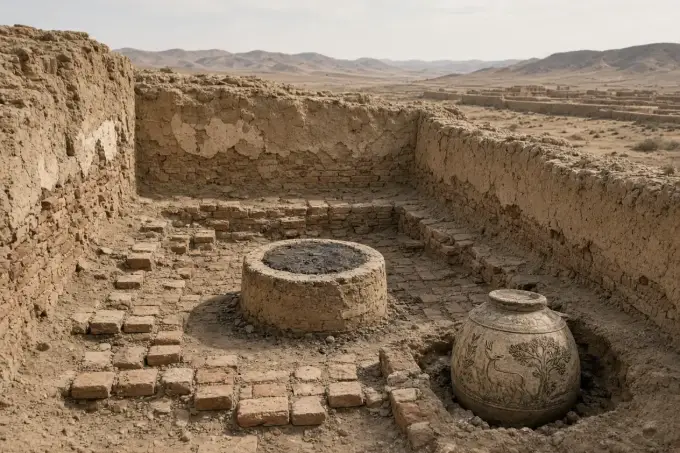
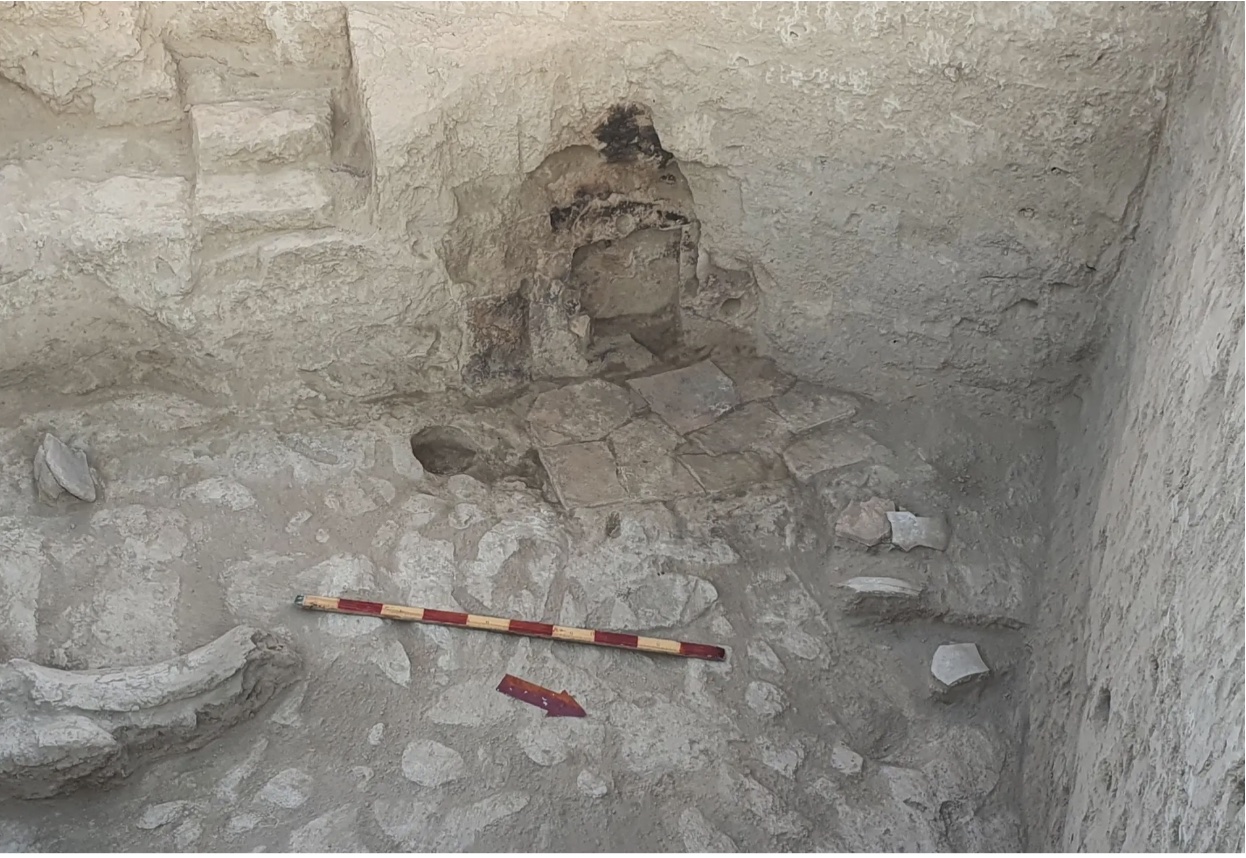
The altar was found in a room with a brick floor, alongside clear evidence of combustion. The walls of this space were coated with clay plaster that had been reapplied several times. These successive repairs indicate that the room was used over a prolonged period.
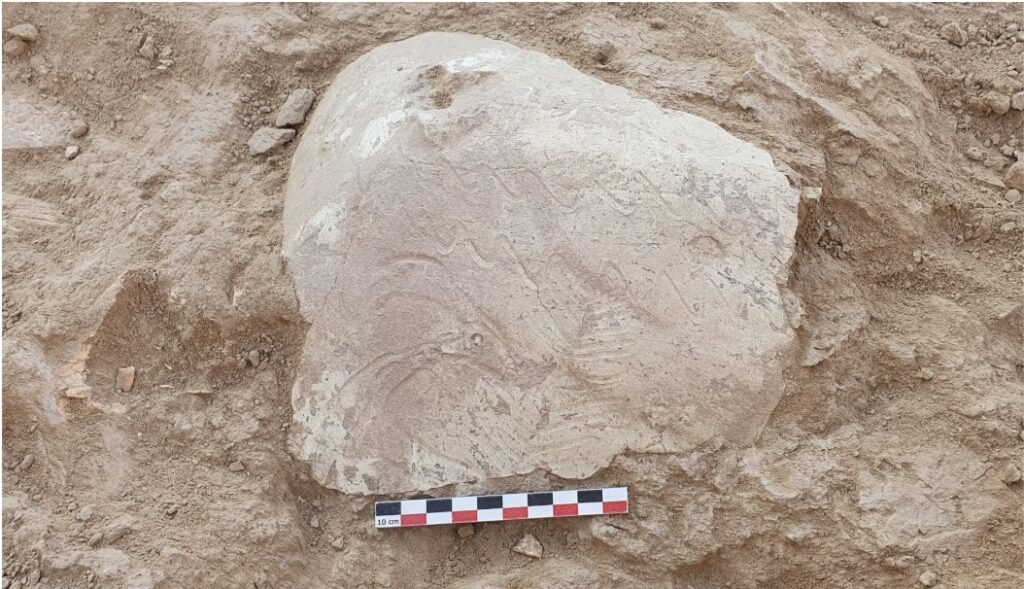
The conservators working on cleaning the ossuary have so far identified images of a deer and a juniper on its surface. The restoration process is expected to reveal more motifs as it progresses.
A possible link to fire worship
It is still unclear how the altar and ossuary were used, or if they functioned contemporaneously. However, specialists note that the traces of fire around the altar could relate it to Zoroastrian practices, an ancient religion where fire held a central place in rituals.
Zoroastrianism spread across large areas of Central Asia and Persia at various times. In this context, any structure associated with ritual combustion becomes particularly interesting to researchers. In Odirmon, the combination of a repeatedly used space, the brick floor, and the burn marks provides a concrete, albeit still provisional, indication.