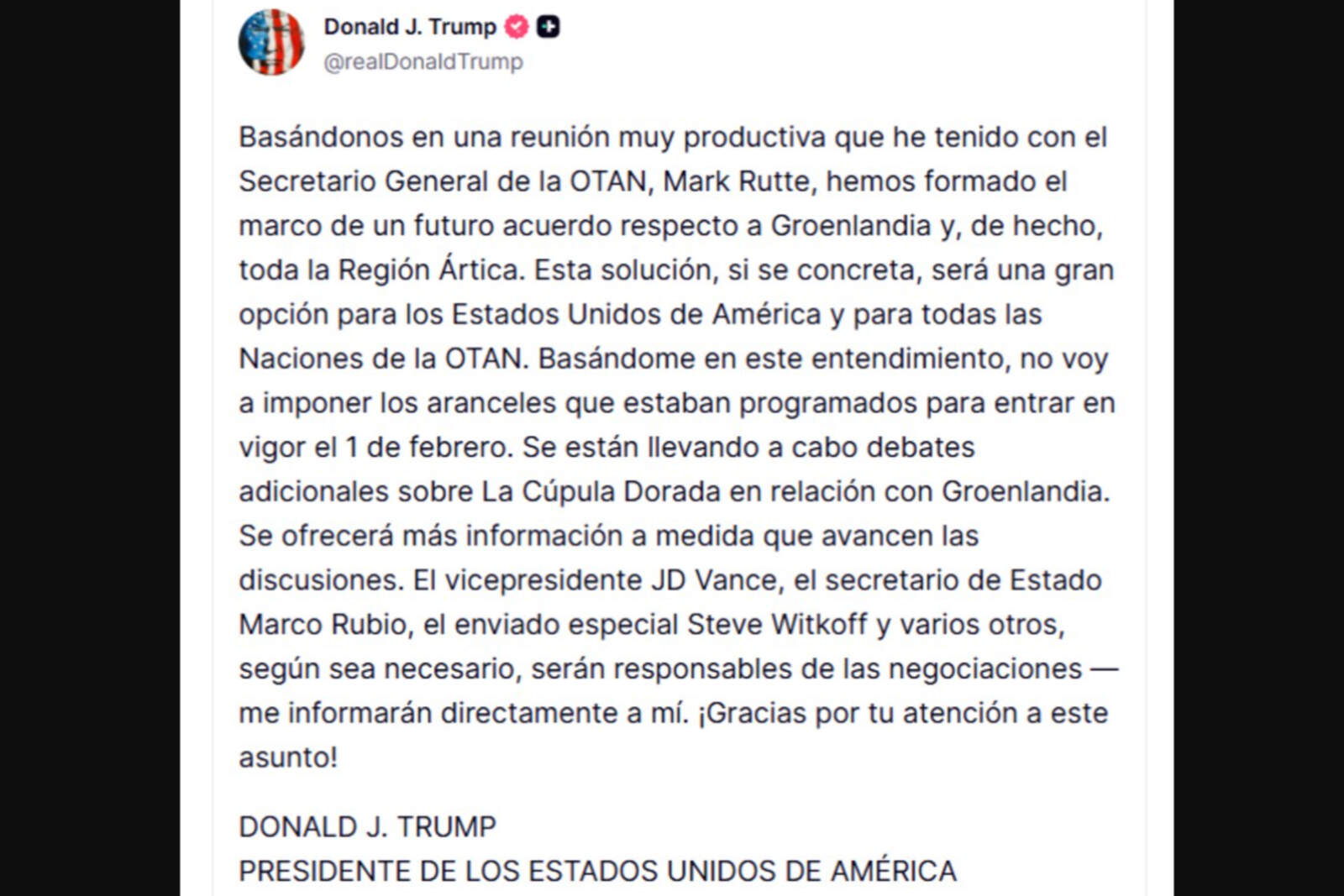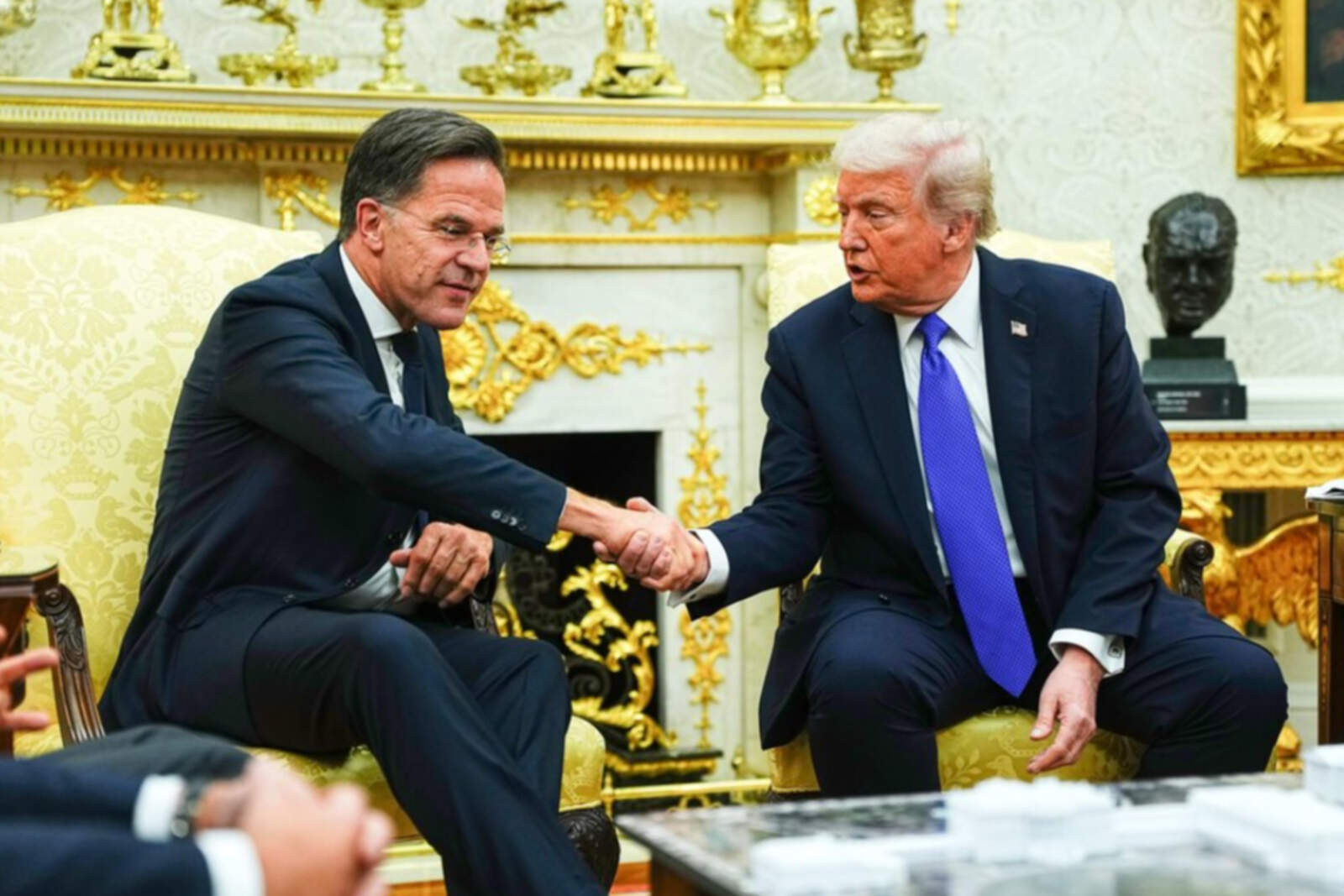

The preliminary agreement reached on the sidelines of the World Economic Forum in Davos made it possible to move toward a de-escalation of international tension around Greenland. The understanding, driven by the President of the United States, Donald Trump, and NATO Secretary General Mark Rutte, is based on four central pillars linked to security, strategic defense, investments, and allied cooperation in the Arctic.
According to reports by European media such as Der Spiegel and Welt, German Chancellor Friedrich Merz would also have played a relevant role in the negotiations. The framework doesn't include any transfer of sovereignty, but it does consolidate U.S. leadership in a region considered key to global security.
Withdrawal of the tariff threat and commercial de-escalation
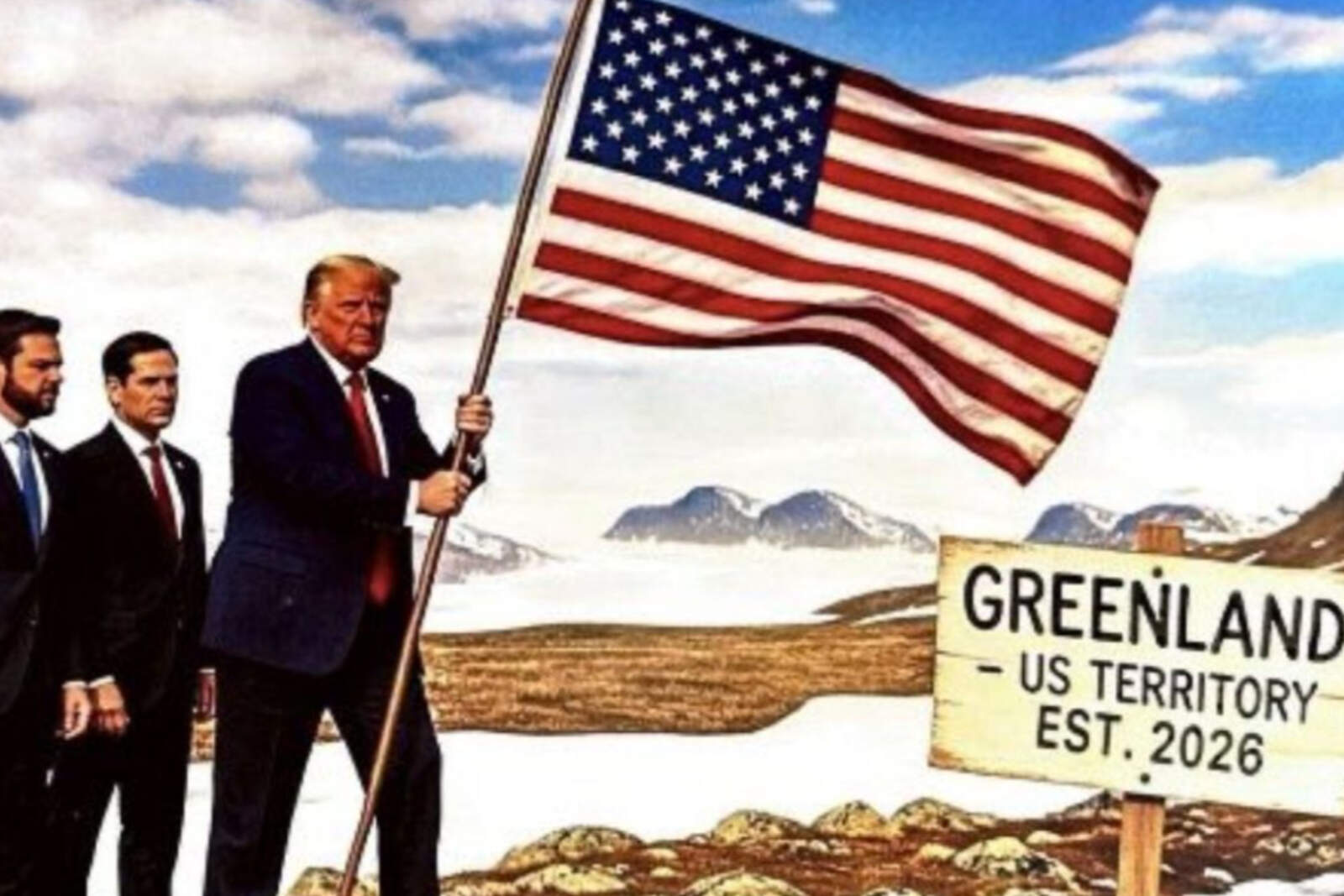
The first point of the preliminary agreement establishes the withdrawal of the threat to impose new tariffs on European countries involved in military maneuvers in Greenland. Trump had already indicated that he would refrain from applying levies to the eight countries that sent troops to the island as of February 1, in exercises led by Denmark.
The measure defused a trade escalation that had led the European Union to consider retaliatory measures, including the use of the so-called anti-coercion instrument—known as the "trade bazooka"—and the imposition of tariffs of more than 93 billion euros on U.S. products. The shift reinforces the logic of direct negotiation promoted by the White House.
Renegotiation of the military agreement and deployment of the missile shield
The second pillar contemplates the renegotiation of the agreement on the stationing of U.S. troops in Greenland, in force since 1951 and last amended in 2004. The objective is to incorporate a clause that enables the deployment of the so-called "Golden Dome", the missile defense system promoted by Trump.