Calle highlighted Chile's support for Argentina and called for monitoring to ensure that Uruguay does not facilitate British air deployment or Chinese fishing exploitation in the South Atlantic
For the analyst, one of the central elements to limit illegal exploitation in the South Atlantic is to prevent neighboring countries from functioning as logistical platforms. “One of the key factors to prevent illegal exploitation from proliferating in the South Atlantic, in the Falklands area, is that Chile does not become a logistical hub for this,” he explained.
International analysts Nicolás Promanzio and Fabián Calle warned this Tuesday about the role of the Government of Yamandú Orsi in Uruguay as a possible logistical facilitator of British and fishing activities in the South Atlantic, and cautioned about the potential need for the Government of Javier Milei to deepen diplomatic efforts to prevent neighboring countries from collaborating with operations linked to the Falkland Islands.
During the program Línea Roja, broadcast by Carajo Stream, both analyzed the new Argentine policy regarding the Islands and particularly highlighted that the president has incorporated concepts related to military power, surveillance, and the effective capacity of the State to defend its national interests.
The Uruguayan government could facilitate the UK's air deployment in the Falkland Islands
“Since '83 I don't remember a president talking about military power, about surveillance capacity,” said Calle, who considered it positive that a “healthy debate” has opened around the issue, even with sectors that express opposition.
The specialist also emphasized that the measures adopted by Argentina currently have a much greater impact than in previous decades. “If Argentina had made this threat ten years ago, it would have been just hot air. Today this threat keeps you out of multibillion-dollar oil, gas, and mining projects,” he asserted, referring to the economic consequences for companies participating in activities linked to disputed territories or resources.
In this context, Calle also highlighted the position of Chile, after the government of José Antonio Kast reaffirmed its support for Argentine sovereignty during a meeting with Milei. “Chile made a very strong statement about Argentine sovereignty,” he stated.
He then focused on Uruguay, warning that the Argentine Government should closely monitor the situation and, if necessary, raise the claim through diplomatic channels. Calle particularly pointed out the repair of fishing vessels operating in the region and the airport facilities used by flights linked to the British.
Promanzio agreed with this concern and stated that Uruguay already functions as a logistical center for vessels operating in the so-called mile 201, including part of the Chinese fishing fleet.
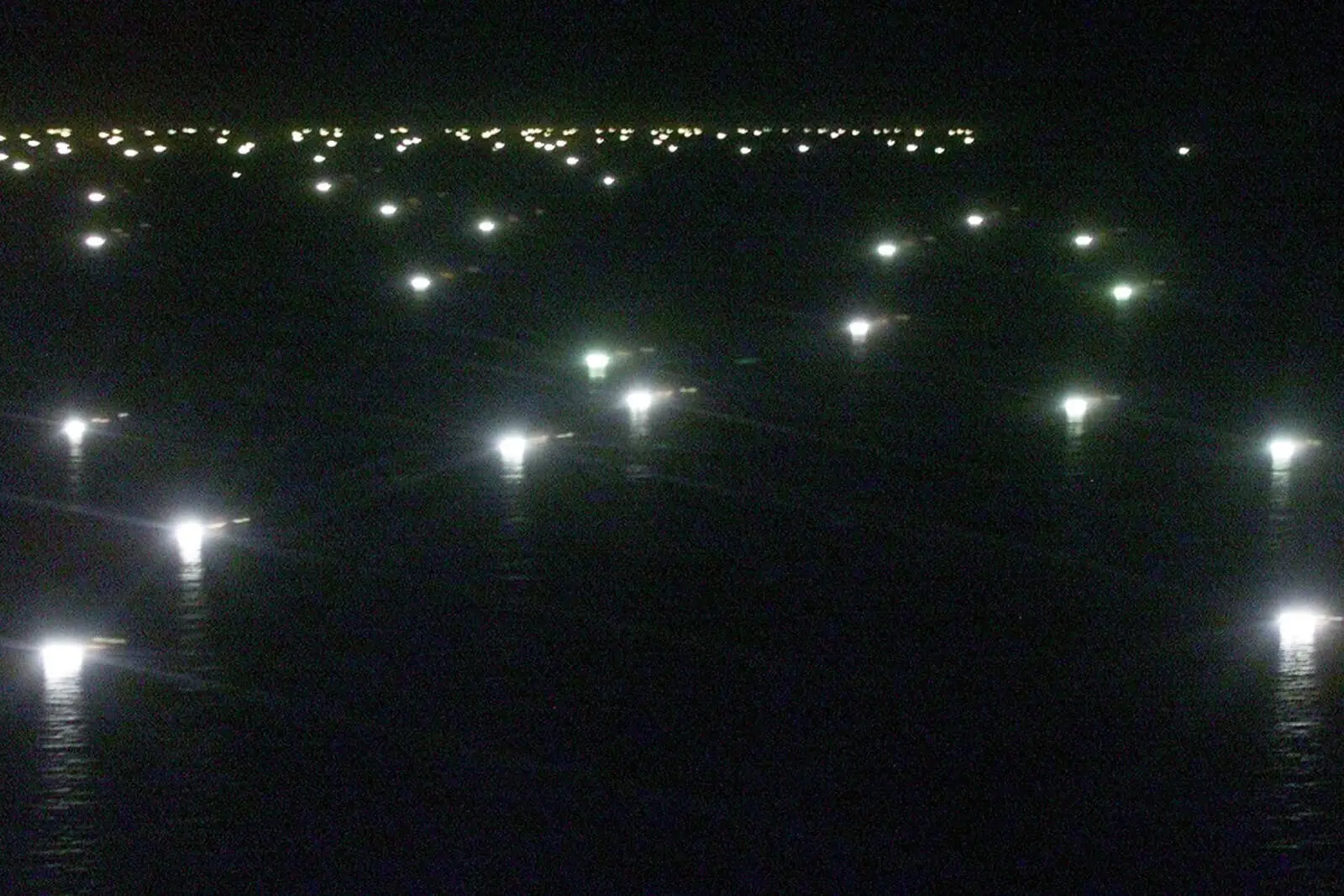
Fishing vessels in the vicinity of Mile 200
“There is something that still escapes me, and that is how Argentina has not yet made Uruguay stop being the free zone for the Chinese in the South Atlantic,” he reflected.
Calle concluded that Argentina must deploy “all possible diplomatic efforts” to prevent both Chile and Uruguay from becoming logistical facilitators of activities that affect Argentine interests in the South Atlantic and around the Falkland Islands.