The Swedish left is in a position to regain power after winning by an extremely narrow margin in the country's general elections.
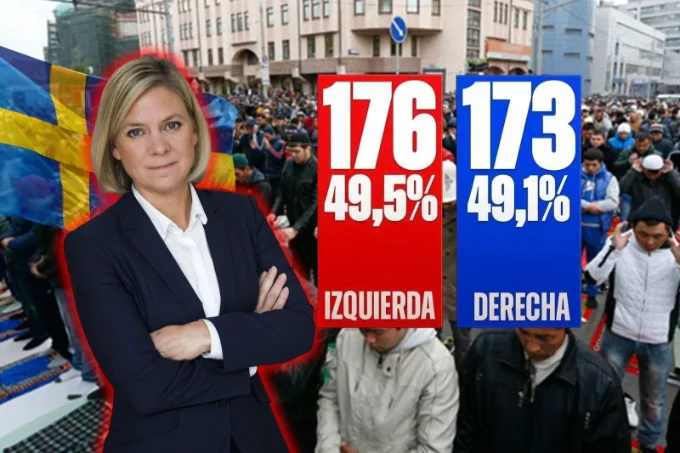
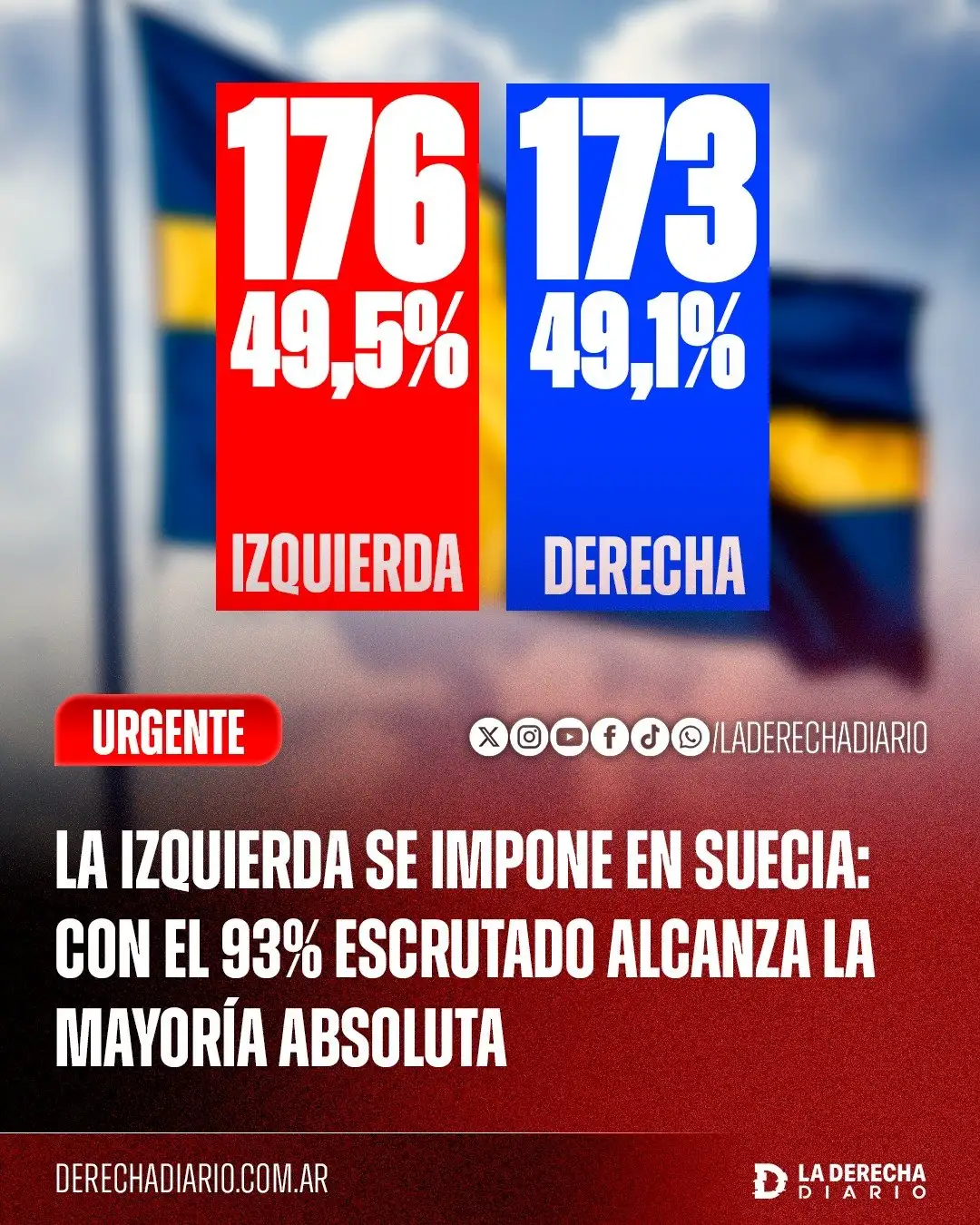
With 93% of the votes counted, the bloc led by Magdalena Andersson reached 176 seats in the Riksdag, one more than the 175 needed for an absolute majority. On the other side, the center-right and the right have a total of 173 seats.
If the trend holds until the end of the count, Andersson will be in a position to oust the current Prime Minister, Ulf Kristersson, and return to government.
The elections in Sweden
The result is particularly significant because it comes with just a three-seat difference between the two blocs. Furthermore, the left's advance occurs in a scenario where the Social Democrats explicitly appealed to the votes of illegal Muslim immigrants, with a controversial electoral campaign in Arabic.
For this reason, the Social Democratic Party could regain power despite having fallen nearly two percentage points compared to the 2022 elections.
An electoral campaign in Arabic
The strategy adopted by the Social Democrats highlighted the strong demographic transformation in the country, resulting from the invasion of illegal Muslim immigrants over decades.
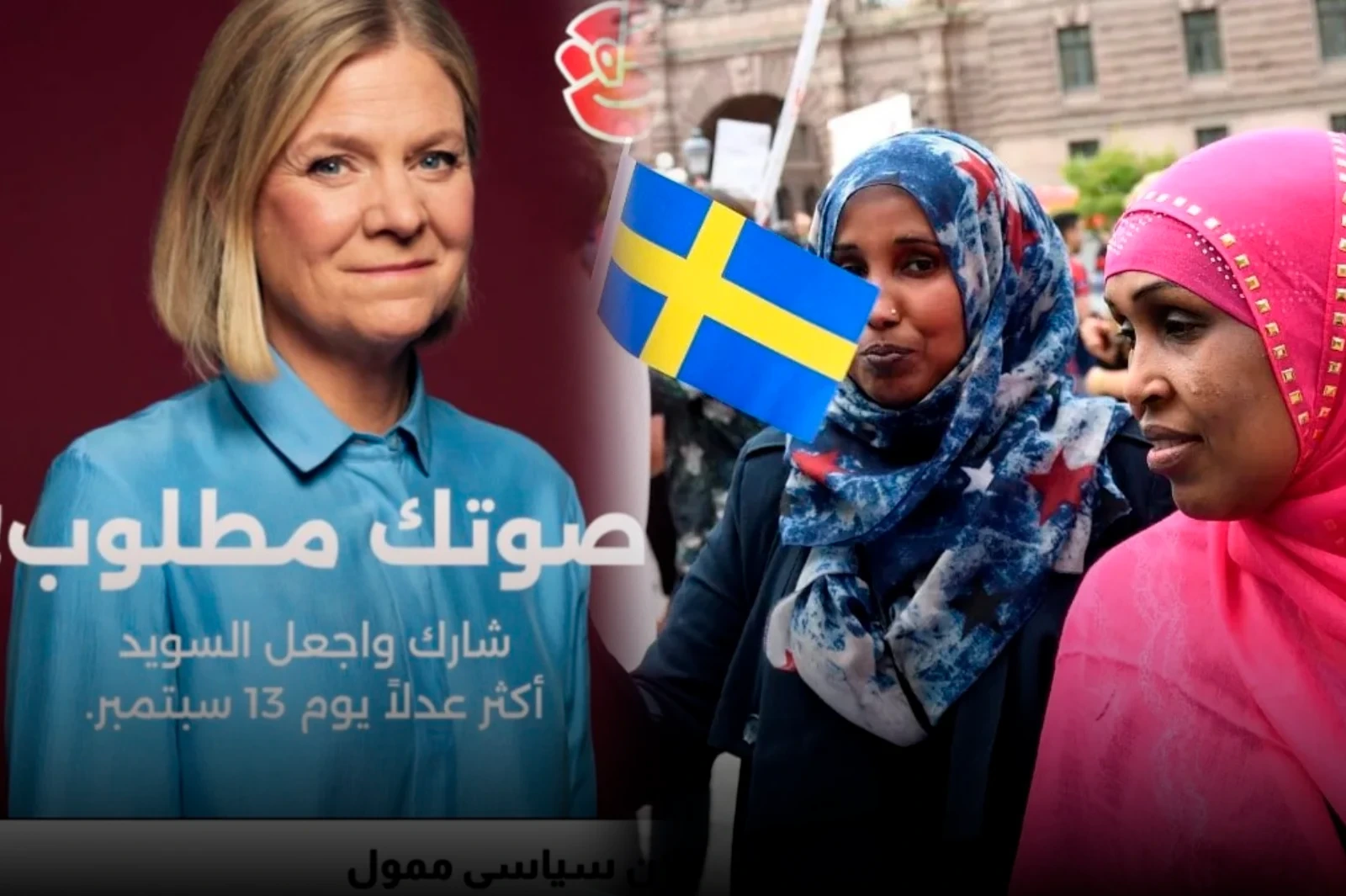
In this context, ahead of the general elections on September 13, the Swedish left decided to launch a campaign specifically aimed at Arabic-speaking voters.
The campaign in Arabic
One of the messages used in that campaign, written in Arabic, stated: "Your vote is necessary! Vote and make Sweden fairer on September 13".
According to official figures from Statistics Sweden (SCB), approximately 2.94 million people, equivalent to 28% of the population, have foreign origins in Sweden. This category includes both those born outside Sweden and residents born in the country whose two parents are foreigners.
Within that population, there is a significant presence of groups from Muslim countries, particularly from Syria and Iraq. The growth of these sectors has also made Arabic increasingly visible in various urban areas.
Stockholm, Gothenburg, and Malmö have a significant presence of Muslim immigrants and have become places where the Arabic language is notably present.
In this context, the Social Democrats' campaign aimed directly at capturing that electoral weight. The result, marked by a minimal difference in seats, once again highlights the impact that Sweden's demographic transformation has on its political landscape.