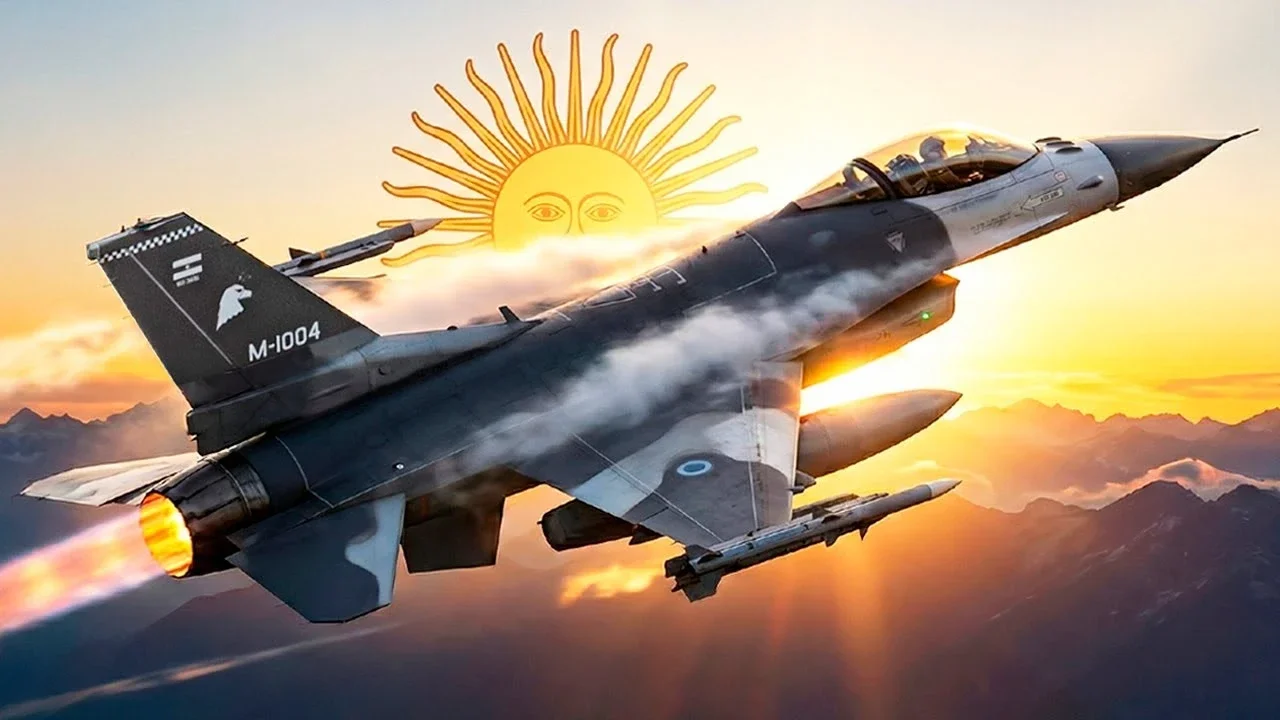
On May 4th, Argentina deepened its process of military re-equipment through the implementation of the ARMA Plan, a plan promoted by the Ministry of Defense to modernize the strategic capabilities of the Armed Forces.
The initiative developed in a context of increasing geopolitical competition for resources, maritime corridors, and strategic spaces in the South Atlantic.
The Argentine military modernization coincided with a diplomatic rapprochement with Chile and a foreign policy oriented towards greater hemispheric coordination with the United States, which has been key in Milei's administration.
The Argentine Army.
This dynamic reactivated discussions related to bi-oceanic control, regional security, and South American Antarctic projection.
In this framework, it is pertinent to analyze the scope of the ARMA Plan, the diplomatic convergence between Argentina and Chile, and the strategic alignment with the United States within a hemispheric logic historically linked to the Monroe Doctrine.
ARMA Plan
At the beginning of this month, the Argentine government officially launched the ARMA Plan —Plan for the Restructuring and Modernization of the Armed Forces— with the aim of strengthening military re-equipment through the use of resources from state assets and specific financing.
Furthermore, the Ministry of Defense explained that the program aims to accelerate the recovery of operational capabilities deteriorated over the last decades.
Argentine F16.
The modernization process included acquisitions in the three military components. Among the most relevant operations was the purchase of 24 F-16 fighters from Denmark, the incorporation of Stryker armored vehicles, and the modernization of naval units and maritime surveillance systems.
These measures were complemented by infrastructure projects and technological upgrades at strategic military bases.
Additionally, the Argentine government stated that the central objective is to recover defense capabilities related to territorial, maritime, and air control.
Support from Chile and strengthening of the bilateral relationship
The diplomatic rapprochement between Argentina and Chile deepened in recent months, particularly after statements by Chilean leader José Antonio Kast supporting the “legitimate rights of sovereignty” of Argentina over the Falkland Islands.
This political convergence occurred alongside initiatives aimed at strengthening economic, mining, and energy integration between both countries.
The bilateral relationship has a strategic dimension linked to the bi-oceanic control of the southernmost part of America. Coordination between Atlantic and Pacific ports, Andean logistical corridors, and projection towards Antarctica would allow for a more integrated regional presence in historically disputed spaces by extra-regional powers.
Javier Milei and José Antonio Kast.
Recent history, however, shows periods of tension that weakened that articulation. The Beagle crisis of 1978 and the regional scenario of the Falklands War in 1982 reflected how border disputes reduced the possibility of a coordinated South American strategy.
Nevertheless, both countries agreed to resume, in July, the sessions of the Administrative Commission of the Mining Treaty, signed in 1997.
It is evident that greater cooperation between Argentina and Chile would enhance regional capacity to manage strategic resources and reduce external dependencies not belonging to our hemisphere.
Alignment with the United States and the Monroe Doctrine
The Argentine rearmament developed in line with the political and military rapprochement with the United States that characterizes Javier Milei's mandate. The acquisition of the F-16s -approved by Washington- consolidated a strategic link with the Western defense system and reinforced interoperability with allied military forces.
This dynamic fits into a hemispheric logic historically linked to the Monroe Doctrine formulated in 1823, under the principle of “America for the Americans.” Although originally aimed at limiting European intervention in the continent, the doctrine evolved towards a scheme of hemispheric strategic coordination led by the United States.
Javier Milei and Donald Trump.
In this scenario, military cooperation between Argentina, Chile, and the United States gains relevance in terms of maritime security, control of the South Atlantic, and regional stability.
It is crucial to understand that the consolidation of continental alliances would strengthen South America's capacity to project influence over oceanic corridors, energy resources, and strategic routes near Antarctica.
Conclusion
The launch of the ARMA Plan reflects a shift in Argentine defense policy aimed at recovering strategic capabilities in an international context marked by territorial, maritime, and energy disputes. Military modernization, combined with greater regional coordination, reinforces the geopolitical importance of the South Atlantic and Antarctic projection.
In this framework, the rapprochement between Argentina and Chile acquires a strategic dimension that exceeds traditional bilateral cooperation. The possibility of consolidating a bi-oceanic articulation in the Southern Cone would strengthen regional capacity to manage resources and strategic corridors with less dependence on extra-continental actors.
Moreover, alignment with the United States within a hemispheric logic reinforces a continental vision linked to regional stability and the control of strategic American spaces. From this perspective, the Falklands issue continues to occupy a central place within Argentina's geopolitical projection and the discussion on sovereignty in the South Atlantic.