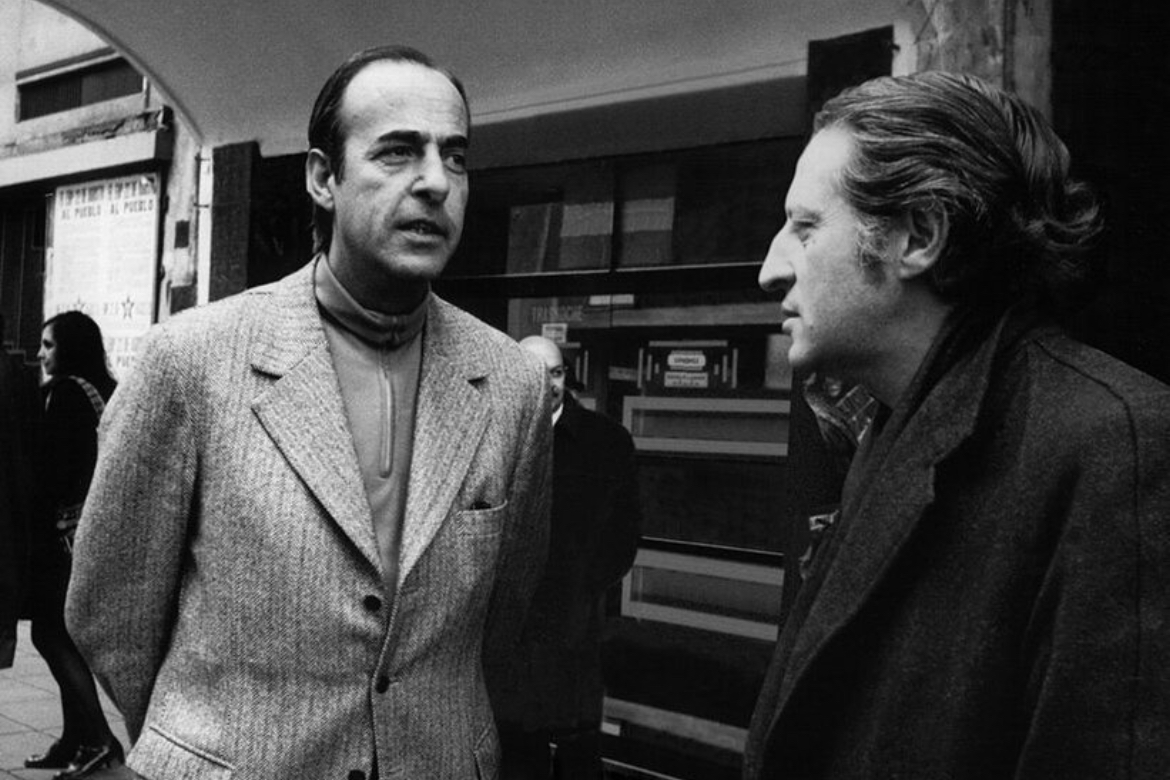

For a moment, the official narrative seems unbreakable. Héctor Gutiérrez Ruiz, “el Toba,” former president of the Chamber of Deputies, director of the white newspaper El Debate, an emblematic figure of the National Party, was assassinated in Buenos Aires in May 1976 along with Zelmar Michelini and former Tupamaros Rosario Barredo and William Whitelaw in an operation of Plan Cóndor. A martyr of democracy, an innocent victim of repression. All that cheap smoke that most members of the current political system repeat like parrots.
Until his own son, Marcos Gutiérrez, lifted the veil in an interview in August 1997 with César di Candia in Búsqueda and confirmed it years later: behind the bronze statue was a pragmatic politician who, in the midst of subversive fervor, struck a deal with the MLN-Tupamaros to save his newspaper.
“El Debate had a significant financial shortfall and the Tupamaros who had stolen Mailhos' gold had logical difficulties converting it into cash. As far as I know, there was a political agreement by which my father got them a contact to sell one or more bars of gold and in exchange, the MLN financed El Debate for a time,” Marcos Gutiérrez recounted with the rawness of someone who doesn’t need filters to tell the family story.
The Mailhos robbery —that “heist of the century” on the night of April 4 to 5, 1970— was no minor detail. A Tupamaro command burst into the residence/offices of Luis Eduardo Mailhos on 8 de Octubre Avenue and took a safe containing 240 kilos of gold in sterling pounds and bars, as well as millions in cash. A loot that, in full secrecy, was as explosive as it was useless if it could not be laundered.
The guerrillas needed contacts in the “legal” world to convert that gold into cash without raising suspicions. And Gutiérrez Ruiz, director of one of the most influential newspapers of the herrerismo, had those contacts.
It was not an act of charity or naivety. It was an explicit political agreement. The white man facilitated the operation for the seditionists and, in exchange, the MLN injected funds into El Debate, which was navigating turbulent financial waters. Previous conversations with Tupamaros —and also with military personnel, according to Marcos himself— were part of a double game that many politicians of the time practiced naturally. It was not pure ideology; it was survival and power.
Federico Leicht, in his research on the era based on declassified documents from the U.S. State Department, goes further and dismantles the image of Gutiérrez Ruiz as a mere financial interlocutor. According to a document from the U.S. embassy in Montevideo dated June 18, 1976 (accessed by the Informe Nacional program of Radio Uruguay and cited by Leicht), the then-deputy provided the MLN-T with key information used in the kidnapping of U.S. diplomats in Montevideo (such as the cases of Dan Mitrione and Claude Fly in 1970). He was not just a facilitator of bars of gold: he was an actor who, from Parliament and the press, wove threads with armed subversion while publicly maintaining the facade of an irreproachable democrat.