The Argentine financial market is experiencing days of strong instability and it worsenedafter the decision by the Chamber of Deputies of rejecting the presidential vetoes on the University Financing and Pediatric Emergency laws.
At midday, the Global bonds in dollars under foreign law recorded an average drop of 4%, with country risk climbing 162 points (+14%) to reach 1,408 units, after hitting an intraday high of 1,433. This is the highest level since September of last year, which limits the possibility of accessing financing in international markets and raises questions about debt repayment capacity.
El Global 29, el Global 30, el Global 41 y el Global 38 sufrieron caídas abruptas.
According to consultancy 1816, "external debt commitments amount to 34,000 million dollars through 2027, and an additional USD 27,000 million would be needed beyond current levels to meet them without incurring negative net reserves". The warning reflects the pressure that Javier Milei's administration will face to sustain the economic program in a scenario of growing distrust.
The breakdown by asset showed significant losses: Global 29 fell 3%, to 68.32 dollars; Global 30 retreated 3.1%, to 64.49; Global 41 plunged 4.4%, to 47.60; and Global 38 lost 3.3%, to 53.34 dollars.
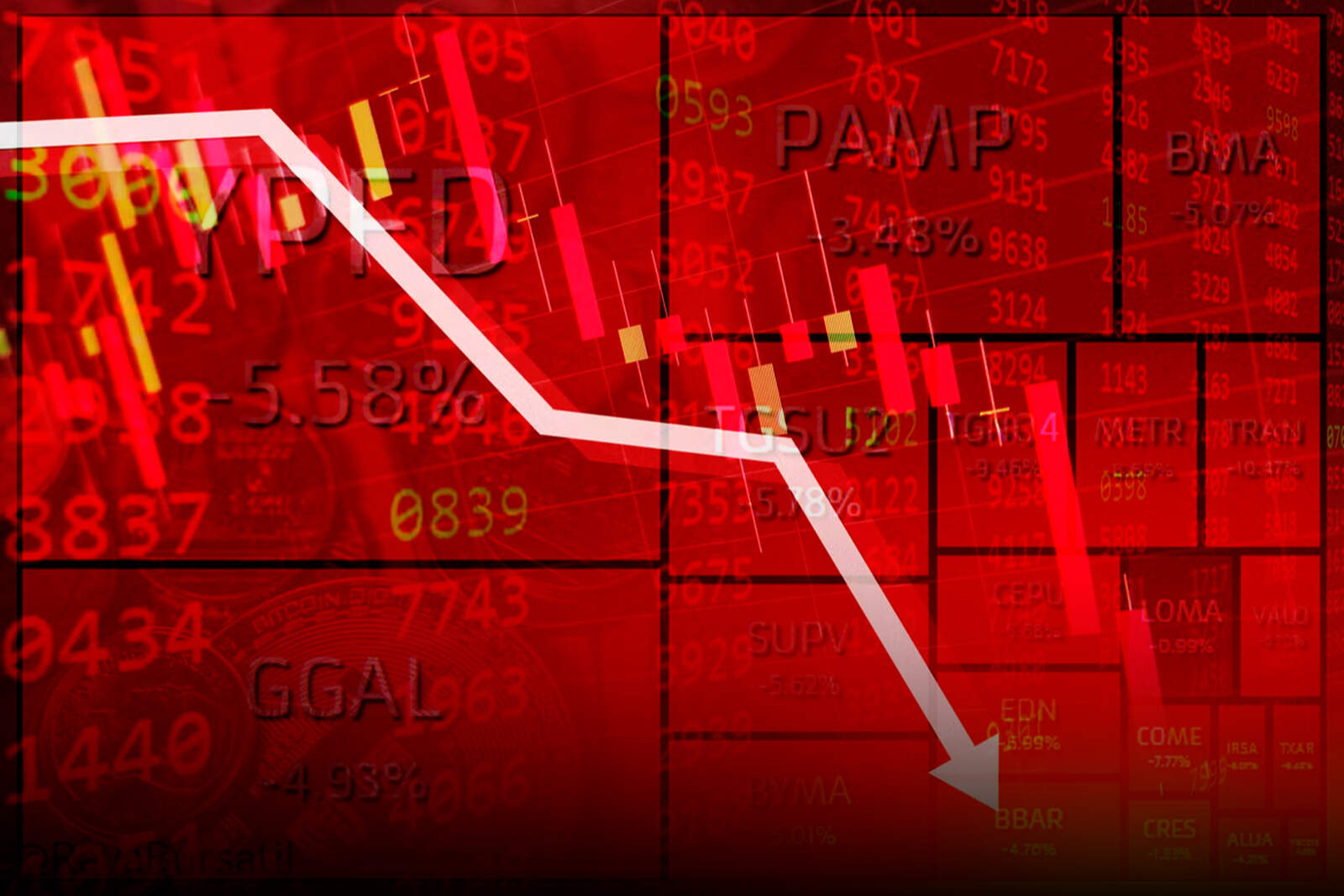
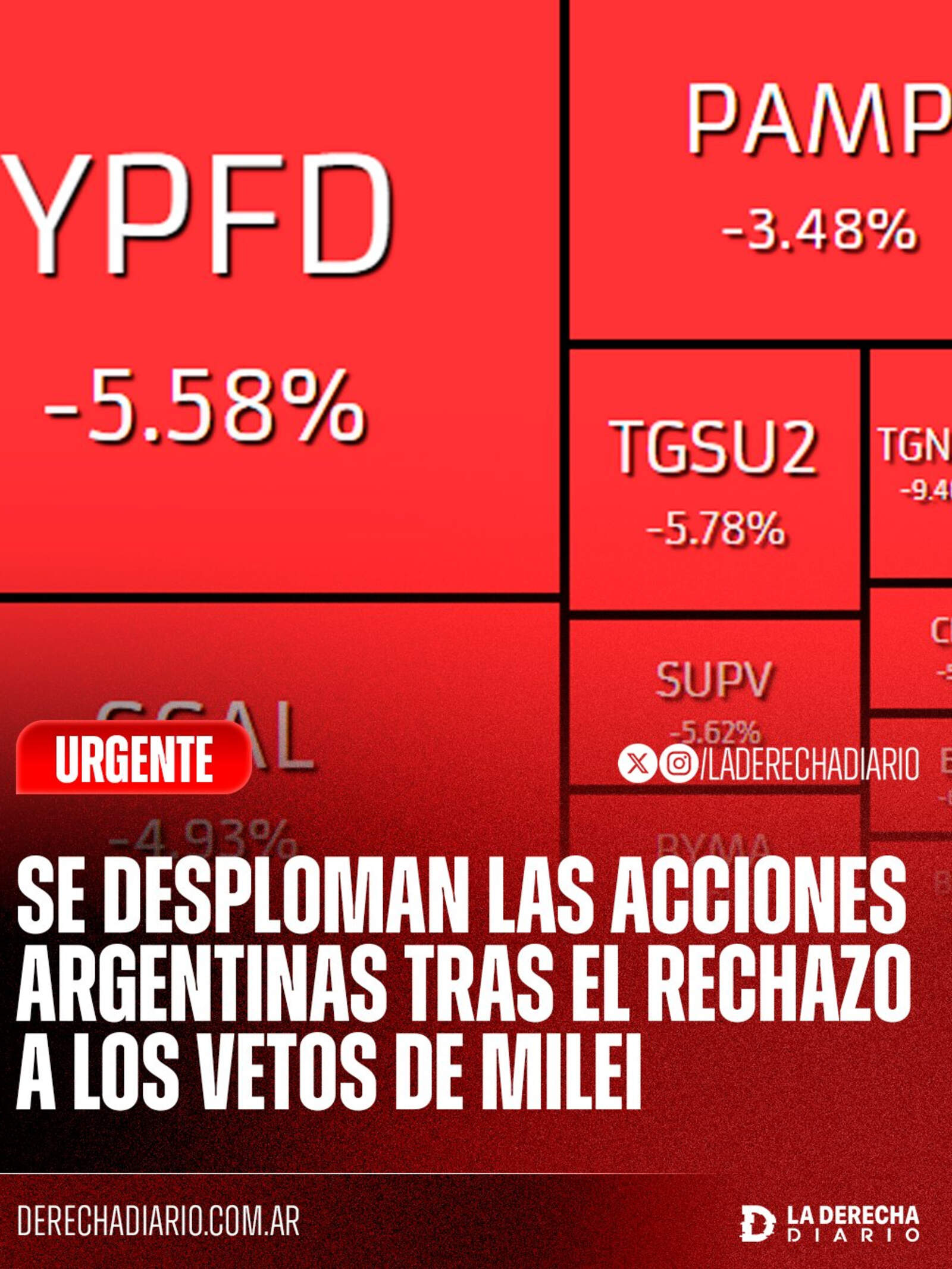
The Buenos Aires Stock Exchange followed the trend. The S&P Merval index dropped 5.6%in pesos to 1,680,000 points, while measured in dollars it has accumulated a 53.6% decline since January, with 1,106 current points compared to the peak reached at the beginning of the year. Among the hardest-hit stocks on Wall Street, Edenor (-8.9%) and Banco Supervielle (-8.6%) stood out.
The contrast with international markets is striking: while Wall Street is reaching record levels, the local market is positioned as the worst performer globally in 2025. The combination of political and economic factors creates a scenario of structural weakness that conditions the continuity of reforms.
Riesgo kuka: acciones y bonos argentinos caen tras rechazo legislativo a los vetos.
On the currency front, pressure on the dollar intensified. The wholesale rate held at $1,474.50 thanks to a Central Bank intervention of USD 53 million, the first since April. However, parallel exchange rates exceeded $1,500 and reached record highs.
The blue dollar stood at $1,515 for sale, above the previous high of $1,500 on July 12, 2024. The retail rate rose to $1,496.85 on average among banks, while at Banco Nación it closed at $1,490.
The dynamic responds to a political context unfavorable to the ruling party, which suffered an electoral setback in Buenos Aires province on September 7 and faces a complicated outlook for the national legislative elections on October 26. The rejection of the vetoes in the Chamber of Deputies exposes an adverse balance of power and limits the Government's ability to sustain the proposed economic course, with more than two years of the term remaining.
In this context, the signal sent by Congress with the approval of higher expenditures without financing puts pressure on financial stability, reinforcing the perception of risk in international markets.