In 1928, a Soviet scientist exchanged his blood with that of a university student, convinced that young blood rejuvenated the body. That experiment ended badly for the researcher, but it marked the beginning of a quest that Russia continues to pursue vigorously today.
Now, the Kremlin has made the fight against aging a national priority. Reports indicate that the program directly driven by Vladimir Putin has a multimillion-dollar budget of about $26 billion. The goal is to develop technologies to prolong human life and combat age-related issues.
This state initiative combines genetic research, organ printing, and xenotransplantation. Unlike in the West, where such efforts are usually private initiatives by tech billionaires, in Russia it is an official strategy to save hundreds of thousands of lives before 2030.
One of the central ideas is to treat the human body like a machine and replace the failing parts. Putin himself has publicly mentioned the possibility of "practical immortality through the continuous replacement of damaged organs."

Organs grown in pigs and bio-printing
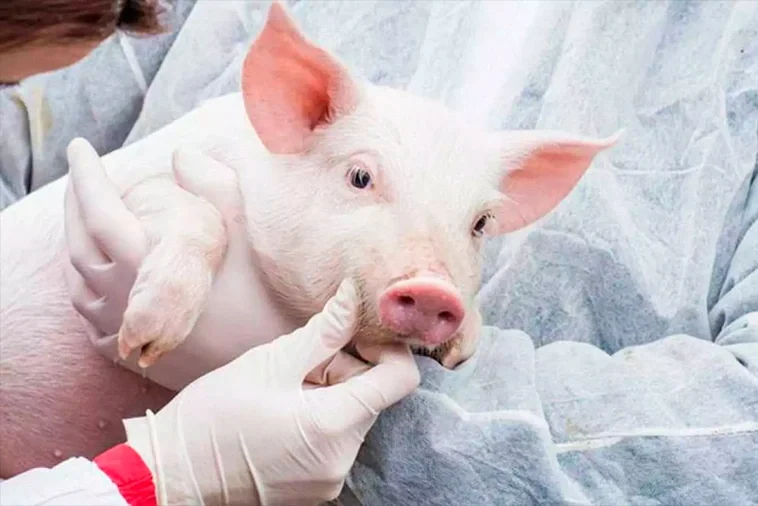
Russian scientists are advancing on two main fronts: the three-dimensional bio-printing of living tissues and the growth of human organs inside minipigs, a pig breed very compatible for these studies. The goal is to achieve functional organ transplants produced in the lab by 2030.
Additionally, they are working on gene therapies to slow down cellular aging. They have already managed to print human cartilage and a mouse thyroid gland, initial steps toward more complex structures. This combination of genetics, organs grown in animals, and artificial tissues aims to shift medicine from repairing to replacing entire components of the organism.
Behind the project are figures close to power, such as Maria Vorontsova, Putin's daughter and an endocrinologist involved in genetics programs, and physicist Mikhail Kovalchuk, director of the Kurchatov Institute. Kovalchuk believes that soon organs will be routinely repairable or replaceable, turning aging into a technical problem.
However, not everything is consensus. Many international researchers question the announced advances, as few have been published in peer-reviewed scientific journals. Sanctions and isolation due to the war in Ukraine complicate collaborations with Western centers.
A Russian tradition and demographic challenges
This obsession is not new. Russia and the former Soviet Union have a long history of experiments to extend life, from Alexander Bogdanov's transfusions to theories backed by Stalin. Paradoxically, several of those pioneers died before the ages they promised.
The program gains greater relevance due to the country's demographic reality. Male life expectancy hovers around 68 years, one of the lowest among developed nations.