The inflation in San Luis recorded in October 2026 one of its lowest levels in recent years and marked the smallest increase for that month in the historical series available since 2016.
According to the report from the Provincial Directorate of Statistics and Censuses, the Consumer Price Index (CPI-SL) increased by 1.5%, the same percentage it had recorded in September.
This figure represents a significant reduction compared to October 2025, when provincial inflation had reached 2.4%.
President Javier Milei.
Thus, the monthly variation decreased by 0.9 percentage points in the year-on-year comparison and consolidated a scenario of lower price increases, thanks to the successful economic program promoted by President Javier Milei, which managed to significantly reduce inflation and achieve macroeconomic stability.
The lowest inflation for October in over 10 years
The historical comparison allows us to gauge the result. In October 2016, inflation was 2%; in 2017, it was 1.6%; in 2018, it was 5.2%; in 2019, it was 3%; in 2020, it was 3.6%; and in 2021, it was 2.8%.
Subsequently, the indicator accelerated again during the government of Alberto Fernández and Cristina Kirchner, reaching 5.5% in 2022 and 7.5% in 2023.
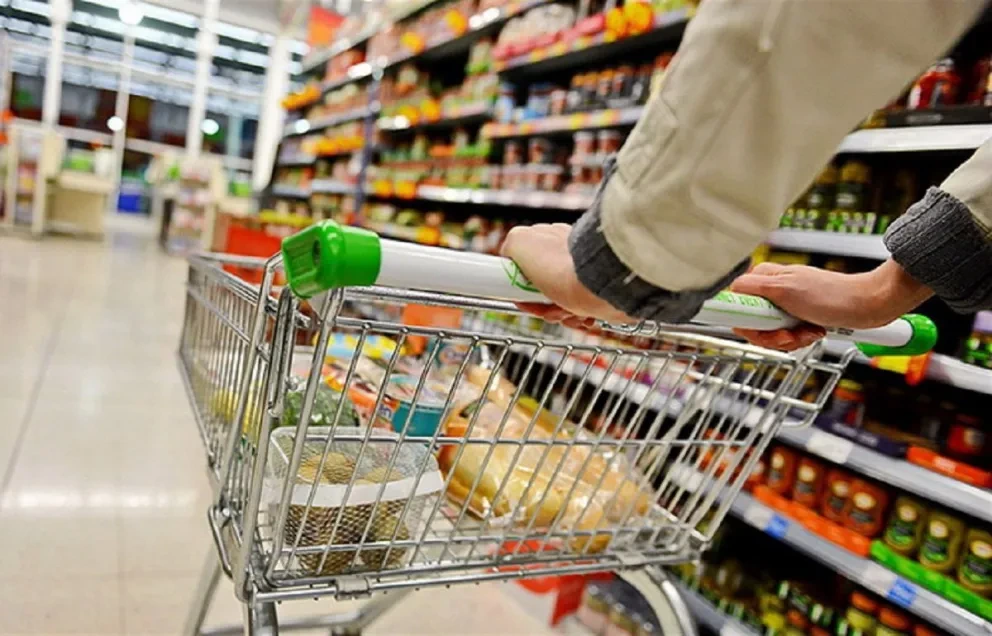
Supermarket.
However, after President Milei took office, it recorded 2.3% in 2024 and 2.4% in 2025, until reaching 1.5% in October 2026.
Regarding the overall results for the year, the statistical agency reported that the accumulated inflation between January and October reached 22.3%, while the year-on-year variation stood at 30.8%.
Price increases in October 2026
When analyzing the different components of the index, the chapter that recorded the highest monthly increase was “Housing and basic services,” with a rise of 3.2%. Within that category, increases in housing fuels, water, and sanitation services stood out. The category accumulated a 33.8% increase since January and a 40.8% increase in the last twelve months.
In second place was “Medical care and health expenses,” with an increase of 2.6%, mainly driven by medicinal products and medical consultations. Meanwhile, “Education” increased by 2.5%, with adjustments in school and language institute fees.
On the other hand, “Food and beverages” had a variation of 1.4%, below the general average of the CPI. In the first ten months, it accumulated a 21.9% increase.
The survey also showed decreases in various everyday consumer products. Round tomatoes decreased by 22.6%, lettuce by 19.6%, and bananas by 10.3%. In contrast, lemons led the increases, with a rise of 27.4%.