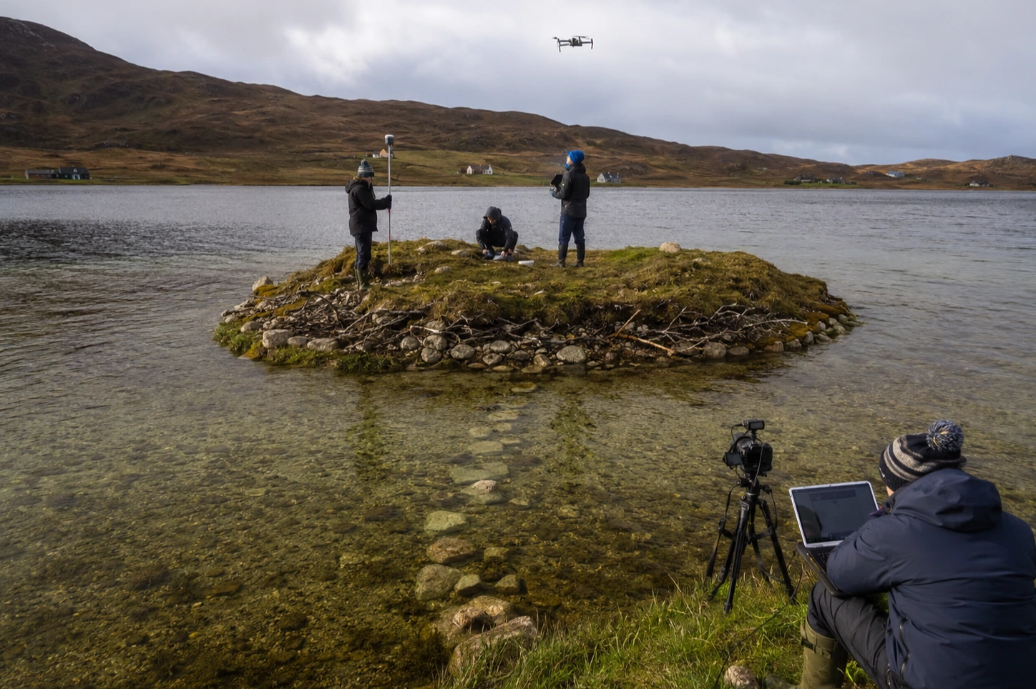
In the shallow waters of Loch Bhorgastail, on the Isle of Lewis in northwestern Scotland, a team of researchers evaluated an ancient crannog using advanced three-dimensional modeling techniques. The work, led by specialists from the University of Southampton and the University of Reading, made it possible to create a high-resolution model of the site using stereophotogrammetry
, which combines photographs taken from different angles.
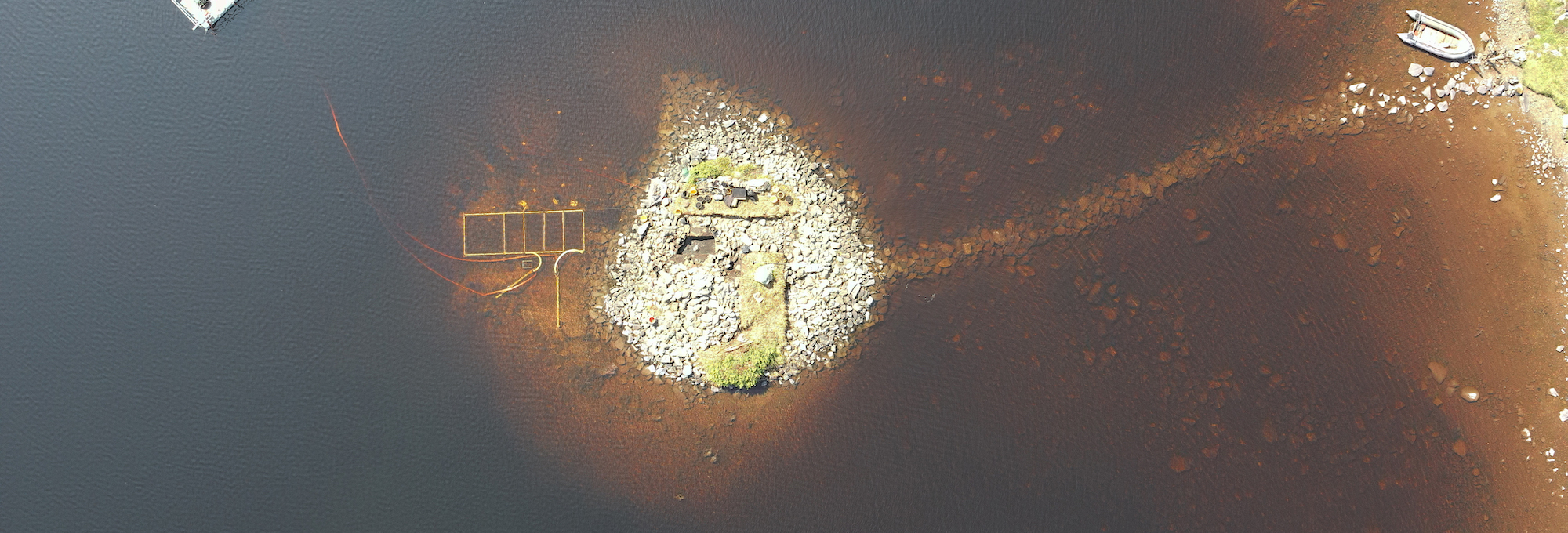
The results show that the structure originated as a circular wooden platform approximately 75 feet in diameter, covered with branches. Findings of Neolithic ceramics in the surrounding area allowed this first construction to be dated to about 5,000 years ago
.
Some 2,000 years later, already in the Middle Bronze Age, new layers of branch and stone were added to the crannog. Later, during the Iron Age, around 1,000 years later, a stone road was built that connected the artificial island with the lake shore, although today it is submerged
.
An older story than previously thought For a long time it
was believed that crannogs had been built and reused primarily between the Iron Age and the post-medieval period. However, this study confirms that some of these artificial sites have much more remote origins, in the Neolithic period, between 3800 and 3300 BC.
“While crannogs were thought to have been built, used and reused mainly between the Iron Age and the post-medieval period, we now know that some were built for the first time much earlier, during the Neolithic period, between 3800 and 3300 BC,” said Stephanie Blankshein of the University of Southampton.
The presence of pottery around the crannog suggests that the place may have been used for communal activities involving cooking and banquets. This interpretation opens up new perspectives on how Neolithic communities lived in
the region.
Importance of the finding for Scottish archaeology The
use of modern technology such as stereophotogrammetry made it possible to accurately document details of the structure without the need for major invasive interventions. This makes it easier to better understand the evolution of the crannog over millennia and its role in
different prehistoric periods.
Crannogs represent fascinating examples of ancient engineering, built on lakes to create habitable or special-use spaces. In the case of Loch Bhorgastail, the sequence of modifications demonstrates a continuity in the use of the site for thousands of years
.
This type of research helps to rewrite part of the history of lake settlements in the British Isles, highlighting that the tradition of building on water began earlier than it was supposed to. The data obtained enrich knowledge about the social and constructive practices of Neolithic, Bronze and Iron Age populations
.
The results of the study were published in the journal Advances in Archaeological Practice, offering a solid basis for future exploration at similar sites in Scotland.