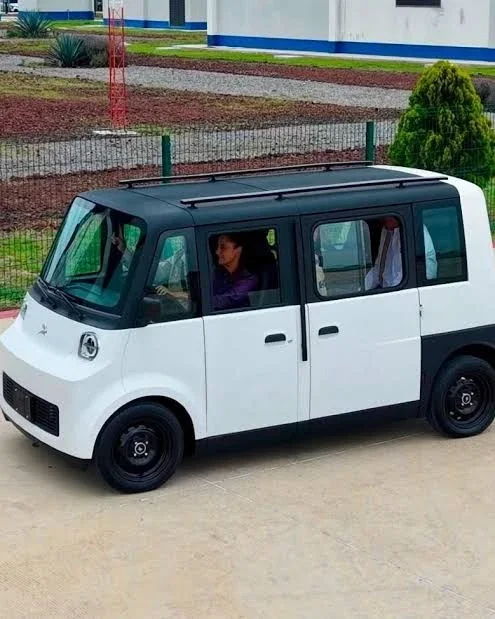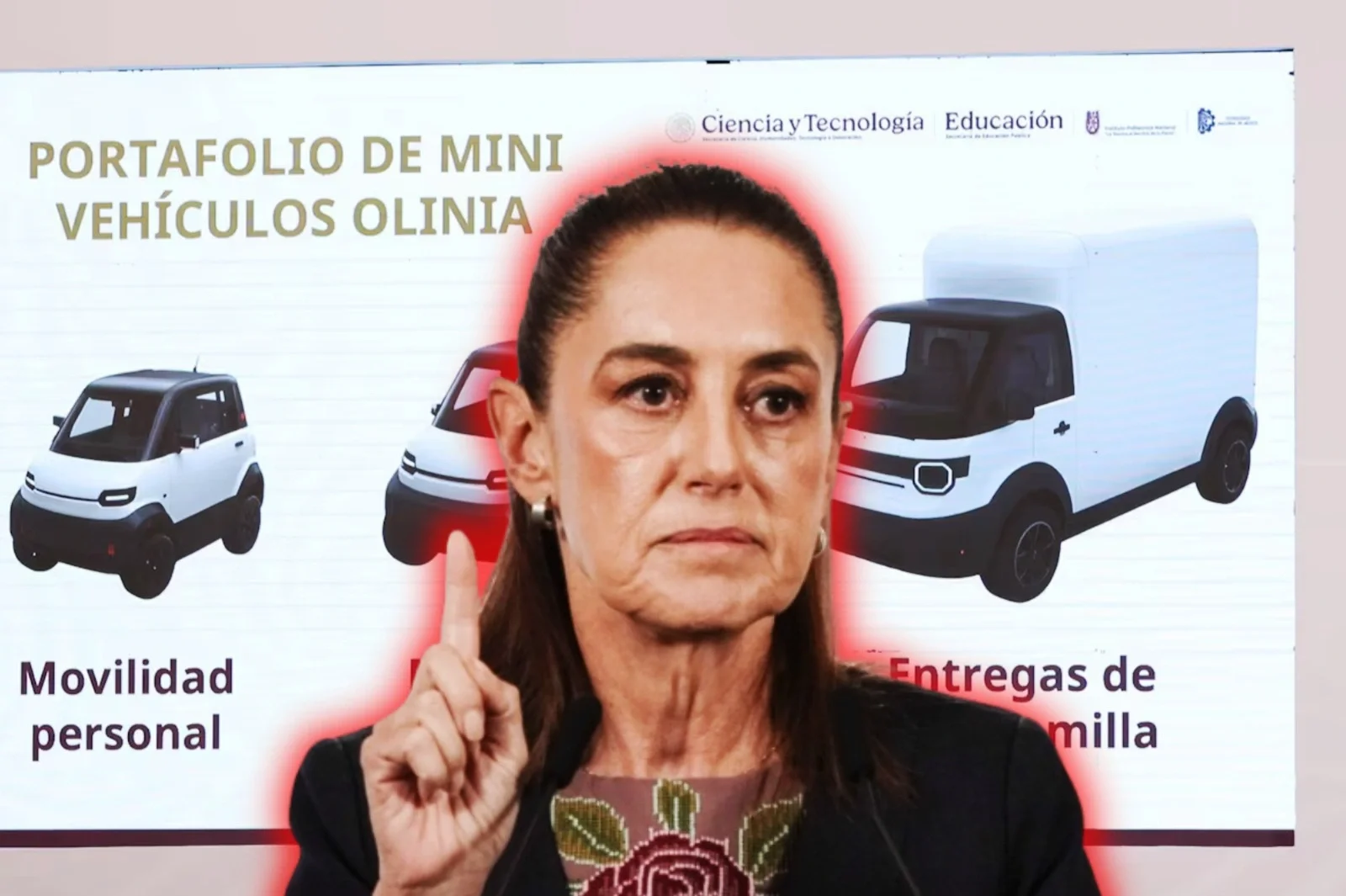

The Mexican president Claudia Sheinbaum officially presented Olinia, an electric vehicle developed by public institutions that the government promotes as an economical alternative for urban mobility. However, far from generating enthusiasm, the project has sparked numerous criticisms due to its technical limitations and the need to modify regulations to allow its circulation.
According to data released by authorities, the vehicle would have a price ranging from 90,000 to 150,000 Mexican pesos, would reach a maximum speed of only 50 kilometers per hour, and could be charged using a conventional household outlet. Although the government highlights these features as advantages, this data makes it an extremely limited product compared to the options currently available in the market.
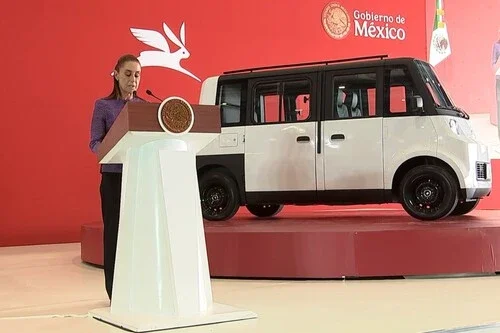
The situation becomes even more controversial due to a key detail: Olinia does not fit within the current regulations for automobiles in Mexico. Instead of adapting the vehicle to existing standards, the government is working on creating specific regulations so that the project can operate legally.
This point summarizes the main problems of the initiative. A vehicle that needs tailor-made regulation even before it starts to be sold raises questions about its design, safety, and ability to compete on equal terms with other manufacturers.