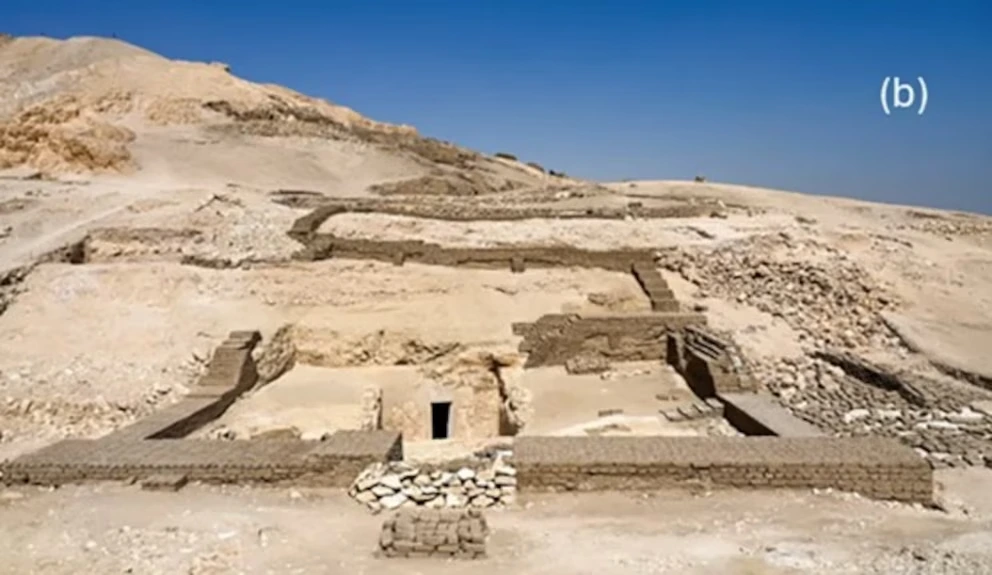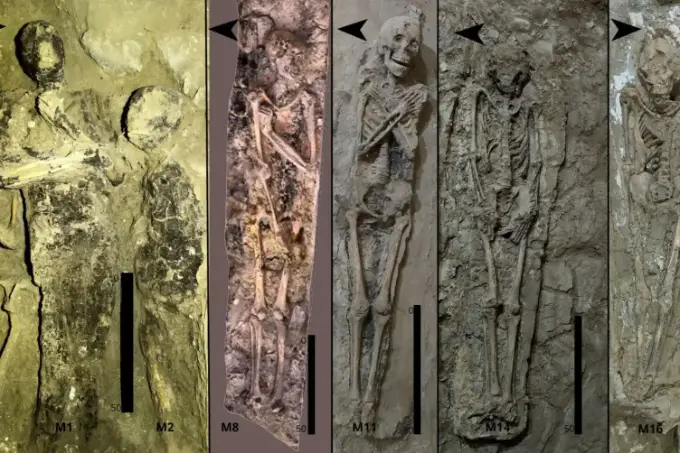

A burial chamber in the ancient Theban Necropolis, opposite Luxor, holds a story of careful reuse that spanned several centuries. Spanish researchers analyzed chamber three of tomb TT 209 and found sixteen mummified individuals, remains of at least four others, and a mummified dog. The space, built during Dynasty XXV, between 754 and 656 BC, was used until the Ptolemaic period, when it was finally abandoned.
The work, published in Frontiers in Environmental Archaeology, shows that it was not a chaotic accumulation. According to the first author, Dr. Jared Carballo-Pérez from the University of La Laguna, the detailed study of the bodies indicates “neither a chaotic accumulation nor a loss of the original ritual over time. Rather, there was a spatial logic in which each new deposit adapted to the presence of previous bodies: a kind of funerary memory in the processes of reuse.”
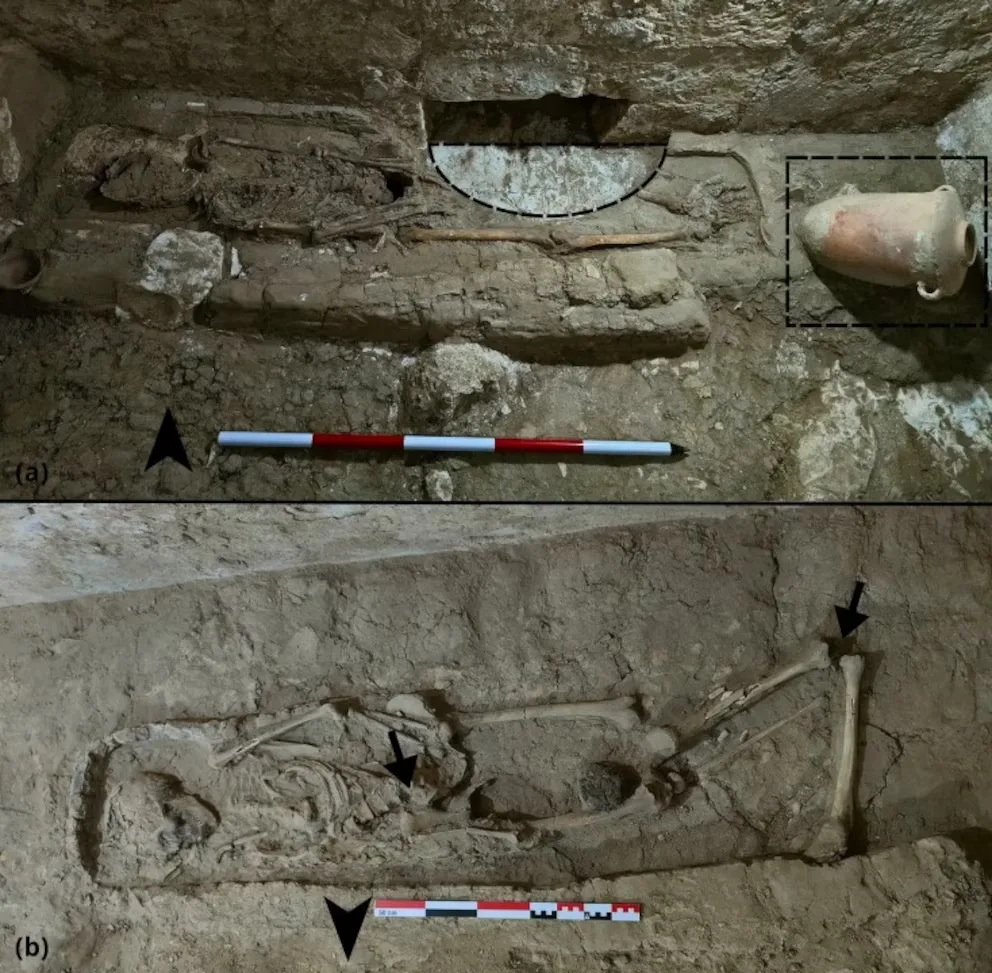
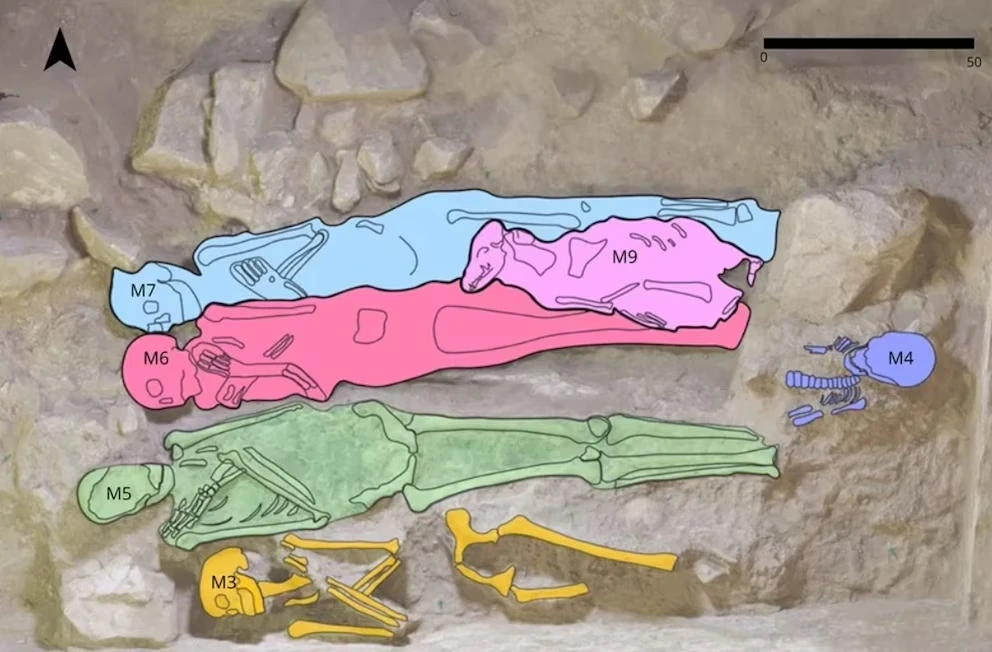
The researchers excavated, photographed, and accurately documented the position and orientation of each body in relation to the architecture of the chamber. They identified nine burial deposits, both individual and collective, along with objects associated with the deceased.
In the early stages, burials were usually more spaced out, and bodies were placed inside coffins. “The earliest individuals buried here appear to have had a high social status, as they were interred in coffins, with funerary nets and amulets, and with a set containing expensive objects, such as the contents of Phoenician amphorae, of which a large quantity was found alongside them,” explained the senior author, Dr. Miguel Ángel Molinero Polo, a professor of Egyptology at the same university.
Changes in practices over time
As the years went by, especially towards the end of Dynasty XXV and during the Persian period, around 680 to 404 BC, new bodies were placed in the remaining free spaces. The chamber became much denser. Variations in the position of the arms were also observed: in early burials, they were usually extended, while some later ones had one arm folded inward.
During the Persian period, another significant change was recorded. Instead of primarily relying on separate individual burials, people began to arrange the bodies vertically. In two-thirds of the deposits in the chamber, overlapping bodies were found. One of the most striking arrangements, dated to the Ptolemaic period, is located in the southeast part of the chamber: four mummies and a mummified dog placed one on top of the other.