








The so-called "Valenzuela method", based on fiscal austerity, the elimination of fees, deregulation, and the encouragement of private investment, is beginning to establish itself as an alternative demanded by municipalities in the interior of the province of Buenos Aires.
A survey conducted by DC Consultores in the Sixth Electoral Section revealed that 87.2% of respondents would apply the model promoted by Diego Valenzuela, former mayor of Tres de Febrero and current deputy, while only 12.8% consider it impossible to transfer to the region.
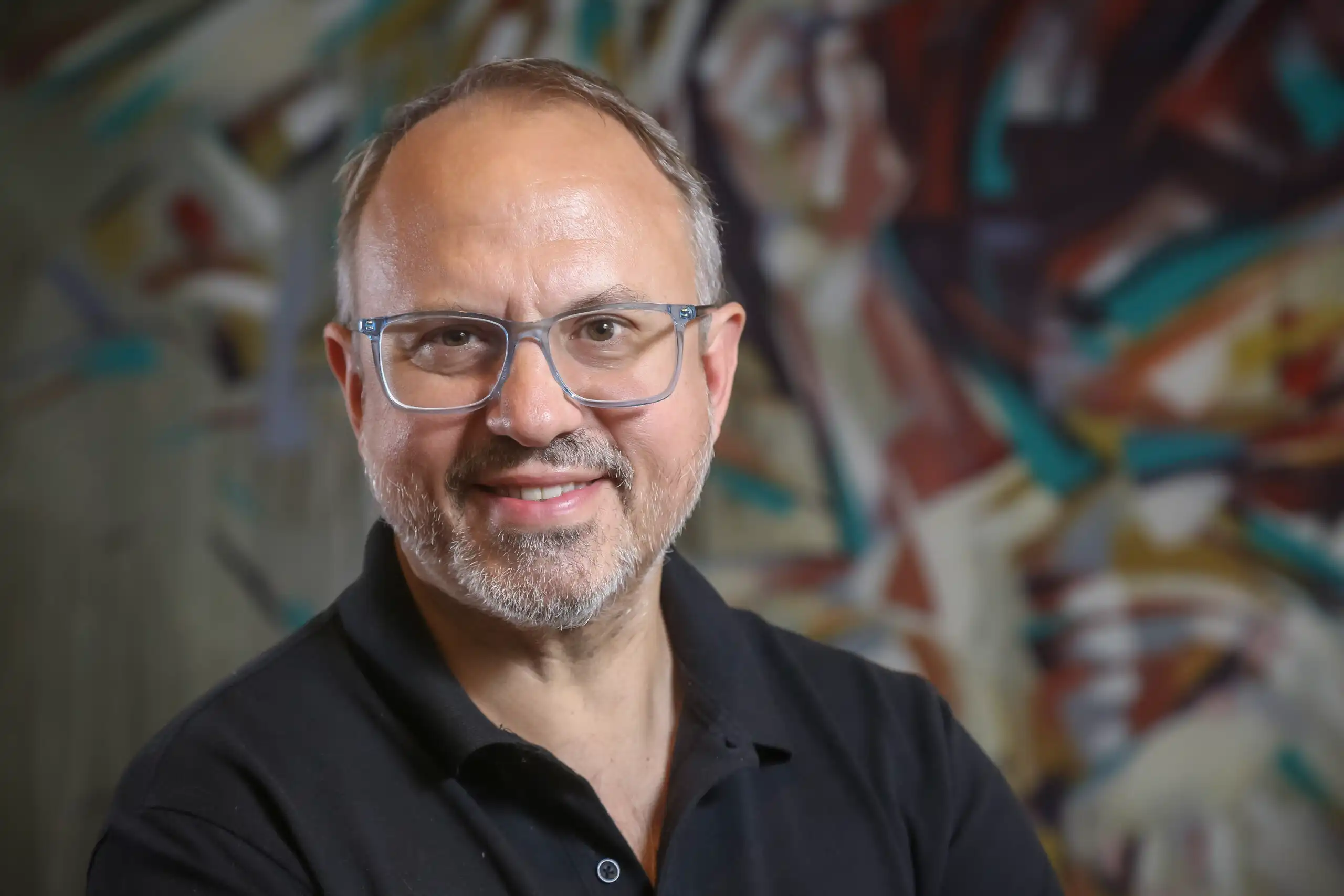
Diego Valenzuela
Within the group that supports the initiative, 47.8% stated that it should be implemented immediately, 21.5% chose to do it in the medium term, and another 17.9% considered it advisable to advance gradually, with a long-term execution.
The study, conducted between July 10 and 13 on 920 cases, defined the "Valenzuela method" based on four pillars: investment, deregulation, zero fees, and austerity. These are the guidelines applied during the leader's management in Tres de Febrero, where he built a profile associated with reducing the tax burden and ordering public spending.
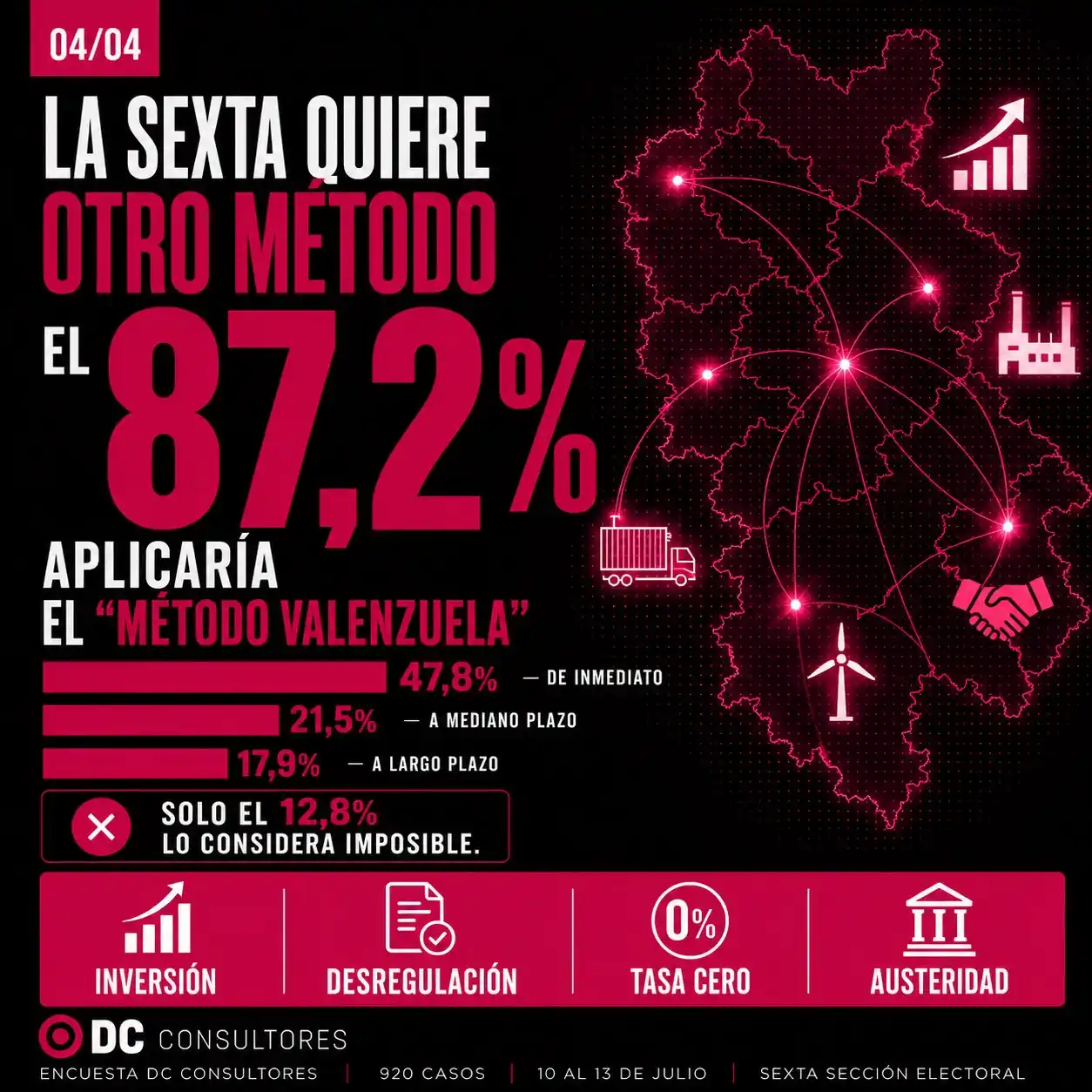
Some results from the study published by DC Consultores
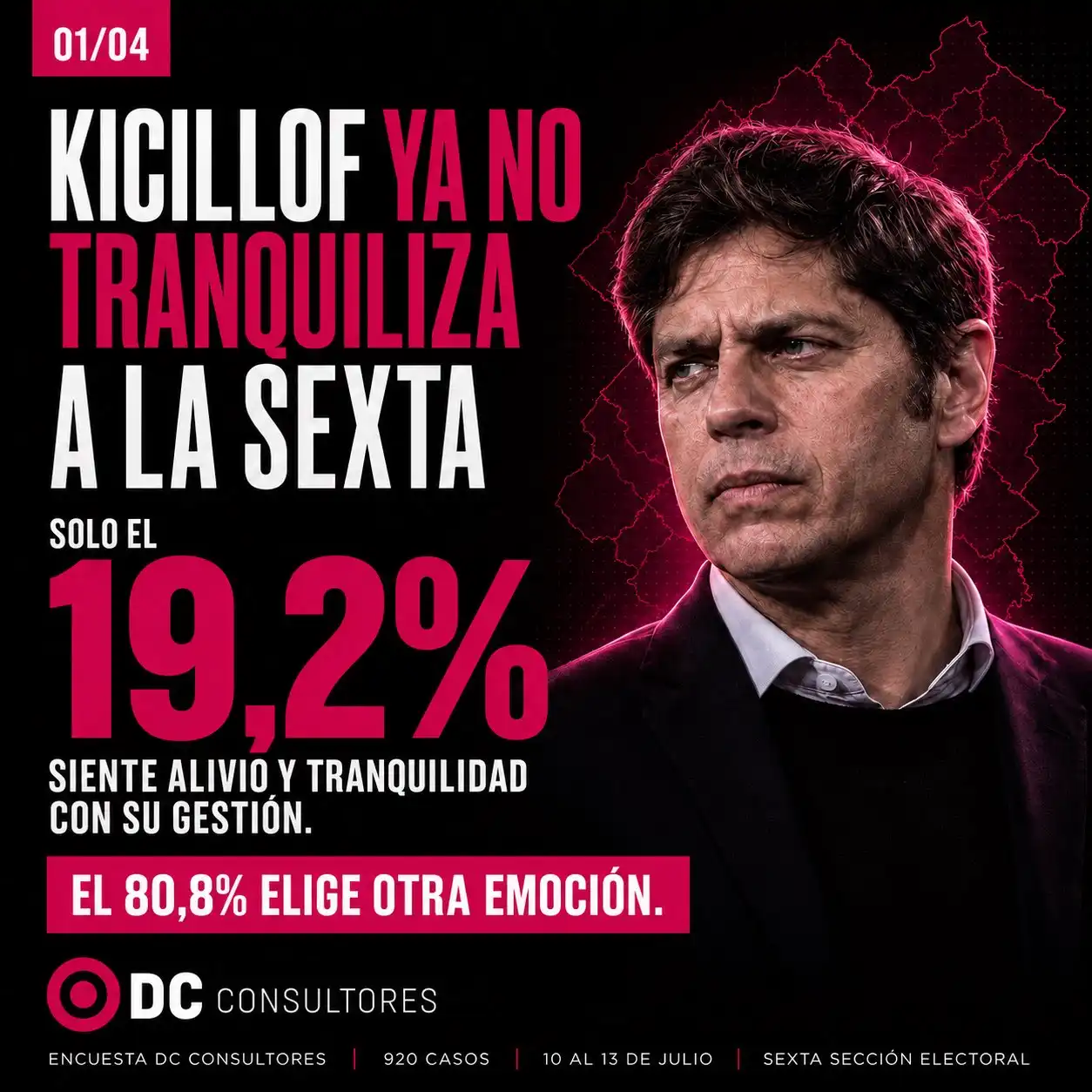
The results also showed a marked weariness with Axel Kicillof's management in southern Buenos Aires. Only 19.2% expressed feeling relief and tranquility with the provincial administration, while 46.1% chose fear as the predominant emotion. Another 15.8% expressed disappointment, and 18.9% said they acted cautiously in the possibility of seeking another alternative within Peronism.
Additionally, 40.8% linked the continuity of the current provincial model with another ten years of stagnation. The measurement does not constitute a voting intention survey but reflects a growing demand for policies related to municipal efficiency, private investment, and less state intervention.
The numbers overwhelmingly disapprove of the management
The trend had already appeared in a provincial survey by DC Consultores conducted in June. In that measurement, the so-called "Valenzuela rhythm," associated with municipal efficiency and fiscal relief, had been the most chosen alternative to reactivate the Buenos Aires economy, with 37.5%.
The survey thus strengthens the positioning of the deputy as one of the leaders with management experience capable of offering an alternative to the bureaucratic and statist model upheld by Kirchnerism in Buenos Aires.